Tag: China

  • China agrees to purchase more U.S. goods after trade talks with Trump officials

    China has agreed to “meaningful increases” in its purchase of U.S. agriculture and energy exports to help reduce the U.S. trade deficit, both countries said Saturday after wrapping up two days of high

    China has agreed to “meaningful increases” in its purchase of U.S. agriculture and energy exports to help reduce the U.S. trade deficit, both countries said Saturday after wrapping up two days of high-stakes trade talks in Washington.

    A joint statement released by the White House said negotiators from both sides found “consensus on taking effective measures to substantially reduce the United States trade deficit in goods with China.”

    “To meet the growing consumption needs of the Chinese people and the need for high-quality economic development, China will significantly increase purchases of United States goods and services,” the statement said. “This will help support growth and employment in the United States.

    The statement said both countries, which have been locked in an escalating tariff feud, agreed to resolve trade concerns “in a proactive manner.”

    Treasury Secretary Steven T. Mnuchin, U.S. Trade Representative Robert Lighthizer and other U.S. officials concluded two days of talks Friday with a Chinese delegation led by State Council Vice Premier Liu He, a special envoy of President Xi Jinping.

    President Trump has been calling for China to end unfair trade practices that have led to a more than $375 billion trade deficit for the U.S.

    The joint statement didn’t specify how much the trade deficit is expected to be impacted. The Wall Street Journal said Chinese officials resisted a U.S. demand to cut the deficit in half by the end of 2020.

    As a result of the talks, China agreed to eliminate restrictions on sorghum imports from the U.S. in a possible deal to ease U.S. sanctions on ZTE Corp., the second-larges manufacturer of phones in China. Mr. Trump said he promised to review the sanctions after a personal request from Mr. Xi, who said the ban on doing business with ZTE had hurt its 70,000 employees.

    The U.S. will send a team to China to work out the details of increasing exports of agricultural and energy products, the statement said.

    The countries also agreed to “strengthen cooperation” on intellectual-property protections, the statement said.

    The U.S. has been threatening tariffs totaling as much as $150 billion on Chinese products, with Beijing vowing to retaliate with its own tariffs on U.S. agriculture, airplanes and other products.

  • Russia eyes closer Iran ties, more trade if Trump nixes nuclear deal

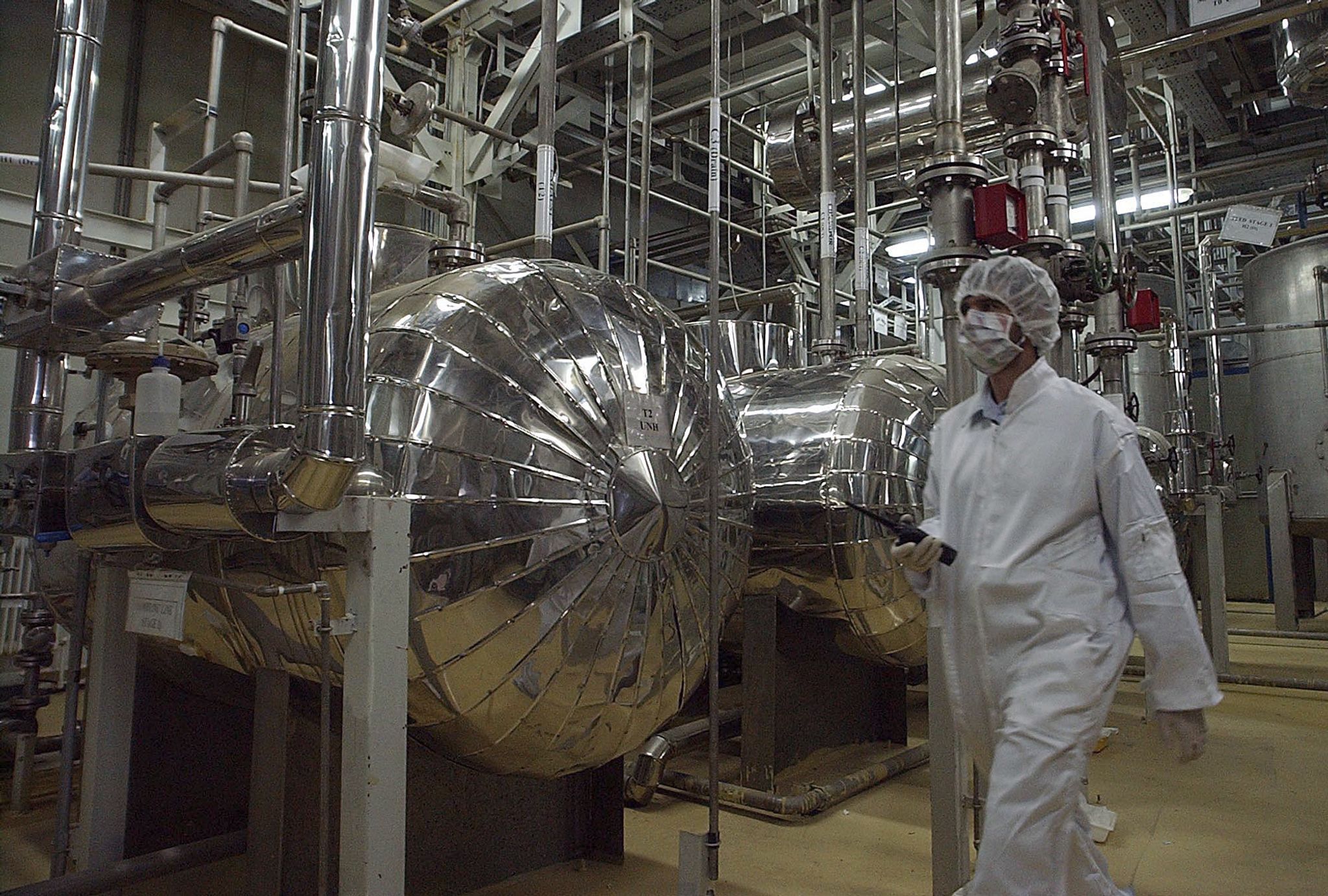
    A top Russian official said bilateral relations and trade with Iran could actually be enhanced if President Trump follows through on a threat to take the United States out of the 2015 nuclear deal wit

    A top Russian official said bilateral relations and trade with Iran could actually be enhanced if President Trump follows through on a threat to take the United States out of the 2015 nuclear deal with Tehran next week.

    Vladimir Yermakov, head of arms control and nonproliferation for the Russian Foreign Ministry, told reporters Friday that a U.S. withdrawal would not kill the deal, which Iran signed with the Obama administration and five international powers — Russia, China, Britain, France and Germany.

    The European allies have lobbied heavily for Mr. Trump not to withdraw from the deal, fearing that the reimposition of American economic and financial sanctions could cast a heavy cloud over their own business dealings with Tehran.

    But Mr. Yermakov argued the deal, which curbed Iranian nuclear programs in exchange for an end to international sanctions, would survive even without U.S. participation, according to the Moscow Times. He spoke to reporters at a nuclear nonproliferation summit in Geneva.

    “It might even be easier for us on the economic front, because we won’t have any limits on economic cooperation with Iran,” he said. “We would develop bilateral relations in all areas — energy, transport, high-tech, medicine.”

    Iranian officials have said they would not be bound by the nuclear restrictions in the deal if the U.S. withdrew, and have rejected any attempt to re-write its terms. But they have stopped short of saying the entire agreement would be void if the U.S. pulled out.

    Mr. Yermakov said Friday it would be smarter for Tehran to stay in the deal and honor its commitments not to seek nuclear weapons.

    “It’s not in anybody’s interest that Iran goes back to the kind of development of its nuclear program that all states would be concerned about,” he said. “But Iran is fully entitled to develop peaceful nuclear energy.”

    China this week also said it continued to support the nuclear accord and called on all sides to honor their commitments.

    The U.N. nuclear watchdog agency says Iran has met its commitments under the deal, but Mr. Trump and other critics say the accord has failed to restrain Iran’s other military programs and its moves to destabilize other states in the region. Many of the restrictions on Iran’s nuclear programs in the deal are also set to expire in just seven years.

  • Trump team returning from China, won’t back down from trade-war threat, president says

    President Trump said Friday that he is not backing down from demands for fair trade with China, as top administration officials returned from the first round of trade talks in Beijing.

    President Trump said Friday that he is not backing down from demands for fair trade with China, as top administration officials returned from the first round of trade talks in Beijing.

    The two-day talks in Beijing did not produce major announcements, and the Trump administration is still threatening to impose tariffs on $150 billion worth of Chinese goods. But further rounds of negotiations were expected.

    “My people are coming right now from China, and we will be doing something one way or another with respect to what is happening in China,” Mr. Trump told reporters at the White House.

    He he said that he had been “nice” in the negotiations out of respect for Chinese President Xi Jinping, who has helped the U.S. apply pressure to bring North Korea to talks on giving up its nuclear weapons.

    “I have great respect for President Xi. That’s why we are being so nice, as we have a great relationship,” said Mr. Trump. “But we have to bring fairness into trade between the U.S. and China, and we will do it.”

    Beijing has said that it is open to improving access to U.S. business but also threaten to retaliate against U.S. tariffs, including targeting industries with big business in China such as agriculture and airplanes.

    The trade delegation was led by Treasury Secretary Steven T. Mnuchin and included Commerce Secretary Wilbur Ross, U.S. Trade Representative Robert Lighthizer, National Economic Council Director Larry Kudlow and U.S. Ambassador to China Terry Branstad.

    The White House talks as “frank discussions” about rebalancing trade.

    A chief aim of the Trump administration is to break down barriers to U.S. business in China and reduce America’s $375 billion annual trade deficit with China.

    “The United States delegation affirmed that fair trade will lead to faster growth for the Chinese, United States, and world economies,” the White House said in a statement.

    The size and high level of the delegation illustrated the importance that the Trump Administration places on securing fair trade and investment terms for American businesses and workers, said the statement.

    “There is consensus within the Administration that immediate attention is needed to bring changes to United States–China trade and investment relationship,” it said.

  • Aimed at China, Trump’s tariffs are hitting closer to home

    President Donald Trump’s escalating dispute with China over trade and technology is threatening jobs and profits in working-class communities where his “America First” agenda hit home.

    WASHINGTON (AP) – President Donald Trump’s escalating dispute with China over trade and technology is threatening jobs and profits in working-class communities where his “America First” agenda hit home.

    The Commerce Department has received more than 2,400 applications from companies seeking waivers from the administration’s tariffs on steel and aluminum imports, which may result in duty payments of millions of dollars for larger businesses. The department has begun posting the requests online for public comment; several of the applications released so far suggest deep misgivings with Trump’s protectionist strategy, especially in areas where he won strong support during the 2016 election.

    The tariffs are aimed primarily at China for flooding the global market with cheap steel and aluminum. But they’ve also led to confusion and uncertainty, according to Associated Press interviews and a review of records. In Oklahoma, Texas and Wisconsin, for example, businesses operating in the furniture, energy and food sectors have outlined the financial difficulties they’d face if they’re not excused from the steel tariff.

    In Okmulgee, Oklahoma, dozens of jobs hang in the balance as office furniture giant Steelcase waits to hear back from the Commerce Department.

    A Steelcase subsidiary, PolyVision, operates a plant in Okmulgee that uses a special type of steel from Japan to manufacture a durable glass-like surface for whiteboards and architectural purposes. PolyVision “cannot and will not be able to procure” from U.S. companies the cold-rolled steel it requires “in a sufficient and reasonably available amount or of a satisfactory quality,” Steelcase said.

    Trump won most of the votes cast for president in Okmulgee County. Without a waiver, Steelcase warned, the “economic viability of PolyVision (and) the small town of Okmulgee” would be jeopardized.

    The waiver request also indicates that a $15 million plant expansion may be at risk. Steelcase and PolyVision are on the verge of making the investment, which would create new construction and manufacturing jobs, according to the request.

    Roger Ballenger, Okmulgee’s city manager, said he and other local officials are “very concerned about the situation with PolyVision.”

    The tariffs – 25 percent on imported steel and 10 percent on imported aluminum – are designed to protect and rebuild the U.S. companies that manufacture the metals. The U.S. temporarily exempted several major trading partners, including the European Union, Mexico and Canada.

    China, which was left on the target list, retaliated by imposing tariffs on $3 billion in U.S. products, including apples, pork and ginseng.

    Trump responded by adding more protectionist measures as punishment for Chinese theft of U.S. intellectual property. And Beijing punched back by proposing tariffs on $50 billion in U.S. products including small aircraft and soybeans – a direct threat to rural areas that were key to Trump’s victory.

    John Hritz, CEO of JSW Steel USA in Baytown, Texas, said his company is in lockstep with Trump’s approach. “We’re in favor of growing the steel industry in this country,” Hritz said. JSW Steel, owned by Indian conglomerate JSW Group, is embarking on a $500 million overhaul of the plant that it says will create hundreds of jobs.

    The growth would be welcomed in Baytown, where unemployment is 9.8 percent, more than double the national rate. Baytown is located partly in Harris County, which Democrat Hillary Clinton won, and partly in Chambers County, which Trump handily won.

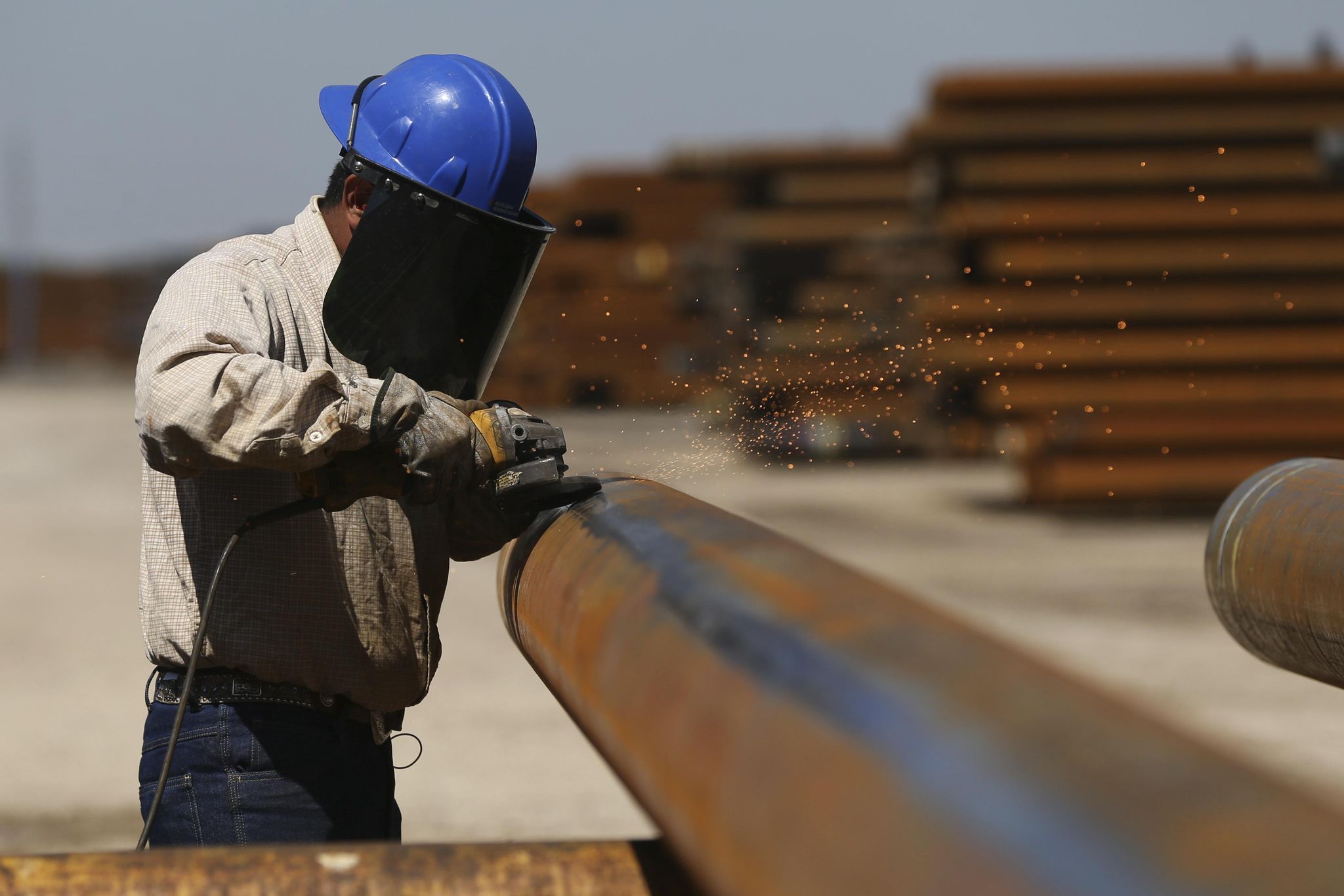
    The future is much murkier for another Baytown steel business, Borusan Mannesmann Pipe. Without a waiver, Borusan may face tariffs of $25 million to $30 million annually if it imports steel tubing and casing from its parent company in Turkey, according to information the company provided to the AP.

    Borusan said the Baytown production line would no longer be competitive and “jobs would be threatened” if it cannot import 135,000 metric tons of steel annually over the next two years. The pipes Borusan produces are used primarily as casing for oil and natural gas wells.

    But if Commerce says yes, Borusan will be able to unlock a $25 million investment in the Baytown facility as it seeks to become a “100 percent domestic supplier,” according to the waiver request. An additional $50 million expansion in pipe fabrication capacity would follow, the company said, leading to as many as 170 new jobs.

    Seneca Foods Corporation, the nation’s largest vegetable canner, said in its waiver application that it’s unclear, at best, if U.S. suppliers have the ability or willingness to expand their production in the long term to meet the company’s annual demand for tinplated steel.

    But “clearly they cannot meet demand in the short term,” Seneca told Commerce officials. That means Seneca has to buy a portion of what it needs from overseas.

    A person with knowledge of Seneca’s situation said the company would face a $2.25 million duty if the Commerce Department doesn’t approve its waiver request for 11,000 metric tons of tinplate it already agreed to purchase from China. The material is to be delivered this year and next, according to the waiver request. The person was not authorized to speak publicly and spoke to the AP on condition of anonymity.

    Seneca said it employs more than 400 people at can-making facilities in Wisconsin and Idaho and near its headquarters in New York’s Wayne County, where Trump bested Clinton. The company doesn’t warn layoffs are imminent if the waiver isn’t approved. Instead, the tariffs would likely come out of Seneca’s bottom line, the person said.

    ___

    Contact Richard Lardner on Twitter at http://twitter.com/rplardner

  • Liu Xiaobei heads China’s U.S. hacking operations

    The activities of one of China’s cyber spymasters has been revealed for the first time in a government report on Beijing’s unfair trade practices made public last week.

    The activities of one of China’s cyber spymasters has been revealed for the first time in a government report on Beijing’s unfair trade practices made public last week.

    The role of People’s Liberation Army (PLA) Maj. Gen. Liu Xiaobei, until recently the director of the Third Department of the PLA General Staff known as 3PLA, was disclosed. The Chinese military hacking group has been linked by U.S. intelligence agencies to massive cyberattacks and data theft from the U.S. government, military and private sector for more than a decade.

    Gen. Liu’s current status is not known, but 3PLA is now the core unit of a new service-level military organization known as the Strategic Support Force whose main component is called the Cyber Corps. The Cyber Corps also absorbed the PLA’s psychological warfare unit called 311 Base, which conducts information warfare — disinformation and influence activities.

    It was the first time the U.S. government publicly identified one of China’s senior military hackers, an indication that he may face U.S. sanctions in the future.

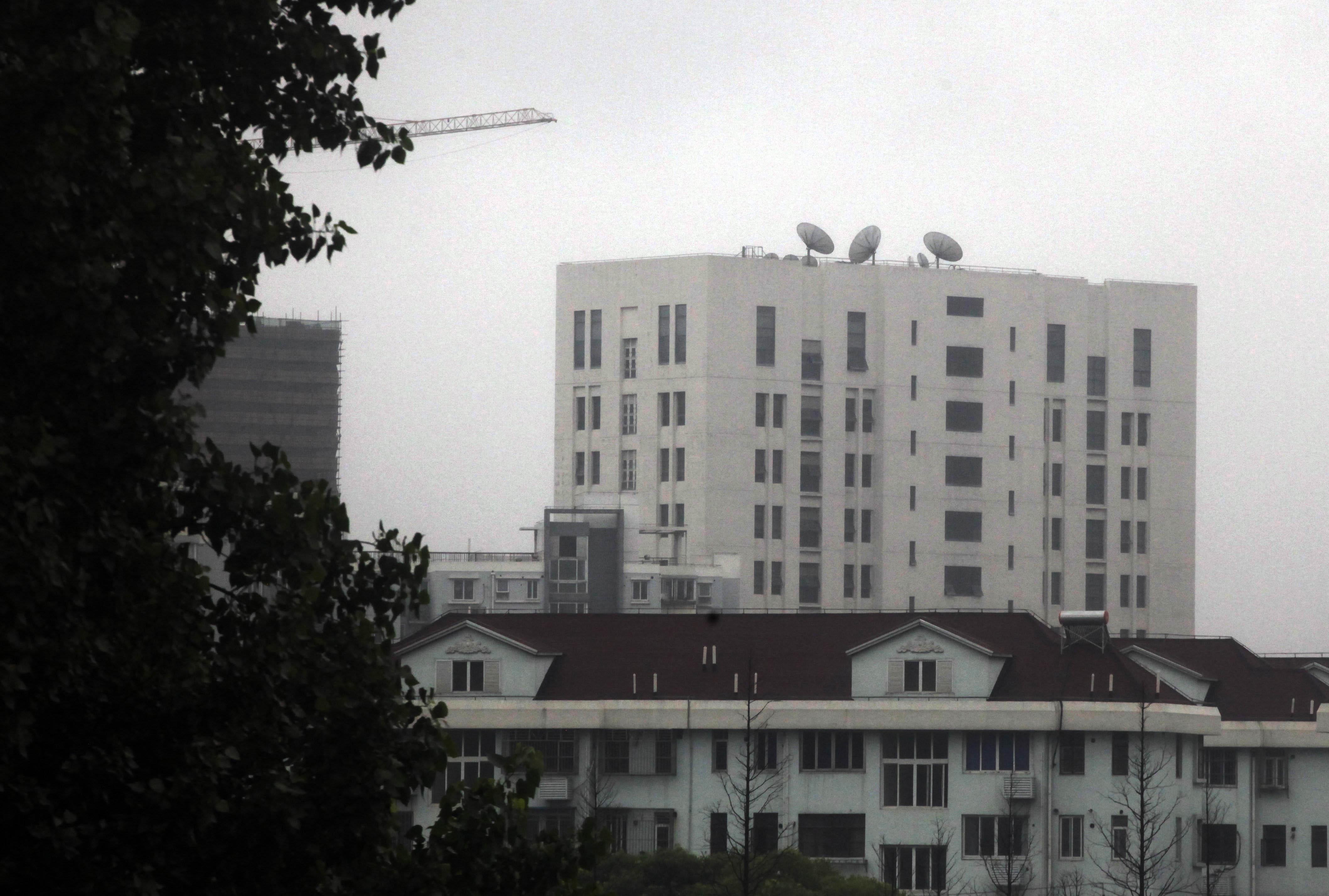
    Four years ago, the U.S. government indicted five midlevel PLA hackers who were part of a Shanghai-based group known as Unit 61398.

    The Cyber Corps is believed to employ 100,000 hackers, language specialists and analysts at its headquarters in the Haidian District of Beijing. Branch units are located in Shanghai, Qingdao, Sanya, Chengdu and Guangzhou.

    The recently published report by U.S. Trade Representative Robert Lighthizer highlights Beijing’s unfair trade practices and reveals that Gen. Liu directed cyberspying operations on U.S. companies during talks with officials from the state-owned China National Offshore Oil Corp. (CNOOC). The investigative report is the basis for Trump administration plans to impose tariffs on Chinese technology products and to curb investment by Chinese firms in the coming weeks.

    The detailed report, citing U.S. government information, says CNOOC ordered the 3PLA to spy on several U.S. oil and gas companies engaged in cutting-edge shale gas technology. The report outlines two cases involving U.S. companies that were hacked by 3PLA.

    The Chinese military hackers in one case broke into a U.S. company’s network and stole details of its plans for negotiating a deal with CNOOC.

    “CNOOC attributed their ultimate success in the negotiation with U.S. Company 1 to the information that CNOOC had received from the intelligence services,” the trade report said without identifying the American company.

    The report added that “senior Chinese intelligence officials, including a PLA director, Liu Xiaobei, endorsed the use of the intelligence information” in the talks between CNOOC and the company.

    CNOOC also employed the 3PLA in a second case to spy on five U.S. oil and natural gas companies, seeking key data relating to operations, asset management, the movements of senior company officials, shale gas technology, research on lab procedures, fracking technology and fracking formulas.

    “These examples illustrate how China uses the intelligence resources at its disposal to further the commercial interests of Chinese state-owned enterprises to the detriment of their foreign partners and competitors,” the report said.

    The Chinese are using cyberattacks as part of an industrial policy of supporting science and technology development.

    Former Pentagon China specialist Mark Stark in 2015 identified Gen. Liu as 3PLA director, a former deputy director and political commissar of the electronic spying agency often compared to the National Security Agency.

    An NSA document made public by renegade former contractor Edward Snowden revealed that 3PLA’s Technical Department is one of the Chinese government’s most aggressive cybertheft actors, with 19 confirmed and nine other possible cyberunits under its command, according to information as of 2013.

    The other major cyberspying organization is the Chinese Ministry of State Security, which runs six known and 22 suspected cyberspying units.

    China also has seven other Chinese-based cyberattack units that are listed by the NSA as “unattributed” to the Chinese government.

    Another leaked NSA document revealed the massive scope and costly damage inflicted by Chinese military cybertheft.

    Under the title “Chinese exfiltrated sensitive military technology,” the NSA lists radar design, including numbers and types of modules; detailed jet engine schematics such as the methods used to cool gases; aircraft wing leading and trailing edge treatments on stealth jets; and an aft deck heating contour map.

    “Many terabytes of data [have been] stolen,” the NSA stated.

    In a Chinese cybertheft operation code-named Byzantine Hades, the NSA in 2013 logged more than 30,000 incidents, 500 of which were described as significant intrusions of Pentagon computer systems. More than 1,600 network computers were penetrated, compromising 600,000 user accounts and causing over $100 million in damage to rebuild networks.

    A 2014 report by the CIA-based Open Source Enterprise identified Gen. Liu, 62, as an encryption specialist and director of Technical Reconnaissance Department, another term for the 3PLA. He was born in Hongan County, Hubei province, dubbed the “No. 1 country of generals” for the many famous PLA revolutionary-era generals who hail from there.

    In a political propaganda video in 2013 called “Silent Contest,” Gen. Liu said the United States is the main target of Chinese cyberoperations because it is the birthplace of the internet and controls its core resources.

    “The U.S. adopted a double standard regarding internet control: Internally, the U.S. implemented tight control, while externally, the U.S. wantonly expanded,” he said. “The U.S. took advantage of its absolute superiority of the internet and vigorously promoted network interventionism in order to reinforce ideological penetration, and it secretly supported hostile forces to create obstructions and conduct acts of sabotage.”

    Gen. Liu has accused the United States of trying to subvert Communist Party rule in China through influencing the Chinese public via the internet. He made clear in published interviews that China is engaged in information warfare against America.

    “The internet has become a new field and platform for ideological struggle,” he said. “Accordingly, we must not lower our guard; [we] must take control of the commanding height of the internet and maintain both the initiative and discourse power.”

    Gen. Liu, in another report, criticized the United States for suborning Chinese academics and targeting the PLA.

    “Recalling what the U.S. has done over the past 30 years, whether they win over academics by taking advantage of foundations or affect major decision-makers by utilizing ideological penetration, U.S. actions have enjoyed great success within China’s academic and ideological circles,” he said.

    “The last obstacle is China’s military,” he added. “Even if the U.S. cannot disintegrate China’s armed forces or turn China’s military against itself, the U.S. can at least suppress the combat wisdom and willpower of China’s armed forces.”

    CHINESE TECHNOLOGY THEFT COST

    Speaking of Chinese information thievery, the U.S. trade representative report on Chinese unfair trade practices estimates that Beijing’s intellectual property theft costs Americans $225 billion to $600 billion annually in lost information. The losses are one reason the Trump administration is imposing $50 billion to $60 billion in tariffs on imports from China.

    Those tariffs, however, do not cover the additional billions of dollars in losses caused by China’s cyberthefts, administration officials said.

    A new report by a commission of the National Bureau of Asian Research bolsters the U.S. trade representative’s report, noting that China is behind 87 percent of all intellectual property theft incidents globally.

    “The scourge of IP theft and cyber espionage likely continues to cost the U.S. economy hundreds of billions of dollars a year despite improved laws and regulations,” the report by the Commission on the Theft of American Intellectual Property states.

    CHINA’S FALLING SATELLITE

    Sometime this week, a bus-sized Chinese satellite is expected to fall out of orbit and come back to Earth. The impact area of the Tiangong-1 space station is expected to enter the atmosphere sometime from Saturday to Wednesday, and although it is expected to burn up, some pieces may reach the surface.

    The impact zone covers the entire continental United States.

    Defense analysts are calling on China to use one of its new anti-satellite missiles to destroy the falling space station to prevent any debris from posing a danger.

    That was what the Navy successfully did back in 2008 when a nonfunctioning National Reconnaissance Office satellite was destroyed with a modified Navy SM-3 anti-missile interceptor fired from a ship west of Hawaii.

    By exploding the falling NRO satellite, the blast created smaller pieces — all of which burned up in the atmosphere.

    • Contact Bill Gertz on Twitter at @BillGertz.
  • Donald Trump says he’s looking forward to North Korea meeting

    President Trump said Wednesday that North Korea’s leader Kim Jong-un will do the right thing for his country and that China is helping with the denuclearization process.

    President Trump said Wednesday that North Korea’s leader Kim Jong-un will do the right thing for his country and that China is helping with the denuclearization process.

    “For years and through many administrations, everyone said that peace and the denuclearization of the Korean Peninsula was not even a small possibility. Now there is a good chance that Kim Jong Un will do what is right for his people and for humanity. Look forward to our meeting!” Mr. Trumptweeted.

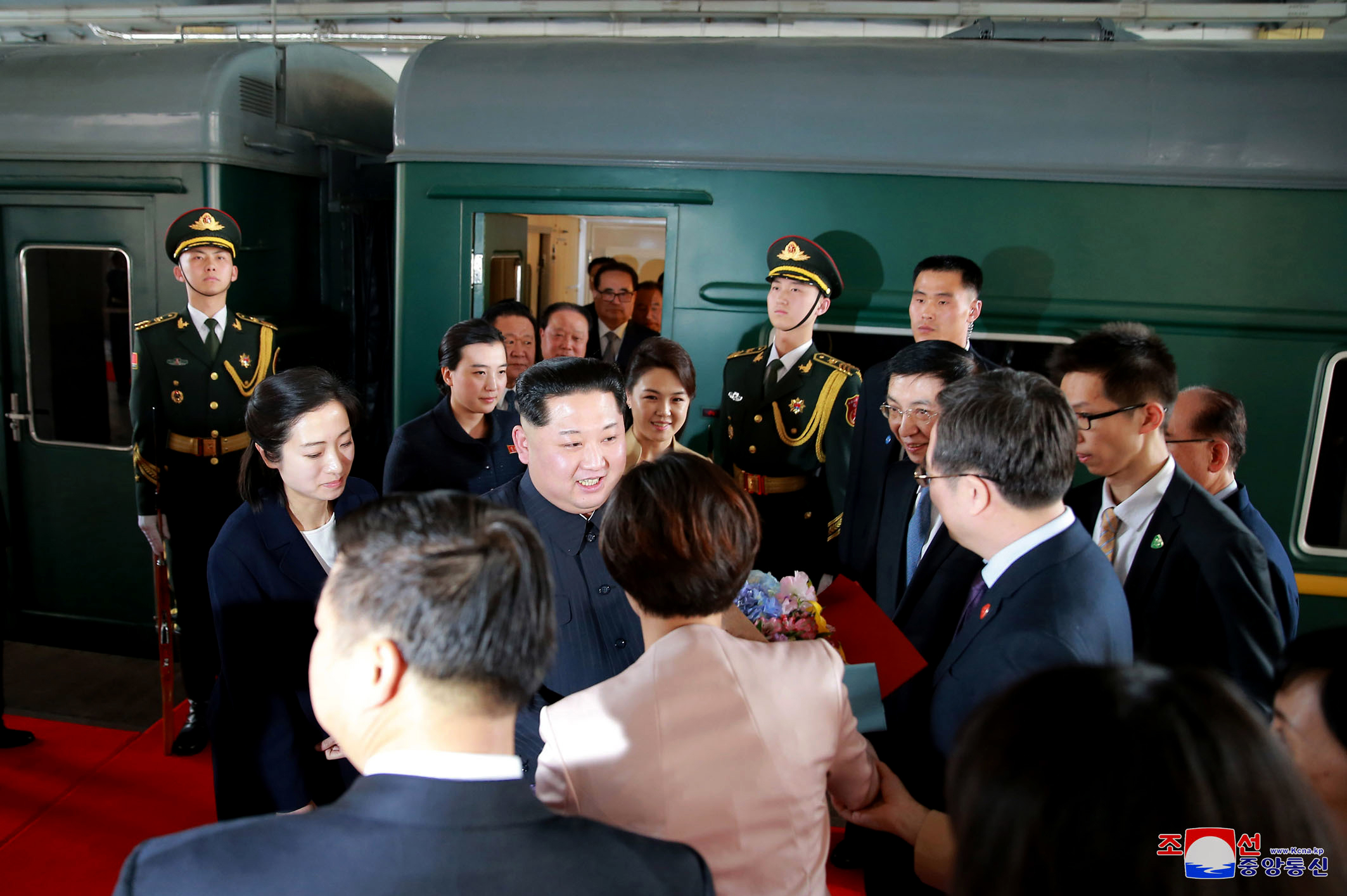
    He also said that Chinese President Xi Jinping said his meeting with the North Korean leader went well, and that a meeting with the U.S. was discussed. A diplomatic train arrived in Beijing on Tuesday, but it was unclear if Mr. Kim was on board. The Chinese later confirmed Mr. Kim’s presence, marking his first foreign visit since taking over in 2011.

    SEE ALSO: North Korean leader Kim Jong-un makes first visit to China, Beijing confirms

    “Received message last night from XI JINPING of China that his meeting with KIM JONG UN went very well and that KIM looks forward to his meeting with me. In the meantime, and unfortunately, maximum sanctions and pressure must be maintained at all cost!” he added.

    For years and through many administrations, everyone said that peace and the denuclearization of the Korean Peninsula was not even a small possibility. Now there is a good chance that Kim Jong Un will do what is right for his people and for humanity. Look forward to our meeting!

    — Donald J. Trump (@realDonaldTrump) March 28, 2018

    Received message last night from XI JINPING of China that his meeting with KIM JONG UN went very well and that KIM looks forward to his meeting with me. In the meantime, and unfortunately, maximum sanctions and pressure must be maintained at all cost!

    — Donald J. Trump (@realDonaldTrump) March 28, 2018

  • Donald Trump hits China with $60 billion in tariffs

    President Trump signed an order Thursday that cracked down on China’s unfair trade practices and theft of U.S. intellectual property with $60 billion in tariffs on high-tech imports.

    President Trump socked China with up to $60 billion in proposed trade tariffs, investment restrictions and plans for a formal complaint to the World Trade Organization, drawing immediate threats of retaliation from Beijing and sending the stock market into an epic nosedive Thursday over fears that the globe’s two biggest economies were heading for a trade war.

    Following though on the tough talk on trade that helped put him in the White House, Mr. Trump said the U.S. was finally cracking down on decades of unfair trade practices and theft of intellectual property. U.S. officials say these Chinese practices contributed to bilateral trade deficits for the U.S. of hundreds of billions of dollars annually.

    “We are doing things for this country that should have been done for many, many years,” the president said as he signed an order for tariffs and other get-tough measures on China.

    In comments that unnerved investors, Mr. Trump added, “This is the first of many.”

    The tariffs instruct the Commerce Department to target Chinese information technology, consumer electronics and telecoms, imposing import costs of $50 billion to $60 billion that roughly equal the value of U.S. technology lost to China because of the country’s onerous trade rules.

    China vowed retaliation.

    “China is not afraid of and will not recoil from a trade war,” the Chinese Embassy in Washington said in a statement. It said Mr. Trump’s tariffs would backfire and “directly harm the interests of U.S. consumers, companies, and financial markets.”

    Despite its huge surpluses, China is not without weapons in a trade fight. Beijing has signaled that it could strike back by cutting its soybean purchases from U.S. farmers. China is the biggest market for soybeans and many other U.S. agricultural products and is a crucial market for American aircraft, cotton, electrical machinery, cars and trucks, corn and coal.

    China is also the world’s largest holder of U.S. government debt — a double-edged sword as any move to hurt U.S. government credit could undercut the value of Beijing’s holdings as well.

    The sell-off on Wall Street was deep and immediate. All 30 stocks in the Dow Jones lost ground, and investment safe havens such as gold and U.S. Treasury bonds jumped in value.

    The Dow Jones industrial average tumbled more than 724 points, or 2.93 percent, to fall below the 24,000 mark. The broader S&P 500 slipped more than 68 points, or 2.52 percent, and the Nasdaq fell more than 178 points, or 2.43 percent.

    It was the worst day for the Dow since a chaotic sell-off in February and the blue chip index’s worst March free fall in 17 years.

    “If the Dow is allowed to vote, you can see what their vote is today: They don’t like it,” Rick Helfenbein, president of American Apparel & Footwear Association, said on Fox Business Network.

    Like many U.S. industries still in the dark on where exactly the Trump administration’s tariffs will land, Mr. Helfenbein said he hoped the tariffs wouldn’t hit his sector.

    Trade moves

    The China decision came close on the heels of a string of other trade moves to implement Mr. Trump’s “America first” economic agenda and reverse what he sees as decades of misguided U.S. trade policy promoting open markets and multilateral trade agreements.

    The administration announced tariffs on steel and aluminum imports this month, although a number of markets, including Canada, Mexico, the European Union, South Korea and Australia, will be exempted initially from the tariffs. Mr. Trump since the beginning of the year has put tariffs on Chinese solar panels and South Korean washing machines. A week later, China’s biggest maker of solar panels announced plans to open a U.S. factory.

    The U.S. is also locked in lengthy talks with Canada and Mexico over Mr. Trump’s demand for a renegotiation of the North American Free Trade Agreement. The president has vowed to leave the 24-year-old pact if a new agreement is not reached.

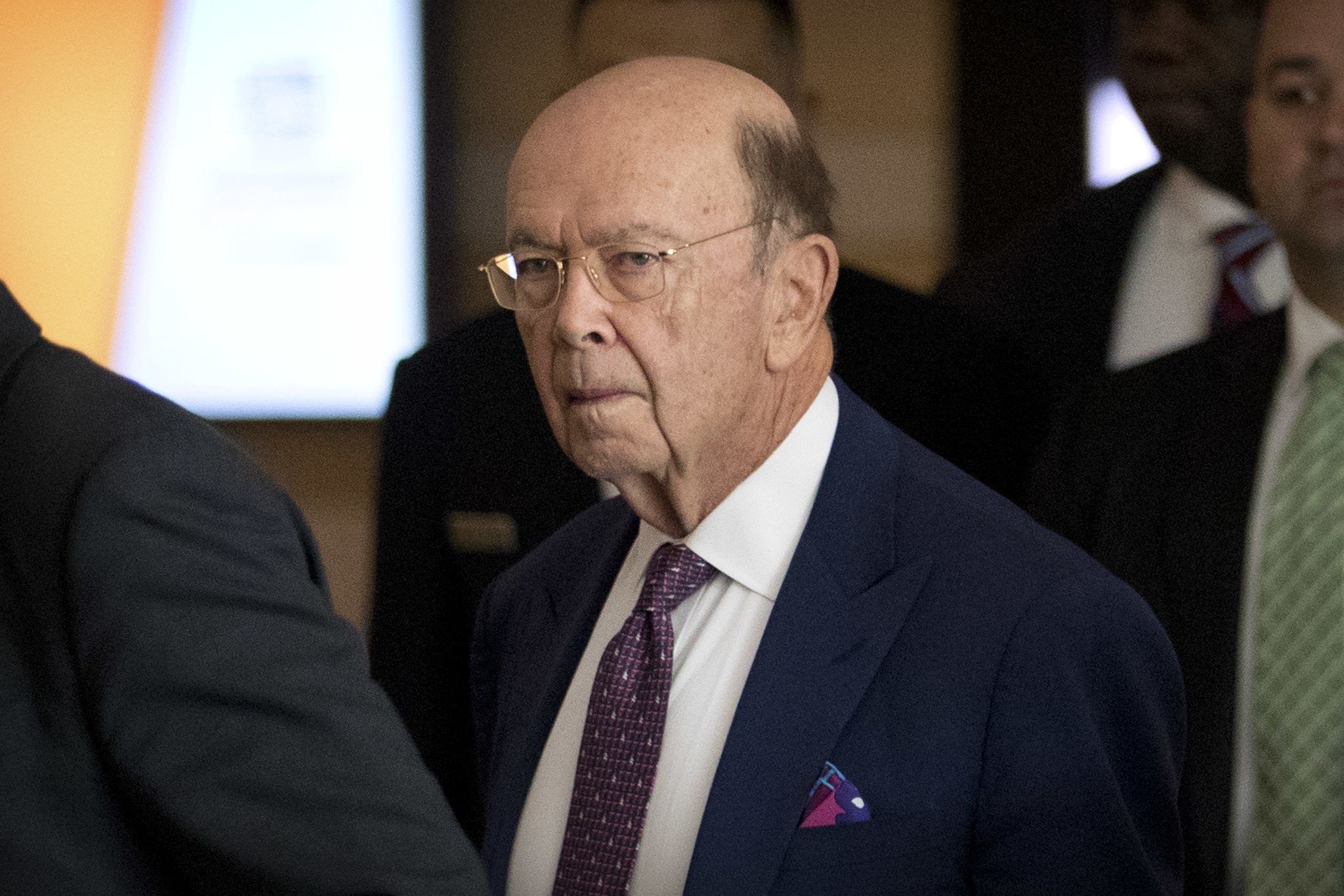
    Commerce Secretary Wilbur L. Ross Jr., a prime advocate of the tariffs, acknowledged that China was likely to retaliate against American companies.

    Many expect Beijing to target states where the president is most popular, but Mr. Ross played down the prospect of an all-out trade war.

    “We will end up negotiating these things rather than fighting over them, in my view,” Mr. Ross told Bloomberg News.

    With U.S. companies long complaining about China’s failure to protect foreign investors’ intellectual property rights, the president’s order focused on technology imports. But the list of items subject to the tariff could expand to include such items as clothing and shoes.

    The tariffs are being imposed under Section 301 of the Trade Act of 1974 that authorizes the president to take action or retaliation against unjustified, unreasonable or discriminatory foreign trade laws that hurt U.S. commerce. They are part of a package of measures to combat Beijing’s aggressive trade tactics, including forced intellectual property transfers for U.S. companies as the price of doing business in China.

    The actions included:

    ⦁ Adding 25 percent to tariffs on products supported by China’s unfair industrial policy, including aerospace, cellphones, computers and machinery.

    ⦁ Opening a World Trade Organization case against China’s discriminatory technology licensing practices.

    ⦁ New restrictions on Chinese companies buying into U.S. technology business.

    At the White House signing ceremony, Mr. Trump was surrounded by former top national security officials and CEOs from defense companies Raytheon, Lockheed Martin, General Atomics and Leidos.

    Lockheed Martin CEO Marillyn Hewson called it a “very important moment for our country.”

    “We are addressing what is a critical area for the aerospace and defense industry, and that is protecting our intellectual property,” she said. “That is the lifeblood of our companies. And so we very much welcome this action on the part of the Trump administration and the president of the United States.”

    Corporate angst

    U.S. Trade Representative Robert Lighthizer, who spearheaded the action against China, said the Trump administration was moving to protect America’s future.

    “Technology is really the backbone of the future of the U.S. economy,” he said.

    Still, leaders from many business sectors overwhelmingly opposed the tariffs and warned that it would be a tax ultimately paid by U.S. consumers.

    “The internet industry has serious concerns with the impact of these tariffs — and potential retaliatory actions — on American jobs, consumers, and the digital economy,” said Melika Carroll of the Internet Association, an industry lobbying group.

    The Business Roundtable, an association of CEOs from the biggest U.S. companies, said in a statement that the Trump tariffs “will only raise prices in America, make American companies and products less competitive, and harm U.S. workers and consumers.”

    Mr. Trump brushed aside the concerns.

    Emphasizing that America’s $800 billion trade deficit with the world could not be allowed to continue, Mr. Trump said other trading partners such as South Korea and the European Union were begging to make deals in the face of his tough trade policies.

    The U.S. trade deficit with China topped $375 billion last year, but Mr. Trump cited calculations that put it over $500 billion.

    He said the tariffs, which do not take effect immediately, had already brought Beijing to the negotiating table. Since taking office, Mr. Trump has been pressing Chinese President Xi Jinping and other top officials to rein in unfair trade restrictions and lower the trade deficit by $100 billion.

    “We are in the midst of very major and very positive negotiations,” the president said.

    But pulling the trigger on tariffs could pressure Mr. Xi to respond at least as hard to show his own government that he can’t be bullied.

  • Karl Marx statue in Trier, Germany, gets mixed reactions ahead of 200 birthday

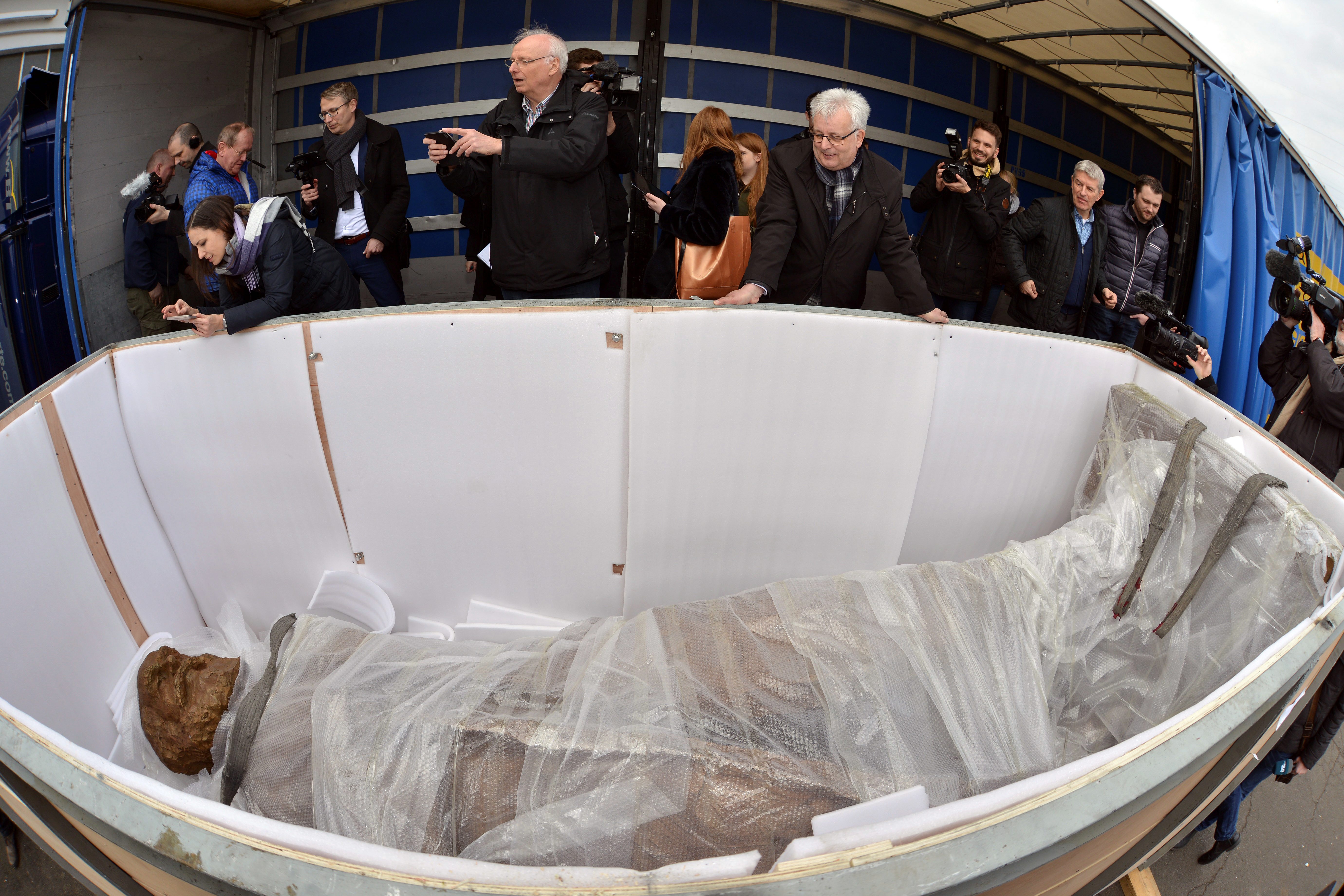
    A towering bronze statue of Karl Marx, a gift of China’s communist government, arrived in Germany on Tuesday two months ahead of a celebration honoring the Communist Manifesto author’s 200th birthday

    A towering bronze statue of Karl Marx, a gift of China’s communist government, arrived in Germany on Tuesday two months ahead of a celebration honoring the Communist Manifesto author’s 200th birthday in his birthplace of Trier.

    But the gift is getting a sharply mixed reaction. Some say the statue honoring the author of “Das Kapital” and the Communist Manifesto celebrates a thinker whose ideas were embraced by some of history’s deadliest regimes. The head of the European Union’s executive arm is taking flak over reports that he may take part in the bicentennial celebrations this spring.

    European politicians and opponents of communism have denounced the statue’s installation and other festivities marking the bicentennial. They say the celebration is a slap in the face to millions who suffered under governments acting in the philosopher’s name.

    Marion Smith, executive director of the Victims of Communism Memorial Foundation, a Washington-based nonprofit, questioned the wisdom of celebrating a thinker whose ideas have led to “some of the greatest episodes of human suffering in all of history.”

    “Every time Marxism has tried, it resulted in abject economic collapse or a repressive police state — or, as we are seeing right now in Venezuela, both,” Mr. Smith said in a statement. “The 200th anniversary of Karl Marx’s birth should not be celebrated, but instead marked by serious historical reflection on the human calamities caused by more than 100 years of communist tyranny.”

    Designed by sculptor Wu Weishan, the 14-foot-tall superstructure depicts Marx with a bushy beard, pensive gaze and flowing frock coat. He carries a book in his left hand and steps slightly forward with his left foot.

    The statue will be unveiled May 5 in Trier’s Simeonstift Plaza, right next to the house where the revolutionary thinker was born. Other celebrations marking Marx’s 200th birthday will accompany the unveiling.

    The Karl Marx House, now a museum, will debut an exhibition, “From Trier to the World: Karl Marx, His Ideas and Their Impact to This Day.”

    Jean-Claude Juncker, president of the European Commission, the European Union’s executive arm and one of the Continent’s most well-known leaders, is expected to speak at the opening of an exhibition, “Karl Marx 1818-1883, Life, Works, Time,” at the Basilica of Constantine in Trier.

    Daniel Kawczynski, a British member of Parliament who fled the Soviet-dominated communist regime in Poland as a 7-year-old, said an appearance from Mr. Juncker would be in “very poor taste” and encouraged him to turn down the invitation.

    “Marxism led to the killing of millions around the world as it allowed a small band of fanatics to suppress the people. We must learn the lessons from this and share with our children,” Mr. Kawczynski told Express.

    A spokesperson for Mr. Juncker did not confirm nor deny his plan to attend the Marx exhibition, saying his schedule is released publicly only a week in advance.

    Troubled relationship

    Trier, a Rhineland town in southwestern Germany best known for its spectacular Roman ruins and architecture, has always had a troubled relationship with its famous son. Marx and his wife, Jenny, were born in the city, and the young scholar and revolutionary spent the first 17 years of his life in Trier.

    More than four decades after his death in London in 1883, the leftist Social Democratic Party turned his boyhood home into a museum. Adolf Hitler’s Nazis gutted the site and used it for a party newspaper. The museum was resurrected after Germany’s defeat in World War II and got a post-Cold War boost in interest when the financial crisis shook the world in 2008.

    Officials say the site now attracts some 40,000 visitors a year and that the biggest non-German contingent comes from China.

    Mr. Kawczynski said erecting a statue of Marx in Germany, which endured decades of division before the Soviet empire collapsed in 1989, is equivalent to “unveiling a statue of Mussolini” in Italy.

    Since the fall of the Berlin Wall, Germany has grappled with how to acknowledge a thinker as consequential and controversial as Marx.

    The Trier City Council approved the statue’s installment last year on a 42-11 vote, despite objections from some residents who are ashamed of the town’s association with the revolutionary thinker and suspicious of China’s motive behind the gift.

    “Setting up a statue of a man who played a major role in the development of communism is a shame and not an honor for Trier,” one resident of Trier told the local newspaper, as reported by the English-language website Deutsche Welle.

    But Trier Mayor Wolfram Leibe told the British Telegraph newspaper at the time that the vote “has nothing to do with glorification” of Marx or his ideas. “Those times are over.”

    Andreas Ludwig, who heads Trier’s planning department, told the newspaper: “That the largest country on earth has thought about the small town of Trier is great. 150,000 Chinese tourists come every year to Trier — and that could rise even more.”

    Beijing also financed a statue of Friedrich Engels, who co-wrote the Communist Manifesto, that was erected in his hometown of Wuppertal in 2014.

    Mr. Smith said China’s promotion of Marx is not surprising, given the continuing dominance of the Chinese Communist Party long after other communist regimes were relegated to what Marxists would call the dustbin of history.

    “It’s telling that the statue in Trier is being donated by the People’s Republic of China — the largest totalitarian state in the 21st century,” he said. “Right now, Beijing is building a digital surveillance state the likes of which even George Orwell could not imagine, conducting campaigns of outright cultural genocide in Tibet and Xinjiang, and implementing a ‘social credit system’ to rank its more than 1 billion citizens by their commitment to Marxist ideology.”

  • China’s investment in Greece tangles Europe relations

    Since 2008, Chinese business leaders have agreed to almost $9 billion worth of infrastructure and business deals — equivalent to about 5 percent of Greek gross domestic product — involving ports, te

    ATHENS, Greece — Unlike many in Europe, Chinese investors saw the Greek economic crisis of the past decade not as a disaster but as an opportunity.

    Since 2008, Chinese business leaders have agreed to almost $9 billion worth of infrastructure and business deals — equivalent to about 5 percent of Greek gross domestic product — involving ports, telecommunications companies, energy facilities, real estate and tourism, according to the American Enterprise Institute.

    For many, it’s a case study of how Chinese investment dollars lead to political payoffs. As Greek political leaders feuded with principal members of the European Union — notably Germany — over an imposed policy of harsh austerity, China offered an economic lifeline. In return, Greece became a leading voice inside the EU to take a softer line on China’s political failings and to offer a warmer welcome to Chinese investments.

    SEE ALSO: China’s foothold in Europe

    “The Greek economy is thirsty for investments, and the presence of Chinese companies is important and we welcome it,” Greek Prime Minister Alexis Tsipras said in September during a business conference in Thessaloniki that featured representatives of Chinese business.

    Although the economic situation has improved, Greece remains mired in a decade of economic turmoil. The unemployment rate still tops 20 percent, growth lags and punitive high taxes are necessary to pay off a debt burden that amounts to 180 percent of GDP.

    The Institute of International Economic Relations, in a major survey of the burgeoning Sino-Greek economic relations released in December, noted that “Greece’s debt crisis has definitely contributed to the rapprochement between Athens and Beijing.”

    SEE ALSO: China’s involvement in Piraeus, Greece

    Chinese officials have openly played on the tensions between Greece and its fellow EU states. The state-controlled Chinese news site Global Times noted in an editorial that “different from the EU, which has treated Athens as a delinquent borrower, Beijing designates the country as a ‘trusted partner.’”

    At a popular level, Greeks are split. Many are thankful that China invested at a time when few other foreigners would take a chance and say Greece badly needed the cash and the jobs. A Pew Research Center survey in early 2017 found that 50 percent of Greeks had a positive attitude toward China, compared with 40 percent negative. The Greek pollster Kapa Research last year found China behind only Russia among countries that Greeks would most like to see closer bilateral relations.

    Culture clash 

    But others are concerned about Chinese influence and Chinese-style management in a southern European country, where management traditionally respects labor rights and workplace conditions.

    China Ocean Shipping Co., or COSCO, a state-owned company, purchased a majority stake in the port of Piraeus from the Greek government in 2016 for $456 million — the largest Chinese investment in Greece to date. The port is now a major node in China’s $1 trillion Belt and Road initiative, a system of trade routes and infrastructure projects that follow the old Silk Road and maritime passages through the Indian Ocean and Suez Canal.

    Labor unions negotiating a new contract with COSCO are likely to have to accept lower wages. Since 2009, when a COSCO subsidiary purchased two piers at Piraeus, workers lost overtime and faced pay cuts of 30 percent.

    “This deal shouldn’t make the port into a Chinese colony,” said Giorgos Gogos, secretary of the Piraeus dockworkers union. “It’s important to secure good labor conditions and make sure the state actually profits from the investment.”

    As real estate prices in Greece continue to fall, 850 Chinese nationals have purchased properties worth more than $310,000, making them eligible for Golden Visas that allow them to travel within 26 European countries that have eliminated internal border controls. Golden Visas have generated more than $500 million in revenue for Athens, according to Enterprise Greece, a state economic development agency.

    Even so, Chinese money is raising political questions about Beijing’s influence in Greece and its long-term ambitions for countries all along Europe’s eastern flank.

    In June, Greece’s left-wing government surprised European leaders by blocking a critical EU statement at the U.N. Summit on China’s human rights record. A year earlier, Greece, Croatia and Hungary — where Chinese investments are also extensive — opposed a joint EU statement on China’s military expansion in the South China Sea. Without the required consensus, the EU statement was blocked.

    “China uses Greece in order to have a strong foothold in the European Union,” said Michael Tsinisizelis, a professor of international and European studies at the University of Athens.

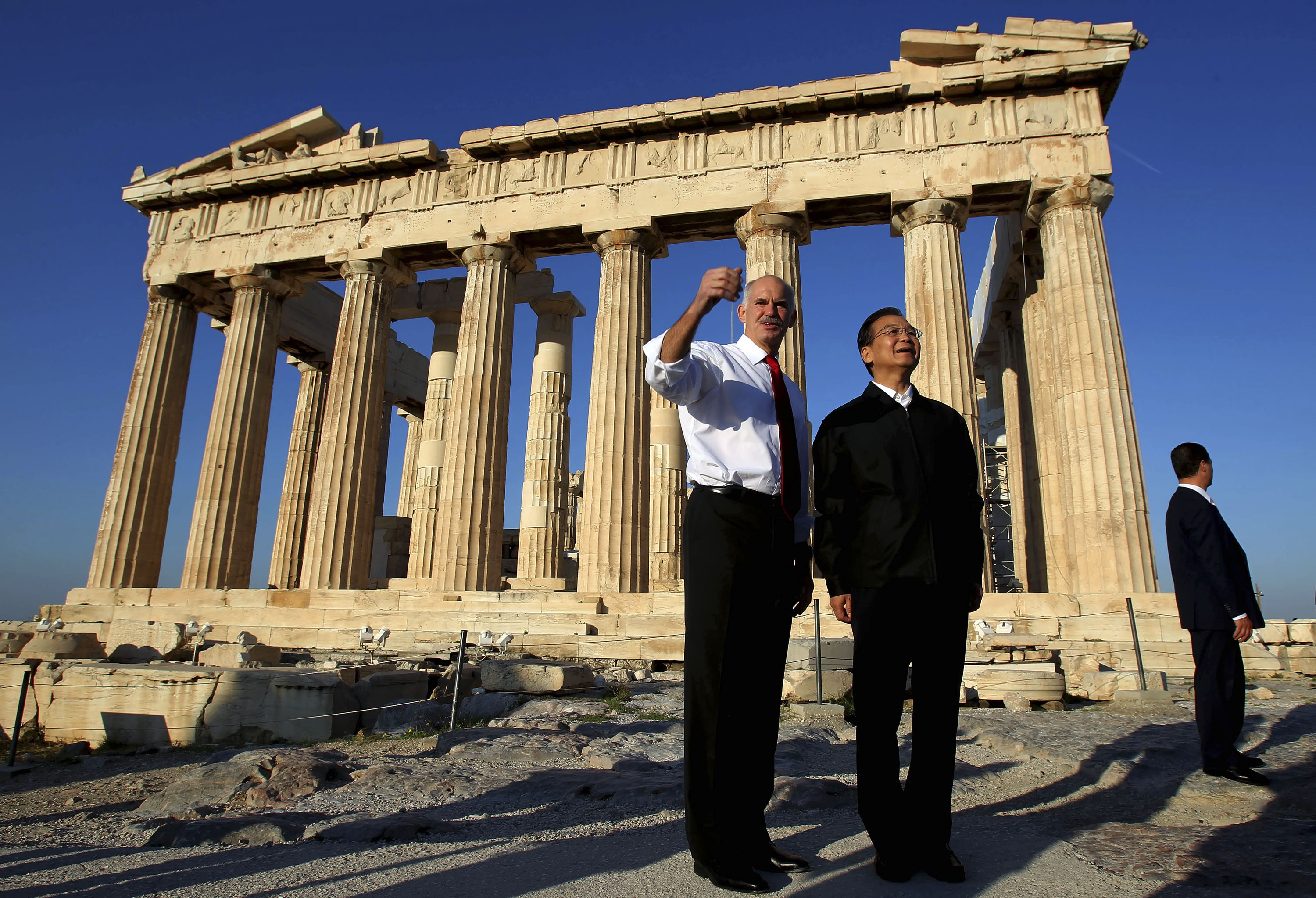
    Greece is in line for membership in Beijing’s Asian Infrastructure Investment Bank. In November, the government sent a delegation to the so-called 16+1 annual summit of China with 16 Eastern and Central European nations. Athens and Beijing in May signed a three-year action plan to guide investment and trade deals. In December, French President Emmanuel Macron delivered an ardent speech under the Acropolis, where he expressed concern about Greek and European economic weaknesses that Beijing could target and keep the bloc from speaking with a united voice about global issues.

    “Our European sovereignty is what will enable us to be digital champions, build a strong economy, and make us an economic power in this changing world and not be subjected to the law of the fittest — the Americans and, soon, the Chinese — but our own law,” he said.

    China is now the EU’s second-biggest trading partner behind the United States. In 2016, China spent $40 billion compared with $23 billion in the prior year.

    Regulation

    While COSCO is expanding its footprint at Piraeus, among the world’s fastest-growing ports, the EU is looking to closely regulate foreign investments in European strategic assets, including ports.

    “There’s a general uneasiness in the EU concerning Chinese investments,” said Polyxeni Davarinou, a researcher at the Institute of International Economic Relations in Athens. “The EU wants to have a better control. At the same time, though, Greece and Eastern European countries really need these Chinese investments.”

    She said Greece and Europe have the power to contain Chinese influence if leaders enact bold rules to monitor foreign investment.

    “There are voices in Europe that believe Greece is too close to China, and that’s because we’ve given them reasons to see it that way,” she said. “Greece’s problem is how to develop a clear and steady strategy.”

    The survey by the Institute of International Economic Relations noted that Greece is still emerging from a period when it could hardly afford to be choosy about who invested in its beleaguered domestic economy.

    “It is an indisputable fact that, trapped in its severe fiscal and economic predicament, Greece is not in a position to discourage foreign investment from any legitimate source,” the report concluded. “In fact, a certain diversification of foreign investment from countries outside the EU is even welcome.”

    But the survey also cautions that, “engulfed by its economic woes and disenchantment with the EU, Greece welcomes China with a coherent strategy.”

    In Piraeus, meanwhile, cranes are offloading shipping containers from huge cargo ships around the clock. COSCO is planning to invest an extra $372 million to build three five-star hotels and a new dock that can accommodate 14 cruise ships.

    Still, Mr. Gogos, the union leader, is pessimistic about Greece’s recovery. No matter how much Chinese money flows into Greece, he said, the country is still laboring to repay its debts. Greeks won’t see the benefits of their hard work for generations, he said.

    “Nothing will change for Greece,” Mr. Gogos said. “All the money ends up in the country’s black hole, repaying its humongous public debt instead of rebuilding the economy.”

  • U.S. Navy carrier’s visit to Vietnam puts China on notice

    For the first time since the Vietnam War, a U.S. Navy aircraft carrier is paying a visit to a Vietnamese port, seeking to bolster both countries’ efforts to stem expansionism by China in the South Chi

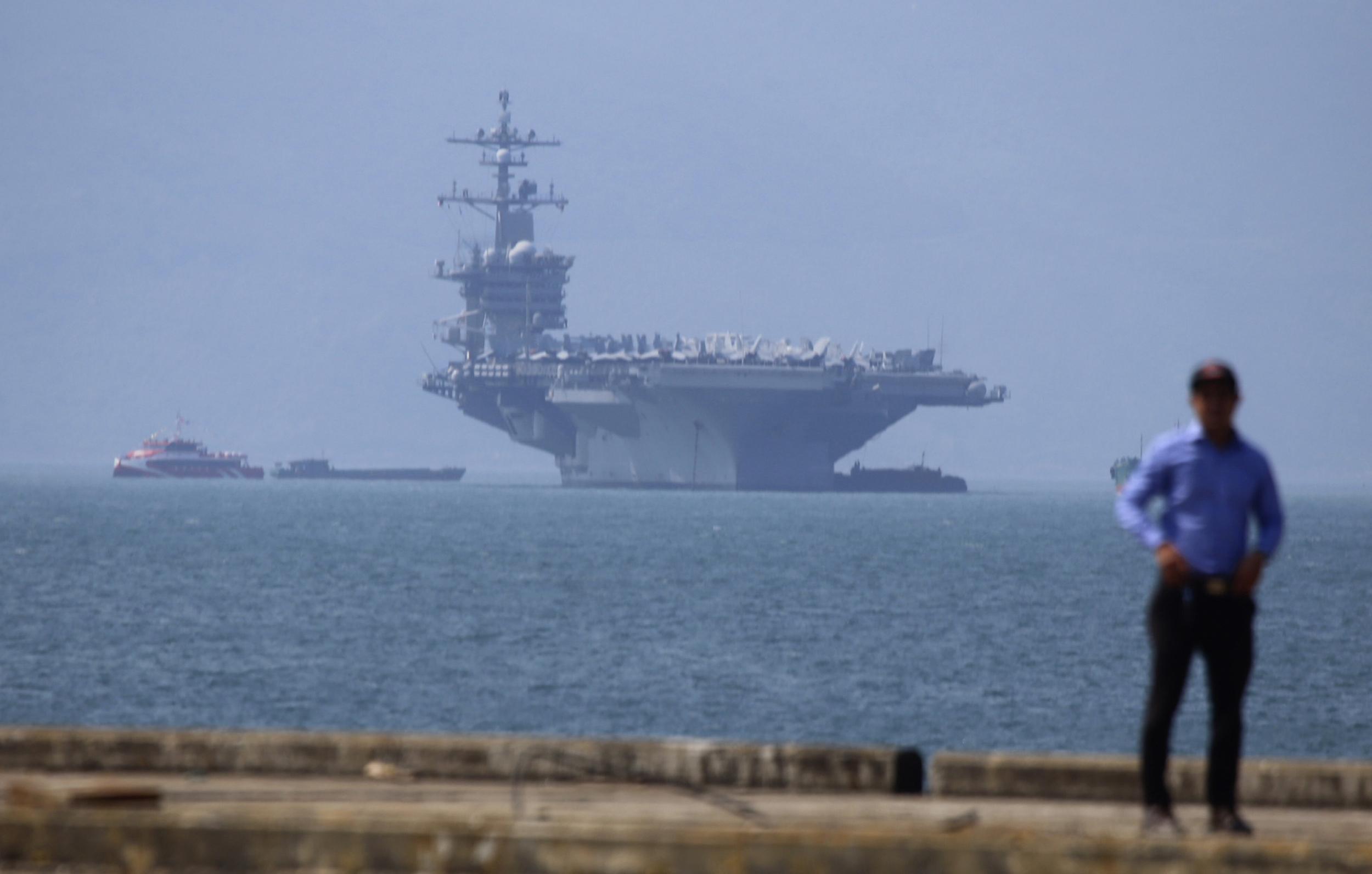
    DANANG, Vietnam (AP) — For the first time since the Vietnam War, a U.S. Navy aircraft carrier is paying a visit to a Vietnamese port, seeking to bolster both countries’ efforts to stem expansionism by China in the South China Sea.

    Monday’s visit by the USS Carl Vinson brings more than 5,000 crewmembers to the central coastal city of Danang, the largest such U.S. military presence in Vietnam since the Southeast Asian nation was unified under Communist leadership after the war ended in 1975.

    The Carl Vinson, accompanied by a cruiser and a destroyer, is visiting as China increases its military buildup in the Paracel islands and seven artificial islands in the Spratlys in maritime territory also claimed by Vietnam. China claims most of the South China Sea and has challenged traditional U.S. naval supremacy in the western Pacific.

    SEE ALSO: China’s influence to be major focus of Rex Tillerson’s Africa trip

    “The visit of aircraft carrier USS Carl Vinson to Vietnam signifies an increased level of trust between the two former enemies, a strengthened defense relationship between them, and reflects America’s continued naval engagement with the region,” said Le Hong Hiep, a research fellow at the Singapore-based ISEAS-Yusof Ishak Institute.

    The ship’s mission includes technical exchanges, sports matches and visits to an orphanage and a center for victims of Agent Orange, a toxic defoliant sprayed by U.S. forces to deny cover for Communist fighters during the war. It marks a fine-tuning, rather than a turning point, in relations. The U.S. Navy has staged activities in Vietnam for its Pacific Partnership humanitarian and civic missions in nine of the past 12 years.

    U.S. Ambassador Daniel Kritenbrink praised the carrier’s visit.

    “I think the visit by USS Carl Vinson demonstrates our commitment to the U.S- Vietnam partnership. It also demonstrates the dramatic progress we made in our bilateral relationship in recent years,” he said.

    The ambassador said the two countries share a range of interests that include “a desire to maintain peace, prosperity, unimpeded commerce, freedom of navigation upon which the region and its economies depend.”

    The United States normalized relations with Vietnam in 1995 and lifted an arms embargo in 2016, and the two former adversaries have steadily improved relations in all areas, including trade, investment and security.

    The visit of an aircraft carrier – a more than 100,000-ton manifestation of U.S. global military projection – reaffirms closer relations as Beijing flexes it political, economic and military muscle in Southeast Asia, and Washington seeks to re-establish its influence.

    “Although the visit is mainly symbolic and would not be able to change China’s behavior, especially in the South China Sea, it is still necessary in conveying the message that the U.S. will be there to stay,” Hiep said.

    Separately from this week’s mission, U.S. officials say American warships continue sailing without prior notice close to China-occupied islands and atolls, an aggressive way of signaling to Beijing that the U.S. does not recognize its sovereignty over those areas.

    Hiep said the Carl Vinson’s visit is likely to irritate China, but that Beijing will not take it too seriously.

    “They understand well the strategic rationale behind the rapprochement between Vietnam and the U.S., which was largely driven by China’s growing assertiveness in the South China Sea,” he said. “However, China also knows that Vietnam is unlikely to side with the U.S. militarily to challenge China.”

    Vietnam, while traditionally wary of its huge northern neighbor, shares China’s system of single-party rule and intolerance for political dissent.

    Economic relations with the United States in recent years have served as a counterbalance to Vietnam’s political affinity with China.

    “The United States now is a very important trading partner with Vietnam and it is the most important destination of Vietnam’s exports,” said Joseph Cheng, a professor of political science at the City University of Hong Kong. “In terms of security, both countries certainly share substantial common interest in the containment of China in view of the territorial dispute between China and Vietnam.”

    “However, it seems that Vietnam does not intend to become an ally of the United States. It is basically a kind of hedging strategy, a kind of balance of power strategy,” he said.

    The first U.S. Marines arrived in Danang in 1965, marking the beginning of large-scale American involvement in the Vietnam War. Some 58,000 American soldiers and an estimated 3 million Vietnamese were killed in the war.

    Danang, which was a major U.S. military base during the war, is now Vietnam’s third-largest city and is in the midst of a construction boom as dozens of resorts and hotels pop up along its scenic coastline.

    Several Danang residents said Monday that they welcomed the Navy visit.

    “During the war, I was scared when I saw American soldiers,” said Tran Thi Luyen, 55, who runs a small coffee shop in the city. “Now the aircraft carrier comes with a completely different mission, a mission of peace and promoting economic and military cooperation between the two countries.”

    Huynh Quang Nguyen, a taxi driver, echoed the sentiment.

    “I’m very happy and excited with the carrier’s visit,” he said. “Increased cooperation between the two countries in economic, diplomatic and military areas would serve as a counterbalance to Beijing’s expansionism.”

    ___

    This story has been corrected to show that ship has more than 5,000 crewmembers, not 6,000.