Tag: Russia

  • Democrats call for multi-agency investigation into Russian sanctions

    Three top Democratic senators have called for multi-agency inspectors general investigations into what they argue is a failure by the Trump administration to fully implement congressionally mandated s

    Three top Democratic senators have called for multi-agency inspectors general investigations into what they argue is a failure by the Trump administration to fully implement congressionally mandated sanctions against Russia.

    Last year Congress voted nearly unanimously to create the Countering America’s Adversaries Through Sanctions Act (CAATSA) in order to pressure President Trump to clamp down on Russia in response to Kremlin meddling in the 2016 presidential election.

    In a May 18 letter to the inspectors general of the State and Treasury Departments as well as the U.S. Intelligence Community, the three senators argue the Trump administration has sent mixed signals, or been inactive in implementing seven mandatory CAATSA provisions, despite evidence of sanctionable activity.

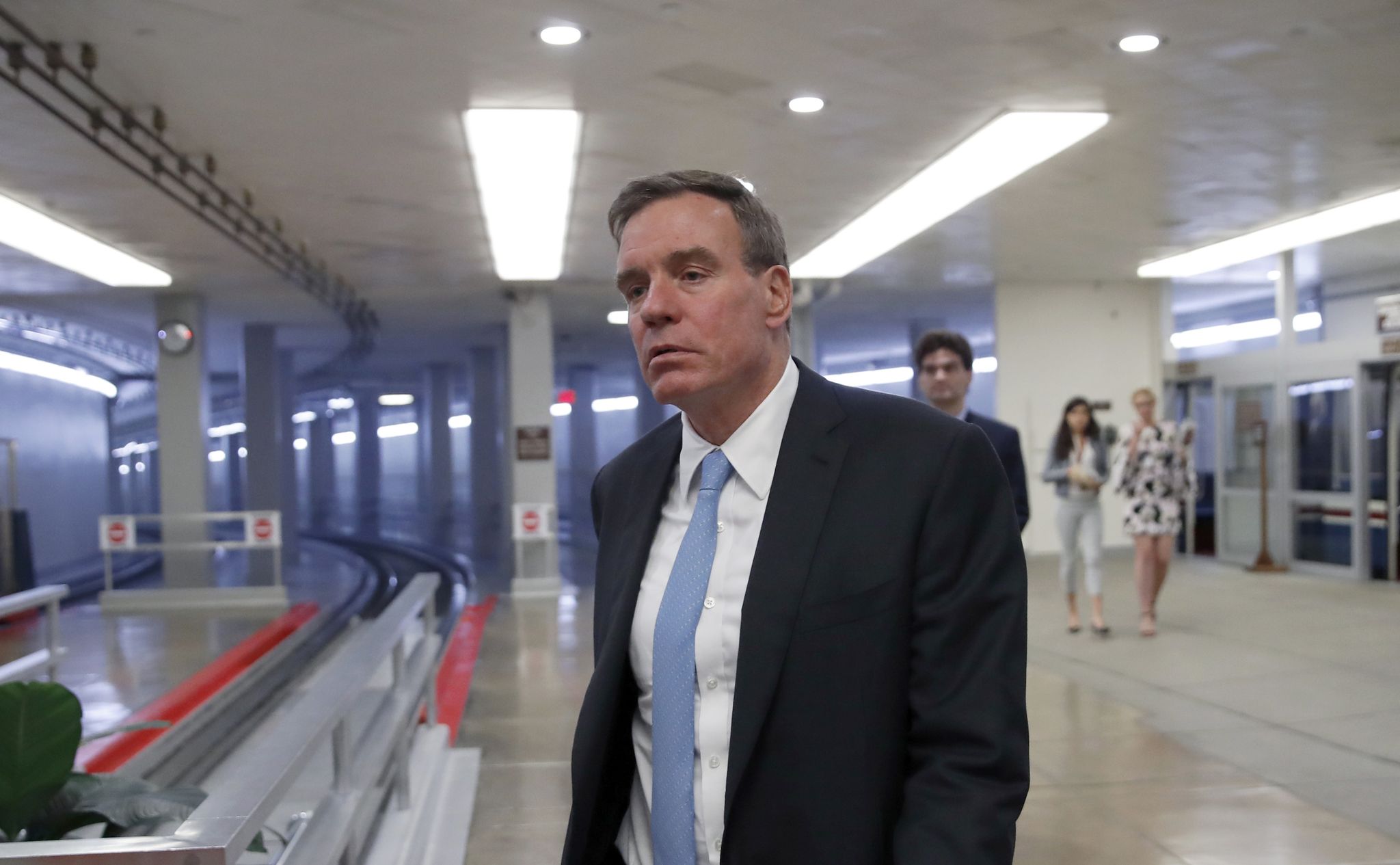
    “Several mandatory provisions of the law have not been implemented by the administration, despite strong evidence that actions taken by or on behalf of the Russian government are in violation of the CAATSA sanctions law and applicable executive orders codified by CAATSA,” Sen. Bob Menendez, New Jersey, Sen. Mark Warner, Virginia and Sen. Sherrod Brown, Ohio wrote on Friday.

    Mr. Menendez, Mr. Warner and Mr. Brown are the top Democrats on the Senate’s foreign relations, intelligence, and banking committees, respectively.

    CAATSA primarily targets Russia’s defense and intelligence sectors and those who do business with them. The senators also say the Trump White House has not followed through addressing related sanctions and penalties.

    “We also remain concerned that the administration has not formally determined whether individuals are conducting significant transactions with the Russian defense and intelligence sectors under Section 231 [part of CAATSA],” they wrote. “Without such determinations, it is impossible to ascertain whether individuals are substantially reducing significant transactions with these entities as outlined in the law.”

    The senators also argue the administration did not follow through last month with additional sanctions against Russia for supporting Syrian President Bashar al-Assad despite Nikki Haley, the U.S. ambassador to the United Nations, having announced new sanctions would be forthcoming.

    Senior Trump administration officials maintain they are pushing back harder on Russian President Vladimir Putin than the Obama administration, while Democrats say Mr. Trump has shown a reluctance to use the full force of CAATSA.

  • Vladimir Putin promises economic reforms as he takes oath of office

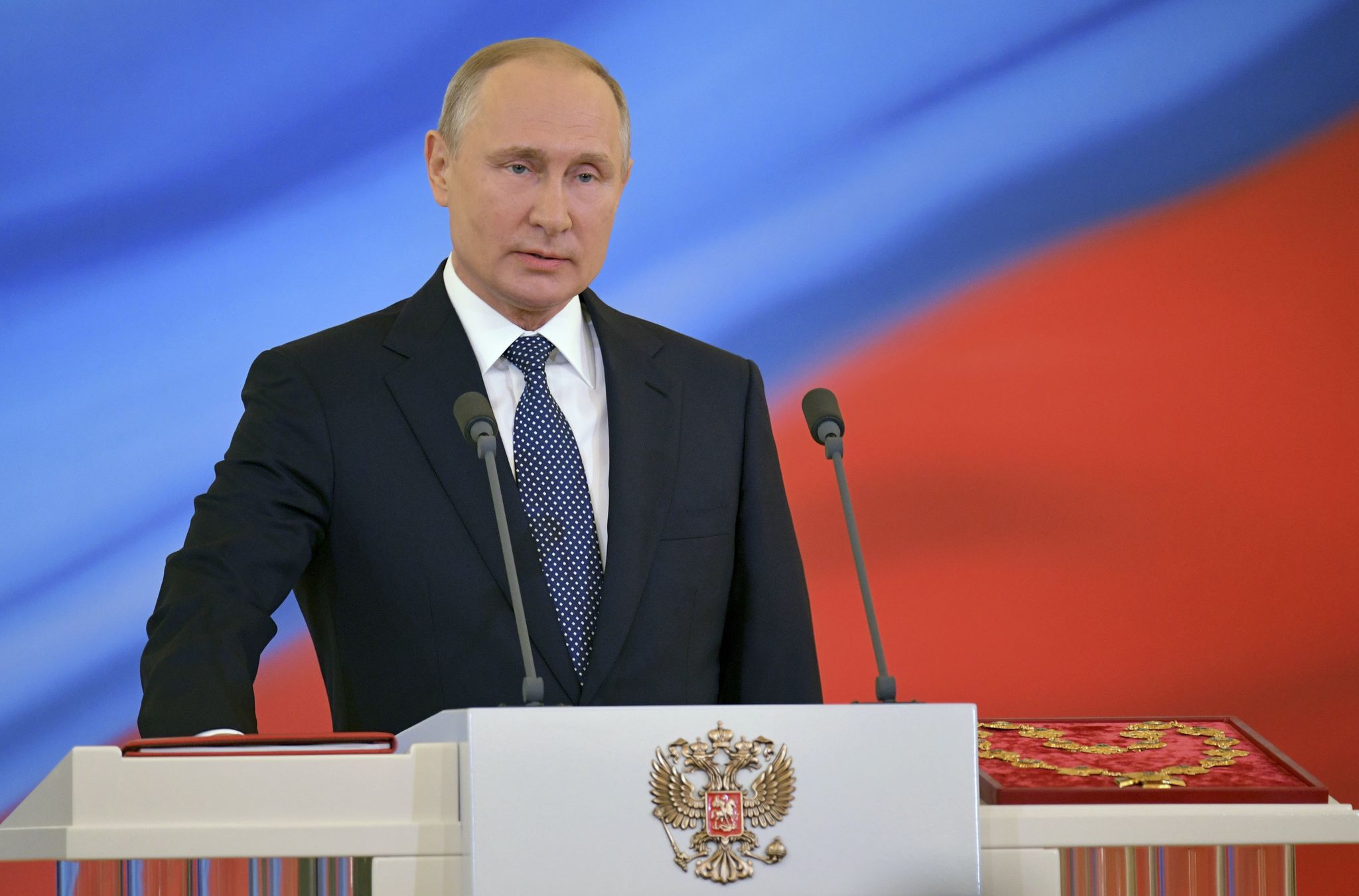
    Vladimir Putin took the oath of office for his fourth term as Russian president on Monday and promised to pursue an economic agenda that would boost living standards across the country.

    MOSCOW (AP) — Vladimir Putin took the oath of office for his fourth term as Russian president on Monday and promised to pursue an economic agenda that would boost living standards across the country.

    In a ceremony in an ornate Kremlin hall, Putin said improving Russia’s economy following a recession partly linked to international sanctions would be a primary goal of his next six-year term.

    “Now, we must use all existing possibilities, first of all for resolving internal urgent tasks of development, for economic and technological breakthroughs, for raising competitiveness in those spheres that determine the future,” he said in his speech to thousands of guests standing in the elaborate Andreevsky Hall of the Grand Kremlin Palace and two adjacent halls.

    “A new quality of life, well-being, security and people’s health — that’s what’s primary today,” he said.

    Although Putin has restored Russia’s prominence on the world stage through military actions, he has been criticized for inadequate efforts to diversify Russia’s economy away from its dependence on oil and gas exports and to develop the manufacturing sector.

    Putin held onto the presidency in March’s election when he tallied 77 percent of the vote.

    Putin has effectively been the leader of Russia for all of the 21st century. He stepped down from the presidency in 2008 because of term limits, but was named prime minister and continued to steer the country until he returned as president in 2012.

  • Natalia Veselnitskaya: Fusion GPS co-founder Glenn Simpson ‘framed’ in production of Steele dossier

    A Russian lawyer who has employed Fusion GPS says co-founder Glenn Simpson was “framed” in the production of the infamous Christopher Steele dossier.

    A Russian lawyer who has employed Fusion GPS says co-founder Glenn Simpson was “framed” in the production of the infamous Christopher Steele dossier.

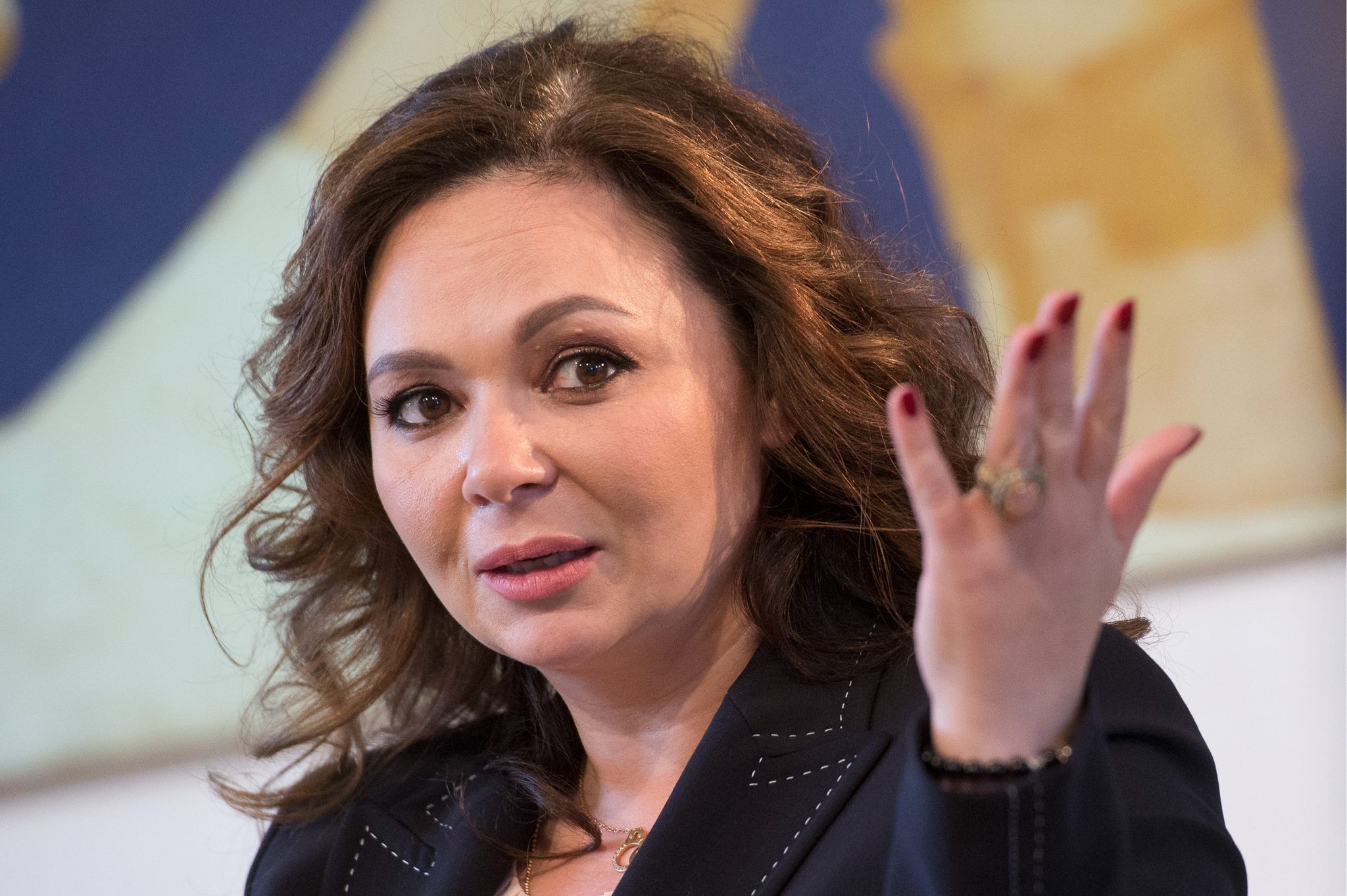
    Natalia Veselnitskaya provided the titillating assessment to The Associated Press in Moscow, where she also said Mr. Simpson’s most famous product, the anti-Trump dossier, is “absolute nonsense.”

    “She insisted that Glenn Simpson, whose firm Fusion GPS was hired to compile the dossier and who was questioned by the House Intelligence Committee in January, had been ‘framed,’ ” the AP story says.

    The story provides no context for who was doing the framing or why. Mr. Simpson’s attorney didn’t return a message seeking comment.

    The Veselnitskaya interview underscores the odd alliances of people in the Trump-Russia collusion narrative, now nearly two years old.

    Ms. Veselnitskaya is most famous for being the Russian lawyer who met on June 9, 2016, in Trump Tower with Donald Trump Jr. and other Trump campaign people.

    Russian contacts told Mr. Trump Jr. she wanted to dish dirt on Hillary Clinton. But the story provided by Mr. Trump Jr. and others is that she had no such information. Her gambit was to talk about removing U.S. economic sanctions on Russian oligarchs and businesses.

    At the time, Ms. Veselnitskaya was paying Mr. Simpson, via the law firm Baker Hostetler, to do investigative work for her client, Prevezon Holdings. The Justice Department in 2017 would announce that Prevezon laundered stolen Russian tax dollars and was paying back nearly $6 million.

    Prevezon is led by Denis Katsyv, a wealthy Russian who wants to remove U.S. sanctions.

    On June 9, 2016, a hearing on the civil forfeiture case brought Ms. Veselnitskaya to New York.

    The same Mr. Simpson who had begun the task in June 2016 of trying to destroy the Trump campaign by linking him to shady Russians was himself also working on behalf of a suspect Russian firm, Prevezon.

    That month, Mr. Steele, a British ex-spy, began sending memos to Mr. Simpson that would make up the dossier. He accused Mr. Trump and his people of an “extensive conspiracy” to collude with the Kremlin to interfere in the 2016 election by hacking Democratic Party computers. Mr. Steele’s sources: Moscow operatives.

    Mr. Steele was paid with money from the Democratic National Committee and the Clinton campaign.

    In congressional testimony, Mr. Simpson said the Baker Hostetler law firm described Mr. Katsyv as a “legitimate businessman He was presented to me as a successful real estate investor.”

    “You know, I don’t know the entire landscape of oligarchs in Russia, but these guys are obviously not significant oligarchs in Russia,” he testified. “That’s what we could tell. “

    Mr. Simpson said Prevezon’s troubles stemmed from a Russian crime family.

    “So Natalia is the one telling us this story because she is the lawyer for Prevezon and had apparently been involved in this extortion matter, and so she’s got all the information from the courts about this alleged shakedown,” he said. “And she was [introduced to me] as some kind of former government lawyer who’s the one who hired Baker.”

    The original charge against Prevezon came from human rights activist William Browder, owner of Hermitage Capital who was an investor in Moscow and then moved to Great Britain. He became a Fusion target, and news stories started appearing that bashed Mr. Browder.

    “We discovered, you know, many things about his activities in Russia and his general finances, his pattern of avoiding taxation, his use of offshore shell companies and tax haven jurisdictions, particularly in Cypress,” Mr. Simpson said.

    Mr. Simpson said he and Ms. Veselnitskaya never discussed the Trump Tower meeting when they met that day at a Prevezon court hearing or later at a dinner in Washington.

    There has been speculation that the Trump Tower session was a setup, but Mr. Simpson said he had nothing to do with the meeting which Democrats portray as Trump-Russia collusion.

    Mr. Browder accused Prevezon in the theft of $230 million in a tax-scheme tied to corrupt, high-level Kremlin officials. He said the fraud was uncovered by his lawyer, Sergei Magnitsky. Moscow prosecutors jailed Magnitsky, who ultimately was beaten to death in prison. He became a martyr for human rights and the name for U.S. Magnitsky Act, which sanctions Russia and other abusers. The law is adamantly opposed by Prevezon and Ms. Veselnitskaya for whom Fusion GPS toiled.

    Mr. Browder portrayed Mr. Simpson as a tool of Russian President Vladimir Putin for repeating “old and false Russian government attacks on me and Sergei Magnitsky.”

    In the AP interview, Ms. Veselnitskaya said she still has not been approached by special counsel Robert Mueller.

    She sat down for an interview last March, she said, with investigators for the Senate Select Committee on Intelligence at a hotel in Berlin. She said she repeated her story that the Trump Tower meeting was about sanctions, not collusion.

    As for Mr. Simpson’s Russian client, Prevezon, the Justice Department in 2013 had alleged that a portion of $230 million stolen from the Russian treasury were laundered through shell companies into Prevezon Holdings.

    “Prevezon Holdings laundered these fraud proceeds into its real estate holdings, including investment in multiple units of high-end commercial space and luxury apartments in Manhattan, and created multiple other corporations, also subject to the forfeiture action, to hold these properties,” the complaint said.

    In May 2017, Justice announced a settlement. Prevezon agreed to pay nearly $6 million, more than triple the amount the department could directly trace to the company.

    The announcement told the tragic story of Mr. Magnitsky.

    “An independent Russian human rights council concluded that Magnitsky’s arrest and detention were illegal, that Magnitsky was denied necessary medical care in custody, that he was beaten by eight guards with rubber batons on the last day of his life, and that the ambulance crew that was called to treat him as he was dying was deliberately kept outside of his cell for more than an hour until he was dead.”

    Mr. Browder was a victim of the money launder scheme. Organized crime operatives stole his firm’s identities and filed for fraudulent tax refunds, Justice said.
  • Russia seeks ban on Telegram, popular messaging app, amid dispute over access to encrypted chats

    The Russian government’s media watchdog has filed a lawsuit against the popular Telegram messaging application aimed at banning it within its borders over dispute a involving Moscow’s inability to eav

    The Russian government’s media watchdog has filed a lawsuit against the popular Telegram messaging application aimed at banning it within its borders over a dispute involving Moscow’s inability to eavesdrop.

    Roskomnadzor, Russia’s state media regulator, said in a statement Friday that it sued the app’s parent company in a Moscow court seeking “restrictions on access to … Telegram on the territory of Russia,” citing its failure to comply with federal authorities’ demand for data.

    Russia tightly restricts internet access inside the country, and legislation adopted in 2016 requires communication providers to give the government access to customers’ conversations. Telegram lets users communicate using end-to-end encryption technology, however, rendering their messages unreadable to anyone other than the authorized sender or recipient, and spurring the ongoing feud with federal authorities at the heart of Friday’s lawsuit.

    Russia’s federal service agency, the FSB, asked Telegram last year for help deciphering messages sent between users, but the company refused to share its encryption keys and appealed to the country’s highest court, decrying the request as both technically impossible and a violation of its customers’ rights to privacy.

    Russia’s Supreme Court last ruled month in the government’s favor, and Roskomnadzor subsequently gave the app 15 days to surrender “information necessary to decode received, transmitted, delivered or processed electronic messages,” but Telegram failed to comply by Wednesday’s deadline and was sued by the watchdog two days later.

    “Telegram’s position has not changed — the FSB’s demand to provide decryption keys for messages is unconstitutional, it is not based on law and can be fulfilled neither technically nor legally, which means that the demand to block Telegram is baseless,” Telegram lawyer Ramil Akhmetgaliyev reacted Friday, Russian state-owned media reported.

    Messages sent using the app’s “Secret chats” feature are end-to-end encrypted using keys specific to only the sender and recipient, meaning not even Telegram is capable of deciphering those conversations, according to the company.

    In a statement, Roskomnadzor said that Telegram had failed to comply with “obligations as the organizer of the dissemination of information” pursuant to federal law.

    Telegram boasted 200 million active users worldwide as of March, Reuters reported, including Dmitry Peskov, spokesman for Russian President Vladimir Putin.

    “There are a lot of messaging services, Telegram is a very convenient one, we have been particularly using it to communicate with journalists,” Mr. Peskov told journalists Friday, Russian media reported.

    “A law is a law, and if it is violated and no measures are taken, we will search for an alternative that would fulfill our requirements in the best possible way,” Mr. Peskov said.

    FSB chief Alexander Bortnikov alleged earlier this week that terrorists used messaging apps during the course of attempting to coordinate over two dozen domestic attack in 2018, Russia’s Interfax newswire reported.

  • Russia retaliates against sanctions, puts more Americans on its ‘blacklist’

    Moscow is striking back against new U.S. sanctions by expanding the number of Americans on its “blacklist,” Russian Deputy Foreign Minister Sergei Ryabkov said Friday.

    Moscow is striking back against new U.S. sanctions by expanding the number of Americans on its “blacklist,” Russian Deputy Foreign Minister Sergei Ryabkov said Friday.

    “Those [American] politicians are playing with fire by destroying Russian-American relationship because simultaneously they shake global stability,” Mr. Ryabkov said, according to a report by the new service RIA.

    It is the first retaliation for the Trump administration slapping new sanctions on Russian individuals and entities, including Russian spy agencies, for meddling in the 2016 U.S. election and cyberattacks on the U.S.

    SEE ALSO: Russia will expel British diplomats in poisoning standoff

    Tension between the West and Russia reached the breaking point this month with a nerve-gas assassination attempt for a former double agent and his daughter in the U.K.

    U.S. national security officials cited the assassination attempt and cyberattacks, including a series of attacks on America’s power grid, nuclear power plants and aviation, as contributing to the sanction regime.

    Mr. Rybkov said adding more Americans to the “blacklist” would maintain Moscow’s policy of parity in sanctions.

    The Trump administration expanded sanctions against Russia by 19 individuals and five entities, Russian spy agency FSB and Russia’s military intelligence agency GRU.

    Russian President Vladimir Putin, who is expected to easily win re-election Sunday, has denied his country was involved in election meddling.

    Moscow also denies involvement in the nerve-agent attack in Britain.

  • Vladimir Putin, emboldened by Russian elections, to expand influence abroad

    There’s little suspense about Sunday’s Russian presidential election, but a lot of questions — and concerns — over what Vladimir Putin might do next with another six-year term in his pocket and a st

    There’s little suspense about Sunday’s Russian presidential election, but a lot of questions — and concerns — over what Vladimir Putin might do next with another six-year term in his pocket and a string of unresolved confrontations with the West.

    Across nine time zones, Russians are widely expected to give the 65-year-old former KGB officer a fourth term in office Sunday, at a time when tensions with the West have skyrocketed to levels not seen since the Cold War.

    The Kremlin is at odds with the U.S. and its allies over alleged election-meddling, the nerve gas attack on an ex-Russian spy living in Britain, the future of Syria, Ukraine and Iran. In his final campaign rallies, including one in the Crimean peninsula seized by Moscow from Ukraine four years ago, Mr. Putin showed little sign of pulling back after Sunday’s vote.

    “If one thought that perhaps Putin would try to de-escalate ahead of this weekend, we have only seen the opposite,” Boris Zilberman, a Russia expert at the Foundation for Defense of Democracies, said in an interview.

    The sense of foreboding is shared by U.S. allies across the Atlantic.

    “Given the trajectory of the last six years, the die is cast for what will happen the next six,” said Dr. Alan Mendoza, executive director of the British-based think tank the Henry Jackson Society. Mr. Putin “has sped up his meddling and pushed Russian influence even further afield. There are no signs this will change.”

    While some blame the West’s inability after the Cold War to establish a new international security system that firmly included Russia — Mr. Mendoza said blame is unimportant compared to future action.

    “The question,” he said, “is not, ‘What is Putin going to do?’, but how are we going to respond and push his face him down and put him back into his box?”

    Experts see two trends intertwining — Mr. Putin’s rejection of the Western-inspired reforms of his predecessor, Boris Yeltsin, and the expansion of an Russian foreign policy to mask social and economic weaknesses at home. Even now, many ordinary Russians see the authoritarian Mr. Putin as a calming presence in the aftermath of the chaotic and economically troubled Yeltsin years.

    “The fact of the matter is Putin’s continued adventurism abroad, brazen violations of international norms and rules, and disregard for rule of law will only ensure that the next 6 years will only be worse for the average Russian citizen.” said Mr. Zilberman.

    Many ordinary Russians say the country’s precarious international standing was just one more reason to stick with Mr. Putin.

    “We will withstand this onslaught,” Svetlana Andrus, a ribbon round her neck in the colors of the Russian flag, told the Reuters news agency during a rally in Moscow. “We will support our country and Vladimir Vladimirovich.”

    The brazen hit job on ex-Russian spy Sergei Skripal on March 4 in the provincial British city of Salisbury could be trivial compared with more audacious actions that Moscow may be planning if Mr. Putin is “emboldened” by a victory, an American national security source with more than two decades experience working in Russia and the former Soviet Union argued.

    “It’s not that Putin was exactly shackled before, but once he has the election victory behind him, it will be like a new mandate,” the source said. “He’ll be emboldened.”

    Challenging Mr. Putin may require tougher steps after Sunday’s election is past, Russia watchers say.

    Mr. Mendoza backed significantly harsher sanctions than those imposed after Russia’s annexation of Crimea, which analysts questioned given that Russian counter-sanctions damaged some European export industries.

    “While there has been some movement, we could really squeeze their access to capital market and starve their ability to fund themselves,” he said. “It’s a weak economy and if we hit it the right way, Mr. Putin will slink back to Moscow with his tail between his legs.”

    Economic woes

    Economically, Mr. Putin’s third term as president was a roller-coaster ride, only turning up markedly in recent months.

    In 2015 falling oil prices rattled the ruble and sent inflation soaring above 16 percent, triggering a roughly two-year recession. Western sanctions also cut into national growth, although local Russian producers rushed to fill some of the import markets.

    Late last year, however, Russia’s central bank announced inflation had dipped below its target of 4 percent and that final 2017 figures showed the economy was growing again.

    International economists credit the Kremlin with policies that helped stabilize the situation, but overall GDP growth also remains extremely sluggish. World Bank estimates place it around 2 percent this year and 1.8 percent per year in future years.

    Everyday Russians feel the stagnation — the reason why Mr. Putin boasts about Russia’s foreign successes instead of recent economic progress.

    “By continuing to focus the attention of Russians to external events and controversies Putin has not had to explain why the average Russian is worse off today than they were six years ago,” said Mr. Zilberman.

    Get out the vote

    Mr. Putin has towered over Russia’s political landscape for the past 18 years and polls give him a roughly 80 percent approval rating.

    But this year the Kremlin grew so worried about low voter turnout that the Central Election Commission budgeted $13 million for consultancy firms to pump out flamboyant TV ads featuring everything from sex to anxiety jokes to persuade voters to cast ballots.

    While official turnout for presidential elections since the Soviet Union’s collapse in 1991 has been between 64 and 69.7 percent, the parliamentary elections of 2016 saw fewer than 50 percent of voters go to the polls.

    Fearful of apathy — and a field of eight candidates who pose no real challenge — Mr. Putin ditched his United Russia party, ran as an independent candidate and spent the past three months traversing the massive Russian countryside on highly choreographed campaign stops to press the flesh at factories, schools and even the occasional mosque.

    Anti-corruption critic Alexei Navalny, seen as the greatest threat to Mr. Putin’s popularity, has also been banned from the race.

    “What is extraordinary about Putin’s conduct this election,” said Mr. Mendoza, “for someone who looks so confident from the outside, he still pushed out Navalny and made sure he is running against the seven dwarfs. It tells you something about his belief in his ability to have a fair fight and it makes one wonder what would happen if the heat was really turned up.”

    • Guy Taylor contributed to this article.

  • Britain mulls hacking Russia in response to former spy’s poisoning

    Britain hasn’t ruled out conducting cyberattacks in retaliation for the recent poisoning of a former double agent and his daughter on U.K. soil, triggering a stern warning from Russia after Prime Mini

    Britain hasn’t ruled out conducting cyberattacks in retaliation for the recent poisoning of a former double agent and his daughter on U.K. soil, triggering a stern warning from Russia after Prime Minister Theresa May said Moscow was likely behind last week’s assassination attempt in the English city of Salisbury.

    “Not only is Russia groundlessly and provocatively accused of the Salisbury incident, but apparently, plans are being developed in the U.K. to strike Russia with cyber weapons,” Russia’s embassy in London said in a statement Tuesday.

    “Statements by a number of MPs, ‘Whitehall sources’ and ‘experts’ regarding a possible ‘deployment’ of ‘offensive cyber-capabilities’ cause serious concern,” the statement said. “We invite the British side to once again consider the consequences of such a reckless move.”

    Ms. May announced on Monday that Britain believed Russia was likely responsible for poisoning Sergei Skripal and his daughter Yulia, and that the U.K. will “take the full range of appropriate responses against those who would act against our country in this way.”

    “On Wednesday, we will consider in detail the response from the Russian State. Should there be no credible response, we will conclude that this action amounts to an unlawful use of force by the Russian State against the United Kingdom. And I will come back to this House and set out the full range of measures that we will take in response,” the Conservative Party leader told lawmakers.

    Addressing a question from a member of Parliament, Ms. May suggested cyberattacks could indeed be in the cards.

    “Can she confirm that if it is the conclusion of her majesty’s government that there was unlawful use of force by the Russian state, that we possess a considerable range of offensive cyber capabilities which we will not hesitate to deploy against that state if it is necessary to keep our country safe?” asked MP Mark Harper, a fellow Conservative.

    “We of course will look at responses across a number of areas of activity should it be, as he has said as I said in my statement, that we conclude that this action does amount to an unlawful use of force by the Russian state here in the U.K.,” Ms. May responded.

    The U.K.’s response could include hacking Russian targets including state-sponsored propaganda outlets and professional trolls linked to the Kremlin’s international meddling, British media reported citing unnamed sources.

    “Offensive cyber would be something in the arsenal. It would be considered or even likely” a government source told The Times of London.

    A former Russian intelligence colonel who later assisted British agents, Mr. Skripal and his daughter were discovered unconscious on a bench in Salisbury on March 4. Britain has since determined they were poisoned by a military-grade nerve agent developed by Russia, and Ms. May said Monday that Moscow was “highly likely” the culprit.

    “Russia is not guilty,” responded Sergei Lavrov, the Russian foreign ministry. “Russia is ready to cooperate according to the Chemical Weapons Convention, if Britain takes the trouble and condescends to carry out its international obligations according to the same document.”

    The U.K. Ministry of Defense warned in an unrelated announcement last week that Britain stands to wage cyberattacks if deemed necessary.

    Britain’s offensive cyber capabilities include the ability to retaliate after a cyberattack; the capability to deny, disrupt or degrade target communications or weapons systems; and capabilities to attack wider systems and infrastructure, according to a report released in December by the U.K. Parliament’s Intelligence and Security Committee.

    “Offensive cyber capabilities are usually highly tailored and system specific, as opposed to a one size fits all ‘cyber weapon,’” the report said.

    Russia, on its part, has been linked to an array of offensive cyber campaigns targeting the U.K and it’s allies, ranging from a wide-scale attack that debilitated Estonia in 2007, to the multi-pronged interference campaign waged against the 2016 U.S. presidential race and Democratic candidate Hillary Clinton.

    In the U.S., meanwhile, a bipartisan group of 14 senators wrote President Trump last week demanding he release a “cyber deterrence strategy” containing rules for responding to state-sponsored hackers.

    “Our adversaries need to understand the boundaries of what is acceptable in the cyber domain, as well as the circumstances under which we would utilize offensive capabilities to retaliate against cyberattacks,” the lawmakers wrote.

  • Donald Trump inches closer to blaming Russia for poisoning ex-spy in the U.K.

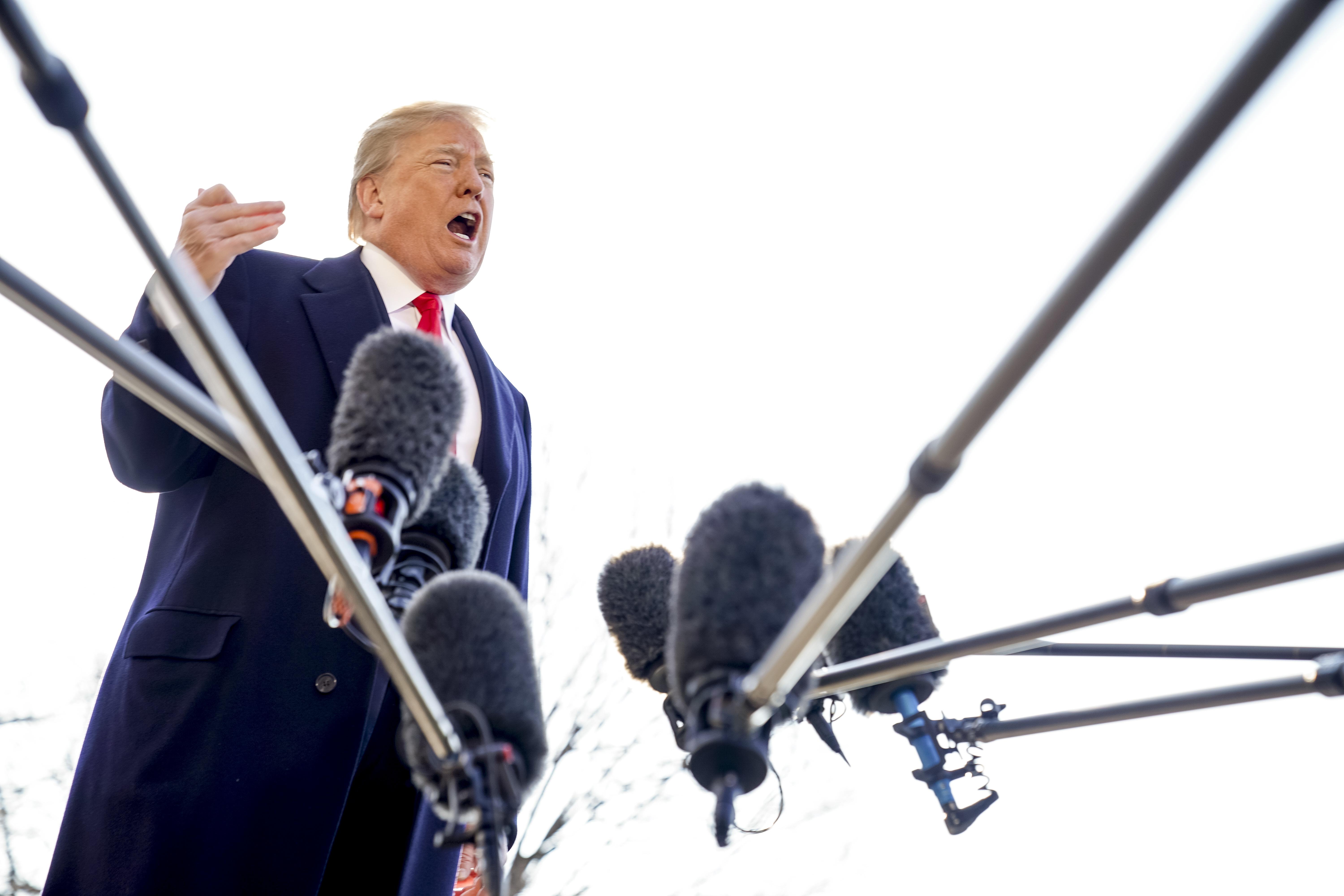
    President Trump said Tuesday that he was prepared to condemn Russia for the poisoning of a ex-British spy in the U.K., but he still wanted to have all the facts.

    President Trump said Tuesday that he was prepared to condemn Russia for the poisoning of a ex-British spy in the U.K., but he still wanted to have all the facts.

    A day earlier, the White House resisted blaming Russia for the attack despite British Prime Minister Theresa May saying it was “highly likely” that Moscow was behind the assassination attempt.

    “It sounds to me like it would be Russia based on all the evidence they have. I don’t know if they have come to a conclusion,” Mr. Trump said Tuesday.

    SEE ALSO: Trump ousts Tillerson, taps CIA Director Pompeo for State Dept.

    The president said that he planed to speak later in the day with Mrs. May.

    “As soon as we get the facts straight, if we agree with them, we will condemn Russia or whoever it may be,” Mr. Trump told reporters Tuesday.

    Former Russian intelligence officer Sergei Skripal, 66, and his daughter, Yulia Scribal, 33, were found collapsed on a city bench March 4 in Salisbury, England. They had been exposed to a military-grade nerve agents known as Novichok, according to British authorities.

    Mr. Skripal and his daughter remain in a critical but stable condition in the hospital.

    In 2004, Mr Skripal was convicted by the Russian government of spying for MI6. He was released to the U.K. in a spy swap in 2010.

    The White House resistance to blaming Russia was the final split between Mr. Trump and former Secretary of State Rex W. Tillerson, whose ouster was announced Monday.

    Mr. Tillerson said that Russia was “clearly” behind the poisoning.

  • U.K. military aiding spy probe; Russia says it’s not to blame

    British police asked the military on Friday to help investigate the nerve-agent poisoning of a former spy, as Russia’s foreign minister expressed resentment at suggestions Moscow was behind the attack

    LONDON (AP) — British police asked the military on Friday to help investigate the nerve-agent poisoning of a former spy, as Russia’s foreign minister expressed resentment at suggestions Moscow was behind the attack.

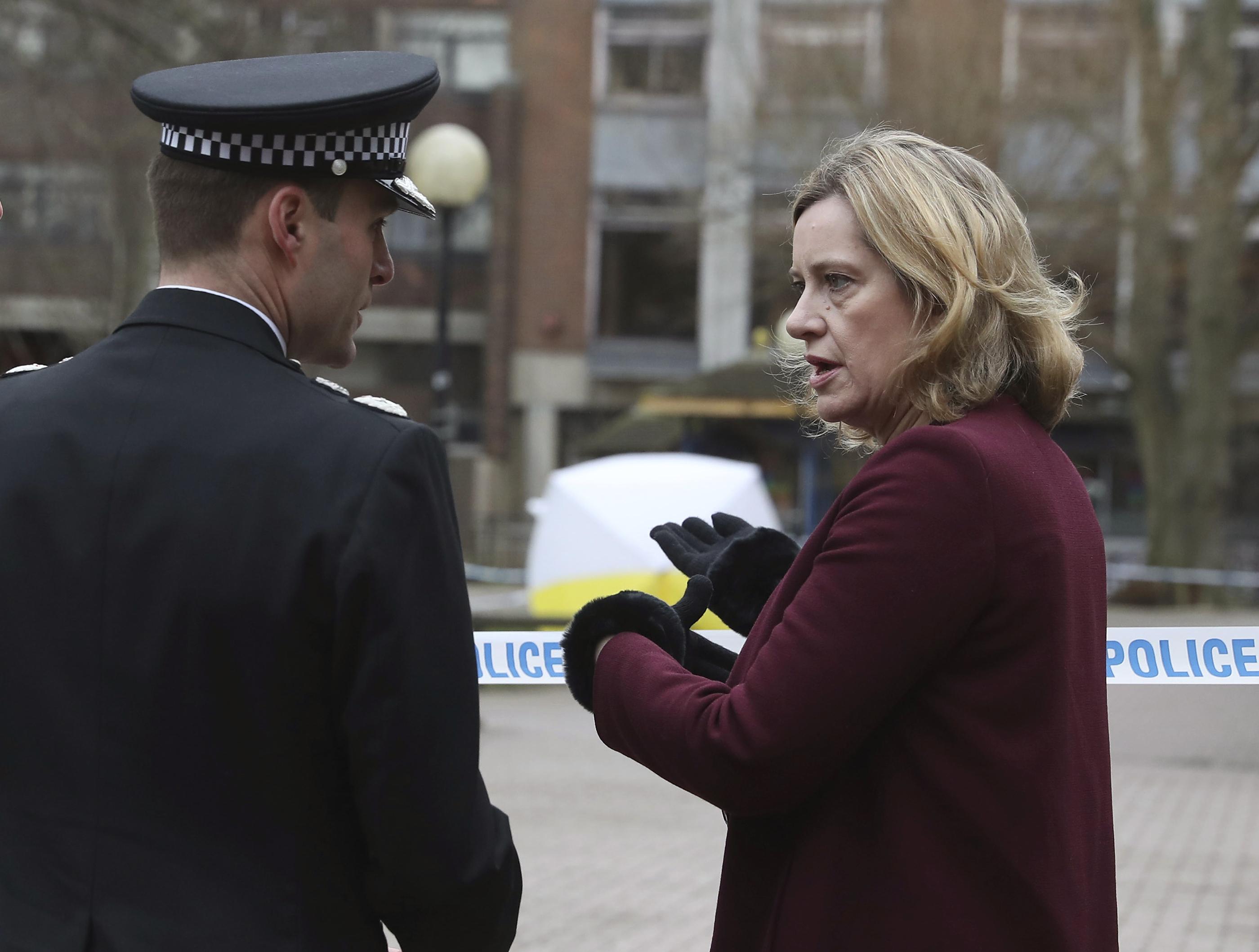
    The Metropolitan Police force said counterterrorism detectives had asked for military help “to remove a number of vehicles and objects from the scene” of Sunday’s attack in the city of Salisbury.

    Police said troops were being called in because “they have the necessary capability and expertise” and health advice remains the same – there is no broader risk to the public.

    British investigators are scrambling to trace the nerve agent that has left former spy Sergei Skripal and his daughter in critical condition.

    Russian Foreign Minister Sergey Lavrov said Moscow was “ready to consider” lending a hand, “whether it’s poisoning of some British subjects, whether it’s rumors about interference in the U.S. election campaign.”

    “But in order to conduct such cases, it is necessary not to immediately run out on TV screens with unfounded allegations,” Lavrov was quoted as saying by Russian state news agency Tass in the Ethiopian capital, Addis Ababa.

    Skripal, a former Russian military intelligence officer, was convicted in 2006 of spying for Britain and released in 2010 as part of a spy swap.

    He had been living quietly in Salisbury, where he and his daughter Yulia were found unconscious on a bench Sunday. They are in critical but stable condition in a hospital in the city, 90 miles (140 kilometers) southwest of London.

    A police officer who treated them at the scene is in serious condition, and a total of 21 people have received medical treatment.

    The U.K. has vowed to take strong action against whoever was responsible for the “brazen and reckless” attack.

    British authorities say it’s too soon to lay blame, but suspicions have fallen on Russia.

    Those branded enemies of the Russian state have sometimes died mysteriously abroad, and the Skripal case echoes the death of Alexander Litvinenko, a former Russian agent who was poisoned in London in 2006 with radioactive polonium-210.

    A British public inquiry found that Russia was responsible for Litvinenko’s killing, and that Russian President Vladimir Putin probably approved it.

    A former head of London’s Metropolitan Police called Friday for new investigations into the deaths of 14 Russians in the U.K. amid suggestions they were targeted by the Russian state.

    Former Commissioner Ian Blair, who led the London force when Litvinenko was fatally poisoned, told the BBC it is important to find out “whether there is some pattern here.”

    A BuzzFeed News investigation claimed U.S. spy agencies have linked 14 deaths to Russia, but U.K. police shut down the cases.

    Russian media have mocked suggestions of Moscow involvement in the attack – but also noted that those who betray Russian seem to come to a bad end.

    One anchorman on a Russian state television news show began a report on Skripal’s poisoning with a warning to anyone considering becoming a double agent.

    Channel One anchorman Kirill Kleimenov said in the Wednesday broadcast that he didn’t wish death or suffering on anyone but wanted those “who dream of such a career” to know that traitors rarely live long.

    “Alcoholism, drug addiction, stress and depression are inevitable professional illnesses of a traitor resulting in heart attacks and even suicide,” Kleimenov said.

    __

    Jim Heintz in Moscow contributed to this story.

  • Sergei Skripal case: U.K. counter-terror specialists offer help after ex-Russian spy collapses

    British counter-terror specialists offered expertise Tuesday to police in southern England Tuesday as they sought to unravel the mystery of why a former Russian spy fell critically ill following expos

    SALISBURY, England (AP) — British counter-terror specialists offered expertise Tuesday to police in southern England Tuesday as they sought to unravel the mystery of why a former Russian spy fell critically ill following exposure to an “unknown substance.”

    Authorities maintained a cordon near the spot — a bench near a shopping mall — where former double agent Sergei Skripal and an unidentified woman collapsed Sunday in Salisbury, 90 miles (145 kilometers) southwest of London. British media reported that the woman was Skirpal’s daughter.

    Though authorities are trying to keep an open mind, the incident drew parallels to the death of former Russian agent Alexander Litvinenko, who was poisoned with radioactive polonium 11 years ago in London.

    “I think we have to remember that Russian exiles are not immortal, they do all die and there can be a tendency for some conspiracy theories,” Metropolitan Police assistant commissioner Mark Rowley told the BBC.

    “But likewise we have to be alive to the fact of state threats as illustrated by the Litvinenko case.”

    Skripal, 66, who was convicted in Russia on charges of spying for Britain and sentenced in 2006 to 13 years in prison. He was freed in 2010 as part of a spy swap, which followed the exposure of a ring of Russian sleeper agents in the United States.

    The Kremlin said Russia has not been approached by British authorities to help in the investigation. But Dimitry Peskov, President Vladimir Putin’s spokesman, said Tuesday at a daily conference call with media in Russia that “Moscow is always ready to cooperate.”

    Wiltshire Police, which is responsible for the Salisbury area, said the man and woman appeared to know one another and had no visible injuries.

    “They are currently being treated for suspected exposure to an unknown substance. Both are currently in a critical condition in intensive care,” police said in a statement.

    The discovery led to a dramatic decontamination effort. Crews in billowing yellow moon suits worked into the night spraying down the street, and the Salisbury hospital’s emergency room was closed.

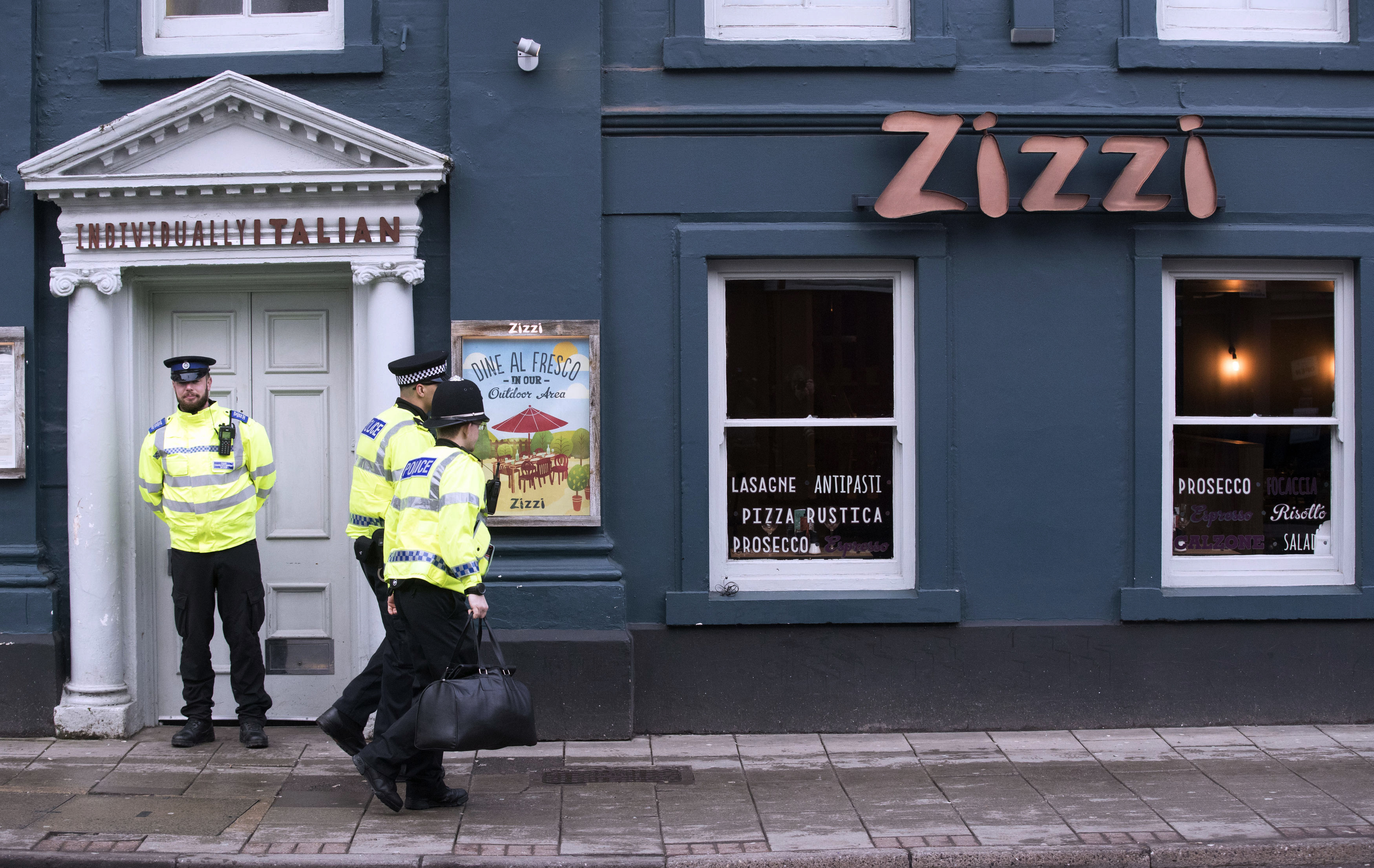
    A closed circuit television image of a man and woman walking through an alleyway connecting the Zizzi restaurant and the bench where Skripal and the woman were found is believed to be of interest to police.

    “Police had a good look at the footage and were interested in these two people. It was the only image they took away,” said Cain Prince, 28, the manager of a nearby gym. “They wanted a list of everyone in the gym between 3 p.m. and 4 p.m. as well.”

    Public records list Skripal as having an address in Salisbury.

    Skripal served with Russia’s military intelligence, often known by its Russian-language acronym GRU, and retired in 1999. He then worked at the Foreign Ministry until 2003 and later became involved in business.

    After his 2004 arrest in Moscow, he confessed to having been recruited by British intelligence in 1995 and said he provided information about GRU agents in Europe, receiving over $100,000 in return.

    At the time of Skripal’s trial, the Russian media quoted the FSB domestic security agency as saying that the damage from his activities could be compared to harm inflicted by Oleg Penkovsky, a GRU colonel who spied for the United States and Britain. Penkovsky was executed in 1963.

    The circumstances surrounding Sunday’s incident were still murky and police urged the public not to speculate. But few could avoid invoking the name of Litvinenko — the former Russian agent who died after drinking polonium-210-laced tea in a swanky London hotel in 2006.

    His illness was initially treated as unexplained; evidence eventually emerged indicating he had been deliberately poisoned with the radioactive material.

    A British judge wrote in a 2016 report that Litvinenko’s death was an assassination carried out by Russia’s security services — with the likely approval of Putin. The Russian government has denied any responsibility.