Tag: Jamal Khashoggi

  • Recep Tayyip Erdogan says Saudis planned Jamal Khashoggi slaying in advance

    Turkish President Recep Tayyip Erdogan said Tuesday that Saudi officials started planning to murder writer Jamal Khashoggi days before his death in Saudi Arabia’s Istanbul consulate.

    ANKARA, Turkey (AP) — Saudi officials murdered journalist Jamal Khashoggi in their Istanbul consulate after plotting his death for days, Turkey’s president said Tuesday, contradicting Saudi Arabia’s explanation that the writer was accidentally killed. He demanded that the kingdom reveal the identities of all involved, regardless of rank.

    President Recep Tayyip Erdogan also said he wants Saudi Arabia to allow 18 suspects that it detained for the Saudi’s killing to be tried in Turkish courts, setting up further complications with the Saudi government, which has said it is conducting its own investigation and will punish those involved. Saudi Arabia has described the suspects as rogue operators, even though officials linked to Saudi Arabia’s assertive Crown Prince Mohammed bin Salman have been implicated in the killing.

    “To blame such an incident on a handful of security and intelligence members would not satisfy us or the international community,” Erdogan said in a speech to ruling party lawmakers in parliament.

    “Saudi Arabia has taken an important step by admitting the murder. As of now we expect of them to openly bring to light those responsible — from the highest ranked to the lowest — and to bring them to justice,” said the Turkish president, who used the word “murder” 15 times in his speech.

    Erdogan’s speech was previously pitched as revealing the “naked truth” about Khashoggi’s slaying. Instead, he merely confirmed information previously reported based on leaks citing anonymous officials in the days since the columnist for The Washington Post walked into the Saudi consulate in Istanbul.

    Erdogan didn’t mention Prince Mohammed by name in his speech. However, he kept pressure on the kingdom with his demands for Turkish prosecution of the suspects as well as punishment for the plot’s masterminds.

    “All evidence gathered shows that Jamal Khashoggi was the victim of a savage murder. To cover up such a savagery would hurt the human conscience,” he said.

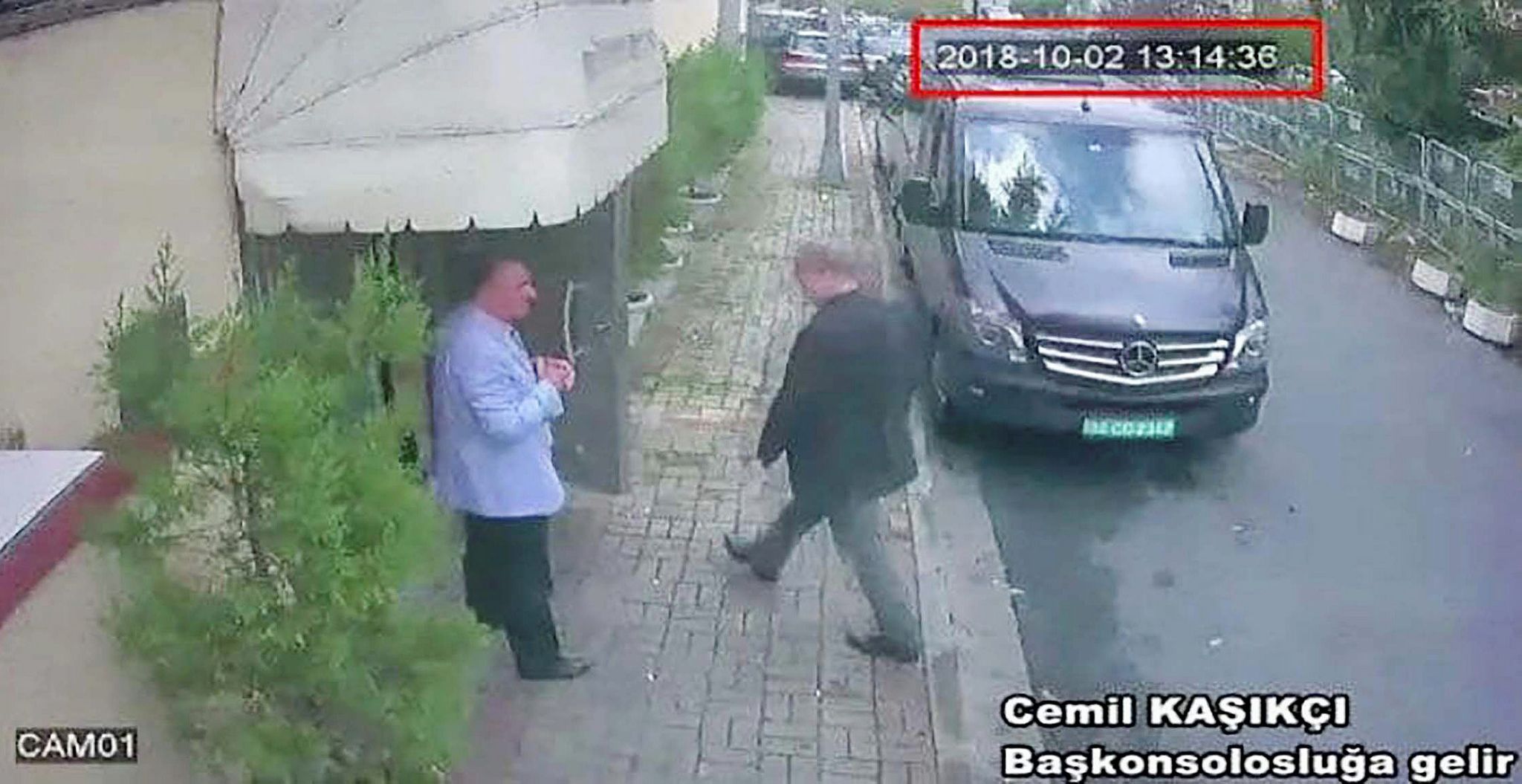
    Erdogan mentioned information that was earlier leaked by Turkish sources, including reports of 15 Saudi officials arriving in private jets shortly before Khashoggi’s death as well as a man, apparently dressed in the writer’s clothes, acting as a possible decoy by walking out of the consulate on the day of the disappearance.

    “Why did these 15 people all with links to the event gather in Istanbul on the day of the murder? We are seeking answers. Who did these people get their orders from to go there? We are seeking answers,” Erdogan said. “When the murder is so clear, why were so many inconsistent statements made? Why is the body of a person who has officially been accepted as killed still not around?”

    International skepticism intensified after Saudi Arabia said on Saturday that Khashoggi died in a brawl. The case has shocked the world and raised suspicions that a Saudi hit squad planned the writer’s killing after he walked into the consulate on Oct. 2, and then attempted to cover it up.

    At a Cabinet meeting Tuesday, King Salman again stressed that Saudi Arabia would hold those responsible for Khashoggi’s slaying “accountable,” according to the state-run Saudi Press Agency.

    Before Erdogan’s announcement, top Turkish officials said Turkey would clarify exactly what happened to Khashoggi as pressure increased on Saudi Arabia, which is hosting a glitzy investment conference this week that many dignitaries have decided to skip because of the scandal.

    “As we all know these are difficult days for us in the kingdom of Saudi Arabia,” Energy Minister Khalid Al-Falih told attendees seated in an ornate hall during the opening of the conference in Riyadh.

    “Nobody in the kingdom can justify it or explain it. From the leadership on down, we’re very upset of what has happened,” Al-Falih said

    Saudi Arabia said it arrested suspects and that several top intelligence officials were fired over Khashoggi’s killing, but critics alleged that the punishment was designed to absolve Prince Mohammed, the heir-apparent of the world’s top oil exporter, of any responsibility. Any major decision must be signed off by the highest powers within its ruling Al Saud family.

    On Monday, leaked surveillance video showed a man strolling out of the diplomatic post hours after Khashoggi disappeared into the consulate, apparently wearing the columnist’s clothes as part of a macabre deception to sow confusion over his fate.

    The new video broadcast by CNN, as well as a pro-government Turkish newspaper’s report that a member of Prince Mohammed’s entourage made four calls to the royal’s office from the consulate around the same time, put more pressure on the kingdom. Meanwhile, Turkish crime-scene investigators swarmed a garage Monday night in Istanbul where a Saudi consular vehicle had been parked.

    Saudi Arabia’s foreign minister, meanwhile, said Tuesday the investigation into the killing of Khashoggi would produce the truth about what happened and that his country was committed to ensuring “that the investigation is thorough and complete and that the truth is revealed and that those responsible will be held to account.”

    Foreign Minister Adel al-Jubeir, in Indonesia, also pledged that mechanisms will be put in place so that “something like this can never happen again.”

    ___

    Associated Press writers Aya Batrawy in Riyadh, Saudi Arabia and Jon Gambrell in Dubai, United Arab Em
  • Jamal Khashoggi killing sparked by Muslim Brotherhood ties

    The prevailing narrative about the bizarre case of U.S.-based Saudi journalist Jamal Khashoggi is that Saudi Arabia’s hard-charging young crown prince ordered him kidnapped and perhaps killed in order

    The prevailing narrative about the bizarre case of U.S.-based Saudi journalist Jamal Khashoggi is that Saudi Arabia’s hard-charging young crown prince ordered him kidnapped and perhaps killed in order to silence a particularly effective critic who wrote widely read, disparaging columns about the royal family and the crown prince’s own ambitious reform agenda.

    But Middle East insiders say some deeper subplots played into Mr. Khashoggi’s disappearance — stemming from his long career of political activism, ties to Saudi intelligence and Mr. Khashoggi’s past relationship with the Islamist group the Muslim Brotherhood.

    Mr. Khashoggi, who was 59 when he disappeared at the Saudi Consulate in Istanbul on Oct. 2, is said to have withdrawn years ago from any formal affiliation with the Brotherhood, but his past ties to the transnational Islamist group are believed to have been a source of distrust for Saudi Crown Prince Mohammed bin Salman.

    The 33-year-old prince branded the Brotherhood a terrorist organization, and one of his signature moves as heir to the Saudi throne was to cut off all ties with the rival Gulf nation of Qatar. The prince blames Doha for financing the Muslim Brotherhood to foment unrest against the powers that be across the Arab world, in particular Saudi Arabia.

    Since leaving Saudi Arabia for self-imposed exile in the U.S. last year, Mr. Khashoggi has worked to create an advocacy group called Democracy for the Arab World Now (DAWN) to promote Arab Spring-style freedom movements across the Middle East.

    Some say Mohammed, who has a reputation for quickly identifying and crushing any threats to his authority, was well aware of Mr. Khashoggi’s political activities and likely more concerned about them than his journalistic efforts as a columnist for The Washington Post.

    Longtime regional analyst and former Wall Street Journal publisher Karen Elliott House said in the newspaper this week: “Those who watch the crown prince closely say he is determined to pre-empt any hint of possible disruption before it can materialize.

    “So Mr. Khashoggi’s decision to register in the U.S. a new political organization, perhaps funded by Saudi regional rivals, might have triggered this action,” wrote Ms. House, who is also the author of an influential 2012 book on Saudi Arabia.

    The New York Times, citing interviews with longtime friends of Mr. Khashoggi, reported that he was in the midst of raising money for DAWN when he disappeared in Turkey, whose own government is a rival to Saudi Arabia in the Muslim world and has close ties to Qatar and to the Muslim Brotherhood.

    Qatar has not commented on claims by Turkish officials that Mr. Khashoggi was killed by a Saudi “hit squad.” The crown prince, meanwhile, has denied any knowledge of what happened and has pledged to support a transparent investigation into the journalist’s disappearance.

    Meeting bin Laden

    Mr. Khashoggi had a long and varied career in Saudi affairs before he became a U.S.-based opinion writer, including working on and off for the Saudi government.

    The Khashoggi name was well-known in U.S. government circles long before Jamal Khashoggi came onto the scene. His uncle Adnan Khashoggi was a noted global arms dealer implicated in the Reagan administration’s Iran-Contra scandal.

    Jamal Khashoggi reportedly engaged in occasional work for Saudi intelligence during the era of Prince Turki al-Faisal, who headed Riyadh’s spy agencies from 1979 until just before the terrorist attacks of Sept. 11, 2001.

    As a younger man in Saudi Arabia, Mr. Khashoggi considered himself a member of the Muslim Brotherhood, which analysts often describe as a foundational group behind the emergence of al Qaeda.

    In his 30s, Mr. Khashoggi drew international attention for interviewing Osama bin Laden. According to the 2007 book “The Looming Tower: Al Qaeda and the Road to 9/11,” Mr. Khashoggi met with the emerging terrorist leader in Sudan in 1995 and pressured him to disavow violence.

    “I was aware of Jamal for many years, during his tenure as a reporter and editor,” Warren David, the founder of the U.S.-based media organization Arab America, wrote on the organization’s website Wednesday.

    Mr. David described Mr. Khashoggi as a “man of principle and integrity” who believed in the promotion of democracy in the Arab world and as someone steeped in the challenges of navigating the tumultuous media scene in Saudi Arabia and across the Middle East.

    “Jamal could speak from experience. He was the editor-in-chief of the Al-Arab News Channel, owned by Saudi prince and philanthropist, Al Waleed bin Talal Abdulaziz al Saud,” Mr. David wrote. “After the Arab Spring uprisings of 2011, Prince Waleed founded the channel which would focus on freedom of speech and democratic media.

    “In February of 2015, Al-Arab News Channel debuted in Bahrain under the leadership of Jamal Khashoggi. On the first day of broadcast, the opposition leader of Bahrain’s uprisings was interviewed,” wrote Mr. David. “Shockingly, within a couple of hours, the channel’s closure was announced. After searching for a new location, and securing a home for the network in Qatar, Jamal was ready to initiate broadcasting with the new network but was informed by Prince Al Waleed in February 2017 that the channel would never open.”

    ‘Putin-style’ whacking?

    While Mr. Khashoggi often and ironically expressed support for the crown prince’s social and economic reforms, he made no secret of his disgust with Mohammed’s crackdown of perceived critics.

    “With young Crown Prince Mohammed bin Salman’s rise to power, he … spoke of making our country more open and tolerant,” Mr. Khashoggi wrote in September 2017. “But all I see now is the recent wave of arrests. … The arrested are accused of being recipients of Qatari money and part of a grand Qatari-backed conspiracy.”

    Although the columns were often critical, analysts are at a loss to explain why the Saudi leadership would risk geopolitical blowback and the strains on U.S.-Saudi ties that would result from an operation to kidnap or kill him. Many say Crown Prince Mohammed simply underestimated the reaction the mission would spark.

    Mr. Khashoggi’s “ties to the Muslim Brotherhood do not seem to have involved any links to extremism,” said Anthony Cordesman, an analyst at the Center for Strategic and International Studies. “His criticisms of the Saudi government seem to have been limited to the kinds of reforms the kingdom will eventually have to make.

    “In fact, a more enlightened and pragmatic Saudi crown prince might have seen them as actually helping in the near term by acting as a counterweight to the hard-line Saudi conservatives that challenge every [reform],” Mr. Cordesman wrote this week.

    But others say Mr. Khashoggi crossed a line in his columns for The Post.

    David Ottaway, a Middle East fellow at the Wilson Center who knew Mr. Khashoggi for more than 20 years, wrote in The Post on Wednesday that “Khashoggi’s unpardonable sin was to call for debate not about the crown prince’s social reforms, which he wholeheartedly supported, but about the crown prince’s stifling intolerance for anyone who cast even a speck of dirt on his highly polished image as the kingdom’s long-awaited savior.”

    But sources close to the Saudi government insist the crown prince would never go so far as to order an assassination.

    “Saudi policy toward a critic like this is always to buy people off, try to bring them back into the fold,” one source told The Washington Times. “An act like this is totally out of character for the royal family. If it happened, it would be because it was a total [mistake] by some people and there will be consequences.”

    Still others say the prince is a new kind of leader for the tradition-bound, hierarchical kingdom, one who drew global attention last year by engineering a nearly three-month-long house arrest of dozens of fellow princes and leading business figure, including several older relatives within the royal family.

    Joshua Landis, who heads the Center for Middle East Studies at the University of Oklahoma, said the prince has ushered in a sharp shift in the way Riyadh conducts itself on the world stage.

    “The Saudis may have used money, not force, for decades to get their way with bribes, but that all changed with Mohammed bin Salman,” Mr. Landis said. “Frankly, I don’t put it past him to have put out an order for [Mr. Khashoggi] to be whacked in the same way [Russian President Vladimir] Putin is whacking opponents overseas, because it sends a message and intimidates critics.

    “Every Saudi who might be thinking about speaking up,” he added, “is [now] going to be quiet.”

  • Mike Pompeo heads to Riyadh as Jamal Khashoggi mystery deepens

    Saudi Arabia on Monday allowed Turkish investigators to search its consulate in Istanbul for clues in the case of missing Saudi journalist Jamal Khashoggi on Monday, in a bid to bring some clarity to

    Saudi Arabia on Monday allowed Turkish investigators to search its consulate in Istanbul for clues in the case of missing Saudi journalist Jamal Khashoggi, in a bid to bring some clarity to an incident that has mushroomed into a diplomatic and political crisis for both Riyadh and Washington.

    Amid reports the Saudis may be considering admitting at least partial fault in the disappearance — and perhaps murder — of the Washington-based writer, President Trump caused a stir by floating the notion that “rogue killers” — not Saudi government operatives suspected by Turkey — may have murdered the journalist two weeks ago.

    With Secretary of State Mike Pompeo dispatched Monday to Saudi Arabia to try to clarify what happened, Mr. Trump told reporters at the White House that Saudi King Salman had “firmly denied any knowledge” of a plot against Mr. Khashoggi, a Saudi citizen and known critic of the kingdom’s ambitious and powerful young Crown Prince Mohammed bin Salman.

    “I don’t want to get into his mind,” said Mr. Trump, “but it sounded to me like maybe these could have been rogue killers. Who knows?”

    The comments drew immediate criticism in Washington, where some quickly accused Mr. Trump of being spun by the 82-year-old king in order to protect a key ally.

    “Been hearing the ridiculous ‘rogue killers’ theory was where the Saudis would go with this,” tweeted Sen. Chris Murphy, Connecticut Democrat and a member of the Senate Foreign Relations Committee. “Absolutely [extraordinary] they were able to enlist the president of the United States as their PR agent to float it.”

    The confusion highlighted the difficult situation caused by the case for the White House, which has spent considerable capital over the past year cozying up to Riyadh as a prime customer of American arms and a go-to ally against the Mideast’s other major power, Iran.

    But support for Riyadh is far softer on Capitol Hill, where lawmakers from both parties were calling for punitive action — including sanctions and a cut in U.S. military sales to Riyadh — if the Saudis are found responsible for Mr. Khashoggi’s death.

    Media frenzy

    In Istanbul, a media frenzy ensued around the Saudi consulate building Monday, with Turkish crime scene investigators dressed in coveralls and gloves going into the consulate for the first time since Mr. Khashoggi entered the building Oct. 2 seeking papers he needed to marry his Turkish fiancee. Prior to the arrival of the Turkish investigators, journalists photographed a cleaning crew with mops, trash bags and what appeared to be bottles of bleach walking into the consulate.

    Searches of such diplomatic posts, otherwise considered foreign soil under international law, are extraordinary and Monday’s development showed the delicate mix of cooperation and rivalry that has marked the Saudi relationship with Turkish President Recep Tayyip Erdogan.

    Turkish officials sent shock waves around the world last week by claiming to have audio and video evidence Mr. Khashoggi was killed and dismembered while visiting the consulate on Oct. 2, allegedly by what Turkish media leaks called a 15-member Saudi “hit team,” a team that left the country shortly after Mr. Khashoggi disappeared. Saudi officials rejected the allegation as “baseless,” but have yet to produce hard evidence that Mr. Khashoggi ever left the consulate.

    Mr. Khashoggi’s background has only added to intrigue surrounding the case. While he has spent much of the past year writing opinion columns for The Washington Post critical of the Saudi ruling family, he is reported to have had a long career working on and off for the Saudi government, and as an independent journalist in the kingdom. As a younger journalist, he first drew international attention for interviewing a young Osama bin Laden and was reportedly for a member of the Muslim Brotherhood, a controversial Islamist organization known for espousing anti-Western views.

    Anthony Cordesman, a Middle East expert at the Center for Strategic and International Studies, said in an analysis Monday that “it seems likely that this was as much the result of a botched kidnapping or a too violent interrogation as a deliberate killing.”

    Others have cast doubt on Turkish media reports of a Saudi hit squad targeting the journalist.

    Steven Cook, a senior fellow specializing on the Middle East at the Council on Foreign Relations, wrote on ForeignPolicy.com last week that the “uncorroborated” account was “quickly accepted as fact.”

    “This does not mean that they are untrue, but Turkey is a country with a poor record of press freedom, and its leaders and their supporters have embraced disinformation as a political strategy and a tool of foreign policy,” Mr. Cook wrote.

    Mr. Cordesman wrote that Turkey’s real motive “was to attack Saudi Arabia’s position and seek to undermine its influence relative to Turkey — as well as improve its own position in the United States.”

  • Saudi stock market plunges after Donald Trump threat over Jamal Khashoggi disappearance

    The Saudi stock market plunged Sunday after President Donald Trump threatened “severe punishment” over the disappearance of Washington Post contributor Jamal Khashoggi.

    DUBAI, United Arab Emirates — The Saudi stock market plunged Sunday after President Donald Trump threatened “severe punishment” over the disappearance of Washington Post contributor Jamal Khashoggi.

    The Tadawul exchange in Riyadh dropped over 6 percent in the week’s first day of trading, with 182 of its 186 listed stocks showing losses by the early afternoon.

    Turkish officials say they fear Saudi agents killed and dismembered Khashoggi after he entered the Saudi Consulate in Istanbul on Oct. 2, saying they have audio and video recordings of it that they have not released. The kingdom has called the allegations “baseless,” but has offered no evidence the writer ever left the consulate.

    In an interview to be aired Sunday, Trump told CBS’ “60 Minutes” that the consequences of Saudi Arabia being involved would be “severe.”

    “There’s something really terrible and disgusting about that, if that was the case, so we’re going to have to see,” Trump said. “We’re going to get to the bottom of it and there will be severe punishment.”

    However, Trump in the same interview said: “As of this moment, they deny it and they deny it vehemently. Could it be them? Yes.”

    Saudi officials had no immediate comment on the selloff, though state television aired an interview with an analyst who blamed it on weaker markets in the U.S. However, other stock exchanges in the Mideast saw far less volatility Sunday. U.S. markets have been rattled by rising interest rates, signs of a slowdown in the global economy and the U.S.-China trade dispute.

    Saudi Crown Prince Mohammed bin Salman has aggressively pitched the kingdom as a destination for foreign investment. But Khashoggi’s disappearance, and suspicions he may have been targeted over his criticism of the crown prince, have led several business leaders and media outlets to back out of an upcoming high-profile investment conference in Riyadh.

    Trump also said “we would be punishing ourselves” by canceling arms sales to Saudi Arabia, which his administration touted on his first overseas trip. The sale is a “tremendous order for our companies,” and if the kingdom doesn’t buy its weaponry from the United States, they will buy it from others, he said. Trump said he would meet with Khashoggi’s family.

    American lawmakers in both parties have been more critical of Saudi Arabia, with several suggesting officials in the kingdom could be sanctioned if they were found to be involved in Khashoggi’s disappearance and alleged killing.

    Khashoggi, who was considered close to the Saudi royal family, had become a critic of the current government and Prince Mohammed, the 33-year-old heir apparent who has shown little tolerance for criticism.

    As a contributor to the Post, Khashoggi has written extensively about Saudi Arabia, including criticism of its war in Yemen, its recent diplomatic spat with Canada and its arrest of women’s rights activists after the lifting of a ban on women driving.

    Those policies are all seen as initiatives of the crown prince, who has also presided over a roundup of activists and businessmen.

  • Saudi Arabia rejects ‘threats’ over Jamal Khashoggi after Trump warning sinks stock market

    Saudi Arabia warned Sunday it will respond to any “threats” against it as its stock market plunged following President Donald Trump’s warning of “severe punishment” over the disappearance of U.S.-base

    Saudi Arabia warned Sunday it will respond to any “threats” against it as its stock market plunged following President Donald Trump’s warning of “severe punishment” over the disappearance of U.S.-based Saudi journalist Jamal Khashoggi.

    Mr. Trump made a point of visiting the kingdom on his first overseas trip as president and has touted arms sales to Saudi Arabia.

    But both the White House and the kingdom are under mounting pressure as concern grows over the fate of the veteran journalist and critic of the Saudi government, who vanished Oct. 2 after visiting the Saudi consulate in Istanbul.

    SEE ALSO: Trump threat sends Saudi stock market tumbling

    Already, international business leaders are pulling out of the kingdom’s upcoming investment forum, a high-profile event known as “Davos in the Desert.”

    “The kingdom affirms its total rejection of any threats and attempts to undermine it, whether by threatening to impose economic sanctions, using political pressures or repeating false accusations,” said the statement published by the state-run Saudi Press Agency on Sunday.

    “The kingdom also affirms that if it receives any action, it will respond with greater action, and that the kingdom’s economy has an influential and vital role in the global economy.”

    The statement from the world’s top oil exporter came after the Tadawul exchange in Riyadh dropped by 7 percent at one point during the week’s first day of trading, with 182 of its 186 listed stocks showing losses by the early afternoon. The market clawed back some of the losses, closing down 3.5 percent for the day.

    Turkish officials say they fear Saudi agents killed and dismembered Mr. Khashoggi after he entered the consulate, saying they have audio and video recordings of it that they have not released.

    The kingdom has called the allegations “baseless,” but has offered no evidence the writer ever left the consulate.

    But Turkish Foreign Minister Mevut Cavusoglu has said Saudi officials have thus far not cooperated with their investigation despite a statement from Saudi Interior Minister Prince Abdulaziz bin Saud bin Naif bin Abdulaziz vowing to uncover “the whole truth.”

    Mr. Cavusoglu has urged Saudi officials to allow Turkish authorities to enter the consulate.

    Severe consequences

    According to the Associated Press, in an interview to be aired Sunday, Mr. Trump told CBS’ “60 Minutes” that the consequences of Saudi Arabia being involved would be “severe.”

    “There’s something really terrible and disgusting about that, if that was the case, so we’re going to have to see,” he said. “We’re going to get to the bottom of it and there will be severe punishment.”

    However, Mr. Trump in the same interview said: “As of this moment, they deny it and they deny it vehemently. Could it be them? Yes.”

    Other stock exchanges in the Mideast saw far less volatility Sunday. U.S. markets have been rattled by rising interest rates, signs of a slowdown in the global economy and the U.S.-China trade dispute.

    Saudi Crown Prince Mohammed bin Salman has aggressively pitched the kingdom as a destination for foreign investment. But Mr. Khashoggi’s disappearance, and suspicions he may have been targeted over his criticism of the crown prince, have led several business leaders and media outlets to back out of an upcoming high-profile investment conference in Riyadh.

    Mr. Trump also said “we would be punishing ourselves” by canceling arms sales to Saudi Arabia, which his administration touted on his first overseas trip. The sale is a “tremendous order for our companies,” and if the kingdom doesn’t buy its weaponry from the U.S., they will buy it from others, he said. Mr. Trump said he would meet with Khashoggi’s family.

    American lawmakers in both parties have been more critical of Saudi Arabia, with several suggesting officials in the kingdom could be sanctioned if they were found to be involved in Mr. Khashoggi’s disappearance and alleged killing.

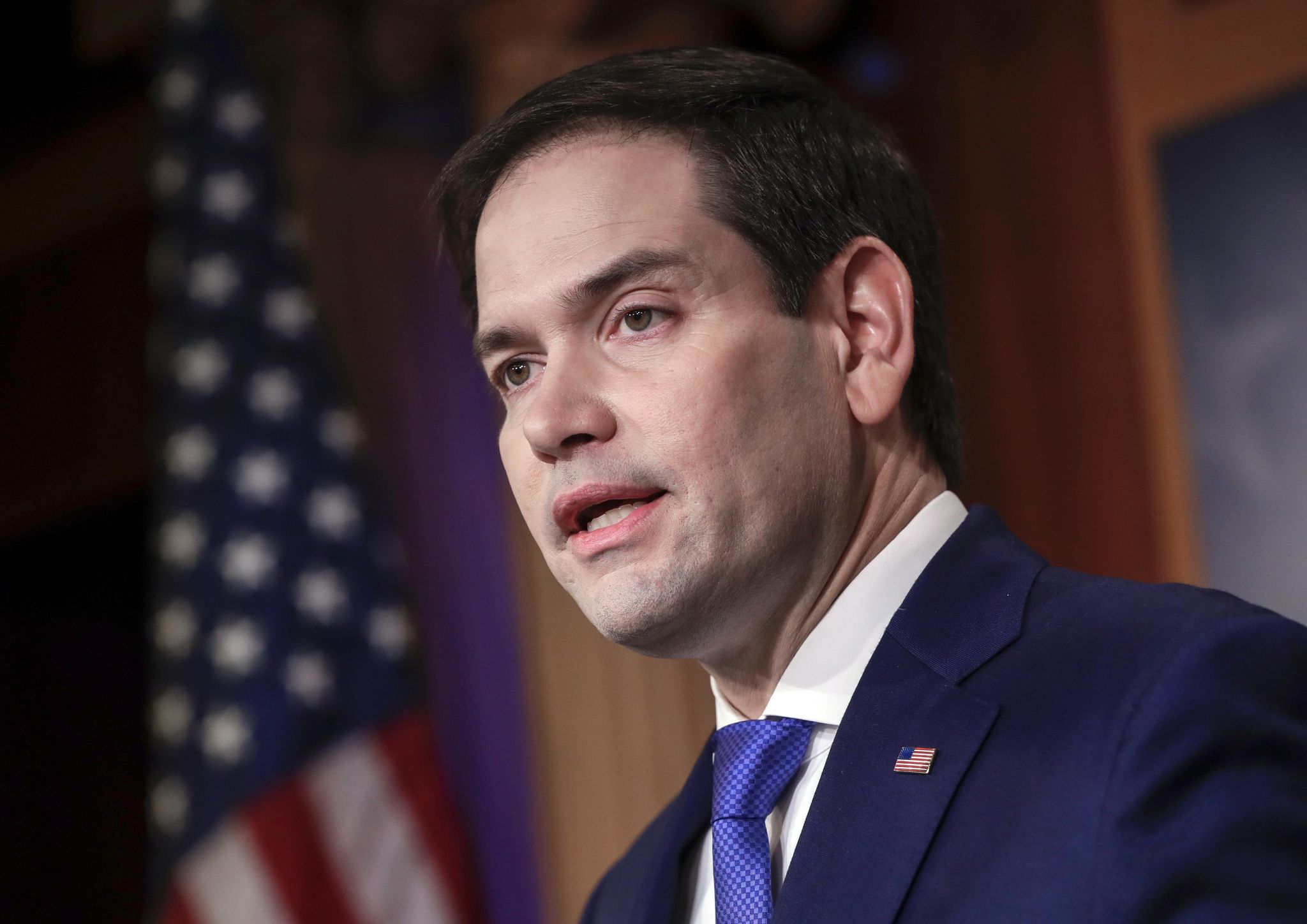
    On Sunday, Sen. Marco Rubio, Florida Republican, said the Trump administration should skip the Saudi’s upcoming international investors conference.

    Treasury Secretary Steven Mnuchin is scheduled to attend the meeting this month in Riyadh.

    “I don’t think he should go,” Mr. Rubio said on CNN’s “State of the Union.” “I don’t think any of our government officials should be going and pretending it’s business as usual until we know what’s happened here.”

    Larry Kudlow, director of the White House National Economic Council, said Mr. Mnuchin still plans to attend the conference, which he described as a meeting on stopping terrorist financing.

    Mr. Rubio added that Congress would respond strongly no matter how the administration may react.

    Sen. Bernard Sanders, Vermont independent, echoed the outrage over the possibility that Mr. Khashoggi may have been murdered.

    “We cannot have an ally who murders in cold blood in their own consulate,” said Mr. Sanders.

    Former CIA Director and one-time Saudi Arabia station chief John Brennan, added that the Saudi’s “denials ring hollow.”

    “Their [Saudi] denials ring hollow,” Mr. Brennan said on NBC’s Meet the Press. “It would be inconceivable that such an operation would be run by the Saudis without the knowledge of the day-to-day decision-maker of Saudi Arabia. That’s Crown Prince Mohammed bin Salman.”

    Mr. Khashoggi, who was considered close to the Saudi royal family, had become a critic of the current government and Prince Mohammed, the 33-year-old heir apparent who has shown little tolerance for criticism.

    As a journalist, Mr. Khashoggi has written extensively about Saudi Arabia, including criticism of its war in Yemen, its recent diplomatic spat with Canada and its arrest of women’s rights activists after the lifting of a ban on women driving.

    Those policies are all seen as initiatives of the crown prince, who has also presided over a roundup of activists and businessmen.

    Mr. Trump has repeatedly criticized Saudi Arabia and King Salman over rising global oil prices. Benchmark Brent crude now trades above $80 and U.S. gasoline prices have risen ahead of the midterm elections.

    Earlier this month, Mr. Trump suggested Saudi Arabia’s king “might not be there for two weeks” without U.S. military support.

    • Valerie Richardson contributed to this article, which is based in part on wire service reports.

  • Marco Rubio calls on White House to boycott Saudi conference over missing journalist

    Sen. Marco Rubio said Sunday that the Trump administration should skip an international investors conference in Saudi Arabia until more is known about what happened to missing journalist Jamal Khashog

    Sen. Marco Rubio said Sunday that the Trump administration should skip an international investors conference in Saudi Arabia until more is known about what happened to missing journalist Jamal Khashoggi.

    Treasury Secretary Steven Mnuchin this month is scheduled attend the event in Riyadh known as “Davos in the Desert,” even as corporate leaders are pulling out over concerns about the fate of Mr. Khashoggi, a critic of the Saudi regime.

    “I don’t think he should go,” Mr. Rubio said on CNN’s “State of the Union.” “I don’t think any of our government officials should be going and pretending it’s business as usual until we know what’s happened here.”

    The Florida Republican also said that Congress would respond strongly no matter how the administration may react.

    “I believe the Trump administration will do something, the president said that, but if he doesn’t, Congress will, that I can tell you with 100 percent certainty,” said Mr. Rubio.

    “With almost full unanimity across the board, Republicans and Democrats, there will be a very strong congressional response if in fact the Saudis lured him into that consulate, murdered him, cut up his body, and disposed of it,” he said.

    .@marcorubio to @jaketapper on Secretary Mnuchin attending economic summit in Saudi Arabia: “I don’t think we should continue as business as usual until we know exactly what’s happened here… I don’t think he should go.” #CNNSOTUpic.twitter.com/8U28j5jZlk

    — State of the Union (@CNNSotu) October 14, 2018

    Mr. Khashoggi, a columnist for The Washington Post, has not been seen since Oct. 2, when he walked into the Saudi consulate in Istanbul, Turkey. His disappearance has touched off a diplomatic crisis amid fears that he may have been killed at the behest of Saudi Crown Prince Mohammed bin Salman.

    The White House has come under pressure to impose economic sanctions and halt arms sales to Saudi Arabia. President Trump has said “we would be punishing ourselves” by canceling arm sales.

    Larry Kudlow, director of the White House National Economic Council, said Sunday that Mr. Mnuchin still plans to attend the conference, which he described as a meeting on stopping terrorist financing.

    “I spoke to him last evening, and at the moment he’s intending to go because of the importance of the issue of ending terrorist financing,” Mr. Kudlow said on ABC’s “This Week.”

    .@GStephanopoulos: Is it appropriate for Treasury Secretary Mnuchin to attend the investor conference in Saudi Arabia?Director of White House National Economic Council Larry Kudlow: “He’s intending to go because of the importance of the issue of ending terrorist financing” pic.twitter.com/5HNdzO7rvH

    — This Week (@ThisWeekABC) October 14, 2018

    “But along with the president and the general investigation, Mr. Mnuchin will make up his mind as the week progresses and as new information surfaces,” Mr. Kudlow said.

    Sen. Bernard Sanders, Vermont independent, also expressed outrage over the possibility that Mr. Khashoggi may have been murdered.

    “We cannot have an ally who murders in cold blood in their own consulate,” said Mr. Sanders.


  • Washington Post says Turkey has proof Saudi writer was killed

    Turkey’s government has told U.S. officials it has audio and video proof that missing Saudi Arabian writer Jamal Khashoggi was killed and dismembered in the Saudi Consulate in Istanbul, the Washington

    ANKARA, Turkey (AP) — Turkey’s government has told U.S. officials it has audio and video proof that missing Saudi Arabian writer Jamal Khashoggi was killed and dismembered in the Saudi Consulate in Istanbul, the Washington Post reported Friday.

    The newspaper, for which Khashoggi is a columnist, cited anonymous officials as saying the recordings show a Saudi security team detained the writer when he went to the consulate on Oct. 2 to pick up a document for his upcoming wedding.

    The Associated Press was not immediately able to confirm the report, and Turkish officials would not comment.

    A delegation from Saudi Arabia arrived in Turkey Friday as part of an investigation into the writer’s disappearance, Turkey’s state-run news agency Anadolu said.

    Saudi Arabia has called the allegation it abducted or harmed Khashoggi “baseless.” However, it has offered no evidence to support its claim he left the consulate and vanished despite his fiance waiting outside.

    Anadolu Agency said the delegation would hold talks with Turkish officials over the weekend. It did not provide further details.

    On Thursday, Turkish presidential spokesman Ibrahim Kalin said Turkey and Saudi Arabia would form a “joint working group” to look into Khashoggi’s disappearance.

    The 59-year-old journalist, who was considered close to the Saudi royal family, had became a critic of the current government and Crown Prince Mohammed bin Salman, the 33-year-old heir apparent who has introduced reforms but shown little tolerance for criticism.

    Khashoggi had been living in self-imposed exile in the United States since last year. As a contributor to the Washington Post, he has written extensively about Saudi Arabia, including criticism of its war in Yemen, its recent diplomatic spat with Canada and its arrest of women’s rights activists after the lifting of a ban on women driving.

    Those policies are all seen as initiatives of the crown prince, who has also presided over a roundup of activists and businessmen.

  • Jamal Khashoggi case: Turkish officials believe Saudi writer was killed: Reports

    Turkish investigators believe a prominent Saudi journalist who contributed to The Washington Post was killed in “a preplanned murder” at the kingdom’s consulate in Istanbul, the Post reported Saturday

    ISTANBUL (AP) — Turkish investigators believe a prominent Saudi journalist who contributed to The Washington Post was killed in “a preplanned murder” at the kingdom’s consulate in Istanbul, the Post reported Saturday night, citing two anonymous officials. Saudi authorities had no immediate comment, though they’ve insisted the writer left their diplomatic post.

    One Turkish official also told The Associated Press that detectives’ “initial assessment” was that Jamal Khashoggi was killed at the consulate, without elaborating.

    Khashoggi, who has lived in self-imposed exile in the U.S. for the last year, vanished Tuesday while on a visit to the consulate. His disappearance has threatened to upend already-fraught relations between Saudi Arabia and Turkey, and it raises new questions about the kingdom and the actions of its assertive Crown Prince Mohammed bin Salman, whom Khashoggi wrote critically about in his columns.

    “If the reports of Jamal’s murder are true, it is a monstrous and unfathomable act,” The Post’s editorial page editor Fred Hiatt said in a statement. “Jamal was — or, as we hope, is — a committed, courageous journalist. He writes out of a sense of love for his country and deep faith in human dignity and freedom.”

    The Post cited one anonymous official who said investigators believe a 15-member team “came from Saudi Arabia.” The official added: “It was a preplanned murder.”

    A Turkish official, requesting anonymity to discuss the ongoing investigation, told The Associated Press earlier Saturday night something similar.

    “The initial assessment of the Turkish police is that Mr. Khashoggi has been killed at the consulate of Saudi Arabia in Istanbul,” the official said. “We believe that the murder was premeditated and the body was subsequently moved out of the consulate.”

    Khashoggi, 59, went missing while on a visit to the consulate in Istanbul for paperwork to marry his Turkish fiancée. The consulate insists the writer left its premises, contradicting Turkish officials.

    “Jamal is not dead! I don’t believe he’s been killed!” his fiancée Hatice wrote on Twitter late Saturday night.

    Turkey’s official Anadolu News Agency said Saturday that the Istanbul public prosecutor’s office began a probe into Khashoggi’s disappearance Tuesday, immediately after he went missing. It added the investigation over allegations that the writer was detained had “deepened,” without elaborating.

    Khashoggi is a longtime Saudi journalist, foreign correspondent, editor and columnist whose work has been controversial in the past in the ultraconservative Sunni kingdom. He went into self-imposed exile in the United States following the ascension of Prince Mohammed, now next in line to succeed his father, the 82-year-old King Salman.

    As a contributor to The Post, Khashoggi has written extensively about Saudi Arabia, including criticizing its war in Yemen, its recent diplomatic spat with Canada and its arrest of women’s rights activists after the lifting of a ban on women driving. All those issues have been viewed as being pushed by Prince Mohammed, who similarly has led roundups of activists, businessmen and others in the kingdom.

    “With young Crown Prince Mohammed bin Salman’s rise to power, he promised an embrace of social and economic reform,” Khashoggi wrote in his first column for the Post. “But all I see now is the recent wave of arrests.”

    Khashoggi was known for his interviews and travels with Osama bin Laden between 1987 and 1995, including in Afghanistan, where he wrote about the battle against the Soviet occupation. In the early 1990s, he tried to persuade bin Laden to reconcile with the Saudi royal family and return home from his base in Sudan, but the al-Qaida leader refused.

    Khashoggi maintained ties with Saudi elites, including those in its intelligence apparatus, and launched a satellite news channel, Al-Arab, from Bahrain in 2015 with the backing of Saudi billionaire Prince Alwaleed bin Talal. The channel was on air for less than 11 hours before it was shut down. Its billionaire backer was detained in the Ritz Carlton roundup overseen by Prince Mohammed in 2017.

    The dispute over Khashoggi’s disappearance also threatens to reopen rifts between Ankara and Riyadh. Turkey has supported Qatar amid a yearlong boycott by Bahrain, Egypt, Saudi Arabia and the United Arab Emirates over a political dispute. Turkey’s support of political Islamists, like the Muslim Brotherhood, also angers leaders in Riyadh and Abu Dhabi, which label the organization a “terrorist group” threatening their hereditarily ruled nations.

    Press freedom groups have decried Khashoggi’s disappearance. U.S. Sen. Chris Murphy, D-Connecticut, who sits on the Senate’s Committee on Foreign Affairs, expressed shock over the news.

    “If this is true — that the Saudis lured a U.S. resident into their consulate and murdered him — it should represent a fundamental break in our relationship with Saudi Arabia,” Murphy wrote on Twitter.

    ___

    El Deeb reported from Beirut, while Gambrell reported from Dubai, United Arab Emirates.