Tag: Donald Trump

  • Airplane and oil deals at risk in Trump pullout of Iran deal

    From airplanes to oilfields, billions of dollars are on the line for international corporations as President Donald Trump weighs whether to pull America out of Iran’s nuclear deal with world powers.

    DUBAI, United Arab Emirates (AP) – From airplanes to oilfields, billions of dollars are on the line for international corporations as President Donald Trump weighs whether to pull America out of Iran’s nuclear deal with world powers.

    Regardless of where they are headquartered, virtually all multinational corporations do business or banking in the U.S., meaning any return to pre-deal sanctions could torpedo deals made after the 2015 agreement came into force.

    That threat alone has been enough to scare risk-averse firms, like Boeing Co., into slow-walking deals agreed to months ago. A complete pullout by the U.S. would wreak further havoc and likely frighten off those considering making the plunge.

    “I absolutely think those on the fence will not jump in,” said Richard Nephew, a former sanctions expert at the U.S. State Department who worked on the nuclear deal and now is at New York’s Columbia University. “The only ones who will, will be those who see tremendous monetary benefit and no U.S. risk.”

    The 2015 Iran nuclear deal lifted crippling economic sanctions that had locked Iran out of international banking and the global oil trade. In return, Tehran limited its enrichment of uranium, reconfigured a heavy-water reactor so it couldn’t produce plutonium and reduced its uranium stockpile and supply of centrifuges.

    For Western businesses, the deal meant access to Iran’s largely untapped market of 80 million people. Most prominently, airplane manufacturers rushed in to replace the country’s dangerously dilapidated civilian fleet.

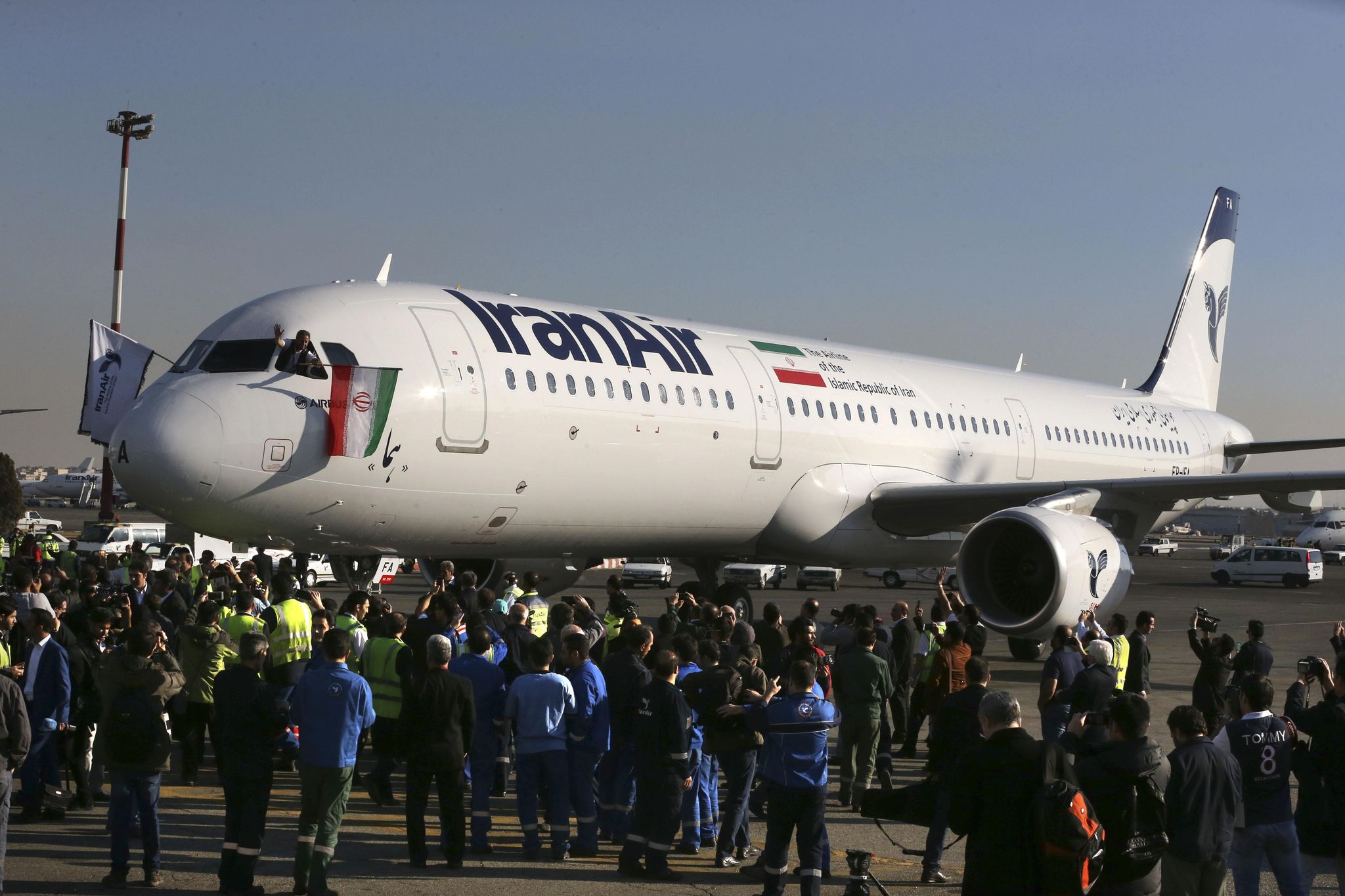
    In December 2016, Airbus Group signed a deal with Iran’s national carrier, IranAir, to sell it 100 airplanes for around $19 billion at list prices. Boeing later struck its own deal with IranAir for 80 aircraft with a list price of some $17 billion, promising that deliveries would begin in 2017 and run until 2025. Boeing separately struck another 30-airplane deal with Iran’s Aseman Airlines for $3 billion at list prices.

    But Boeing has yet to deliver a single aircraft to Iran. The Chicago-based company’s CEO recently stressed it understands the “risks and implications around the Iranian aircraft deal,” which would be the biggest business agreement between an American company and Iran since the 1979 Islamic Revolution and U.S. Embassy takeover.

    “We continue to follow the U.S. government’s lead here and everything is being done per that process,” Dennis Muilenburg said during a quarterly earnings conference call on April 25. “We have no Iranian deliveries that are scheduled or part of the skyline this year, so those have been deferred again in line with the U.S. government process.”

    Airbus, a European airline consortium based in Toulouse, France, likewise continues its sales at the discretion of the American government. At least 10 percent of its aircraft components are of American origin, meaning it requires permission from the U.S. Treasury for its sales to Iran. Airbus has already delivered two A330-200s and one A321 to Iran.

    Airbus declined to comment when asked by The Associated Press about its possible plans ahead of Trump’s decision.

    European airplane manufacturer ATR struck a $536-million deal with IranAir for at least 20 aircraft last year. It’s already has delivered eight of its twin-engine turboprops to Tehran after earlier winning permission from the U.S. Treasury.

    “To date, we are on track to deliver the remaining ATR aircraft in due time, before the end of the year,” ATR spokesman David Vargas told the AP.

    The speed at which Western airplane manufacturers went into Iran is contrasted by a slow start by Western energy firms despite the country’s vast oil and gas wealth. The exception is French oil giant Total SA, which in July signed a $5 billion, 20-year agreement with Iran and a Chinese oil company to develop the country’s massive South Pars offshore natural gas field. The natural gas pumped by the deal will go toward Iran’s domestic market.

    The deal marked a return to Iran for Total, which pulled out of the country in 2008 as Western sanctions over its nuclear program began to ramp up. Total did not respond to requests for comment, though its CEO Patrick Pouyanne reportedly told Trump in February to stick with the deal.

    “If the framework, the rules of the game, change, of course we will have to re-evaluate,” Pouyanne told the Financial Times.

    French carmaker PSA Peugeot Citroen reached a deal in 2016 to open a plant producing 200,000 vehicles annually in Iran. Peugeot, once a major player in Iran’s car market before sanctions, did not respond to a request for comment.

    Meanwhile, fellow French automobile manufacturer Groupe Renault signed a $778-million deal to build 150,000 cars a year at a factory outside of Tehran.

    “The Renault Group is closely monitoring the evolution of the diplomatic situation,” the company said in a statement to the AP, without elaborating.

    Volkswagen also began exporting cars to Iran.

    “Currently we are tracking and examining the development of the political and economic environment in the region very closely,” the German carmaker said in a statement. “In principle, Volkswagen adheres to all applicable national and international laws and export regulations.”

    Nuclear deal co-signers Britain, France and Germany, which have urged Trump to preserve the deal, may seek exemptions to protect their companies if the U.S. snaps back sanctions, said Ellie Geranmayeh, a senior policy fellow studying Iran at the European Council on Foreign Relations.

    “This should include a series of exemptions and carve-outs for European companies already involved in strategic areas of trade and investment with Iran, with the priority being to limit the immediate shock to Iranian oil exports,” she wrote Wednesday.

    ___

    Follow Jon Gambrell on Twitter at www.twitter.com/jongambrellap . His work can be found at http://apne.ws/2galNpz .
  • Donald Trump to host South Korea’s Moon Jae-in ahead of summit with North Korea’s Kim Jong-un

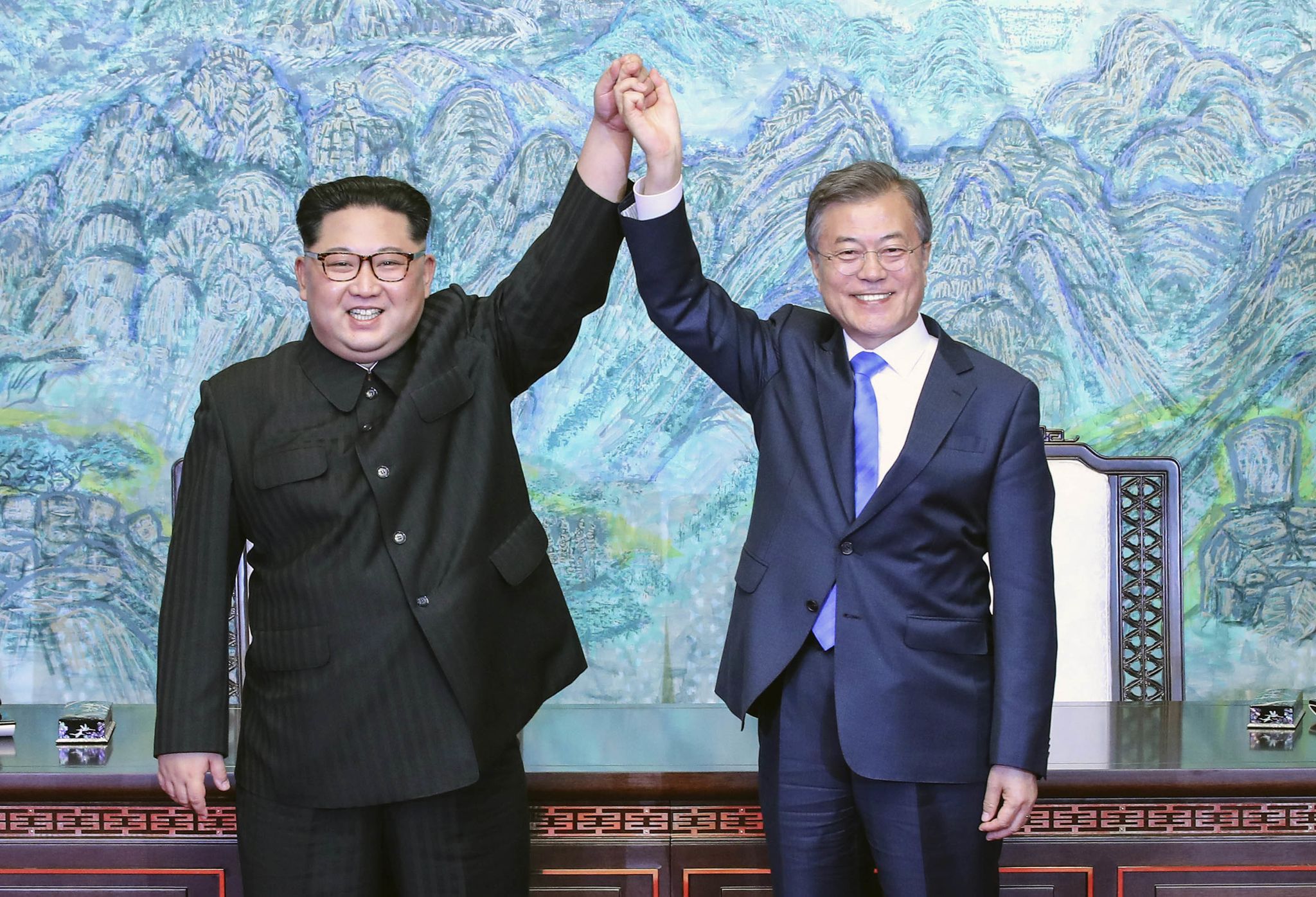
    South Korean President Moon Jae-in will visit President Trump at the White House later this month ahead of Mr. Trump’s historic summit with North Korea’s leader on the pivotal issue of denuclearizatio

    South Korean President Moon Jae-in will visit President Trump at the White House later this month ahead of Mr. Trump’s historic summit with North Korea’s leader on the pivotal issue of denuclearization.

    The White House said Friday that Mr. Trump will host Mr. Moon on May 22, their third meeting since Mr. Trump took office.

    White House press secretary Sarah Huckabee Sanders said Mr. Trump’s upcoming meeting with North Korean leader Kim Jong-un will be high on the agenda, following Mr. Moon’s first meeting with Mr. Kim on April 27.

    “President Trump and President Moon will continue their close coordination on developments regarding the Korean Peninsula,” she said. “This third summit between the two leaders affirms the enduring strength of the United States–Republic of Korea alliance and the deep friendship between our two countries.”

    Mr. Trump said Friday that the U.S. and North Korea have agreed on the date and location of their summit, but he didn’t disclose the details. Among the locations under consideration are Singapore, Mongolia and the demilitarized zone between North and South Korea.

  • Senate Dems concerned Ukraine not cooperating with Mueller’s Russia probe

    Top Senate Democrats are pushing Ukrainian officials to explain allegations that they’re not cooperating with special counsel Robert Mueller’s investigation because they fear President Trump.

    Top Senate Democrats are pushing Ukrainian officials to explain allegations that they’re not cooperating with special counsel Robert Mueller’s investigation because they fear President Trump.

    The three senators — Robert Menendez of New Jersey, the top Democrat on the Senate Foreign Relations Committee, and Richard Durbin of Illinois and Patrick Leahy of Vermont — wrote a letter Friday to Ukraine Prosecutor General Yuriy Lutsenko, expressing concern about a recent New York Times report quoting Ukrainian government officials saying its relationship with the U.S. and Trump administration is too valuable to jeopardize in any way.

    “As strong advocates for a robust and close relationship with Ukraine, we believe that our cooperation should extend to such legal matters, regardless of politics,” the senators wrote. “Blocking cooperation with the Mueller probe potentially cuts off a significant opportunity for Ukrainian law enforcement to conduct a more thorough inquiry into possible crimes committed during the Yanukovich era.”

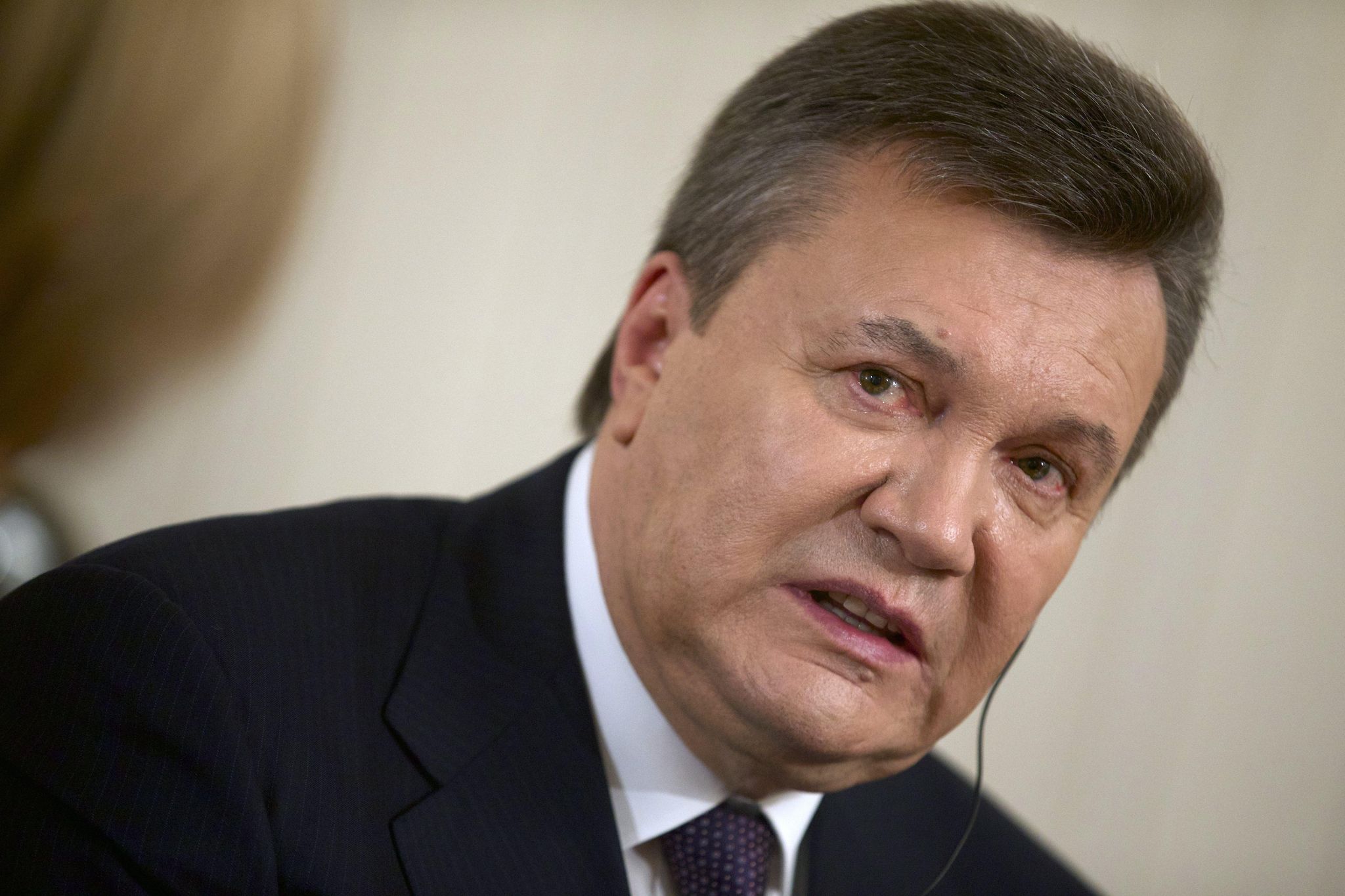
    Viktor Yanukovych served as Ukraine’s president from 2010 to 2014, when he was removed from power during the Ukrainian revolution. He is currently in exile in Russia.

    “This reported refusal to cooperate with the Mueller probe also sends a worrying signal — to the Ukrainian people as well as the international community — about your government’s commitment more broadly to support justice and the rule of law,” the senators wrote.

    The letter also includes questions the senators have about Mr. Lutsenko’s office allegedly preventing the issuing of subpoenas to collect evidence and interview witnesses in four open cases related to former Trump campaign chairman Paul Manafort.

    As part of the Mueller probe, Mr. Manafort has pleaded not guilty to conspiracy, money laundering and tax and bank fraud charges related to his lobbying work for Mr. Yanukovych.

  • Donald Trump urged by U.K. not to nix Iran nuke deal

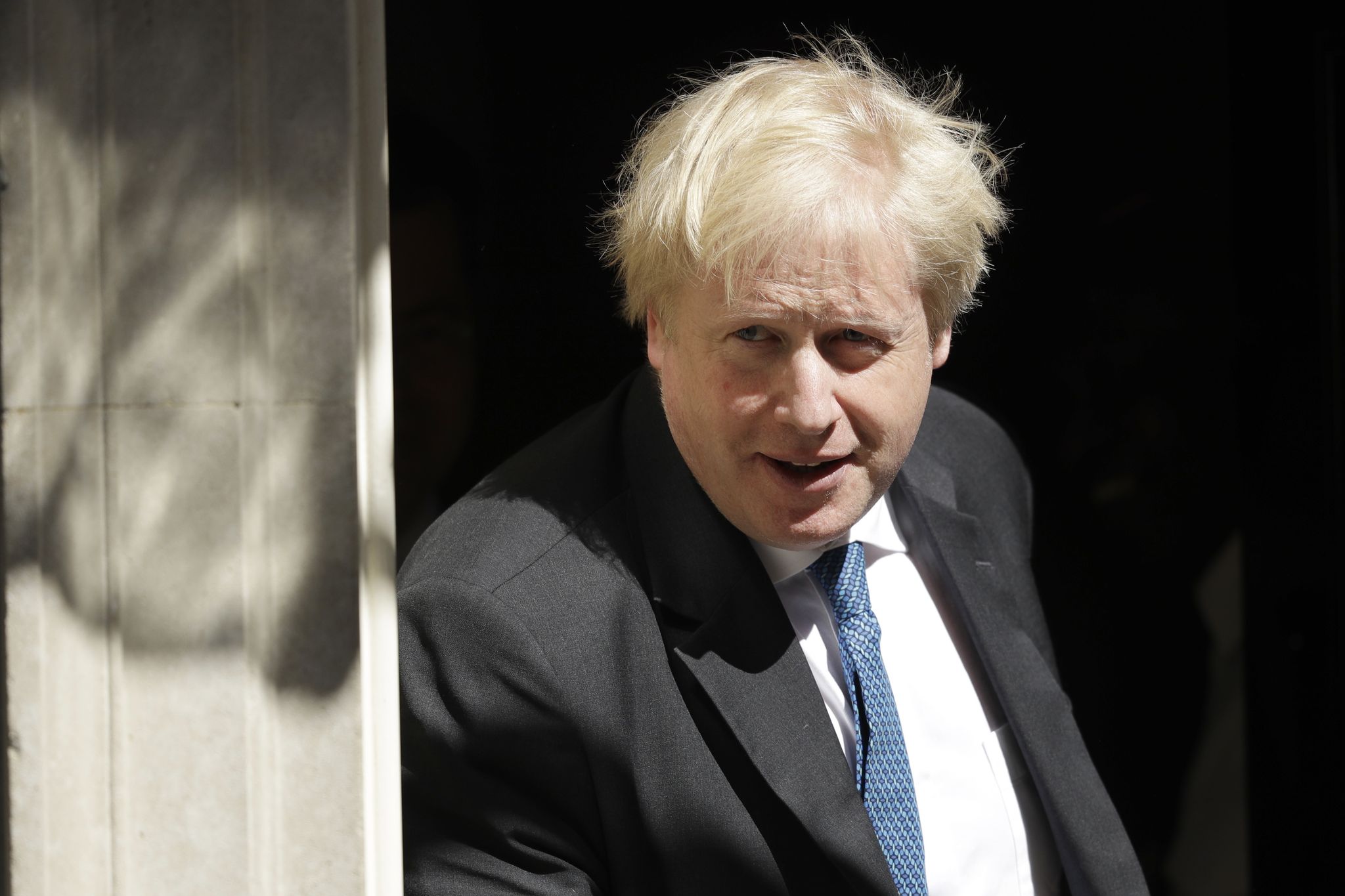
    U.K. Foreign Secretary Boris Johnson on Monday went on President Trump’s favorite TV show to urge him not to quit the Iran nuclear deal, although agreeing with the president’s assessment that it is a

    U.K. Foreign Secretary Boris Johnson on Monday went on President Trump’s favorite TV show to urge him not to quit the Iran nuclear deal, although agreeing with the president’s assessment that it is a bad deal.

    He stressed that there was no “Plan B” if the U.S. nixes the deal.

    “The president has a legitimate point,” Mr. Johnson said on Fox News’ “Fox & Friends,” which Mr. Trump regularly views. “He set a challenge for the world. We think that what you can do is be tougher on Iran.”

    He said ripping up the Iran deal would be like “throwing the baby out with the bathwater.”

    Mr. Trump has set a Saturday deadline to decide whether to pull out of the Obama-era agreement that lifted economic sanctions on Iran in return for halting the Islamic regime’s nuclear program until 2025.

    Mr. Johnson is in Washington this week but will not meet with the president. He took to the airwaves to deliver his message to Mr. Trump.

    Similar appeals were delivered directly to Mr. Trump in visits last month by French President Emmanuel Macron and German Chancellor Angela Merkel. France, Germany and the U.K., as well as China and Russia, joined the U.S. in negotiating the deal.

    Mr. Trump’s concerns, from more rigorous inspections of Iran nuclear facilities to extending the moratorium beyond 2025, would be addressed by building on the current deal, Mr. Johnson said.

    “As I say, a Plan B does not seem to me to be particularly well developed at this stage,” the foreign secretary said.

    If Iran begins fast-tracking a nuclear weapon, the option of bombing its nuclear facilities or allowing a nuclear arms race in the volatile Middle East were both bad options, Mr. Johnson said.

    “At the moment there does not seem to be a viable military solution,” he said.

  • Richard Grenell: U.S. and Germany ‘on the same side’ despite differences

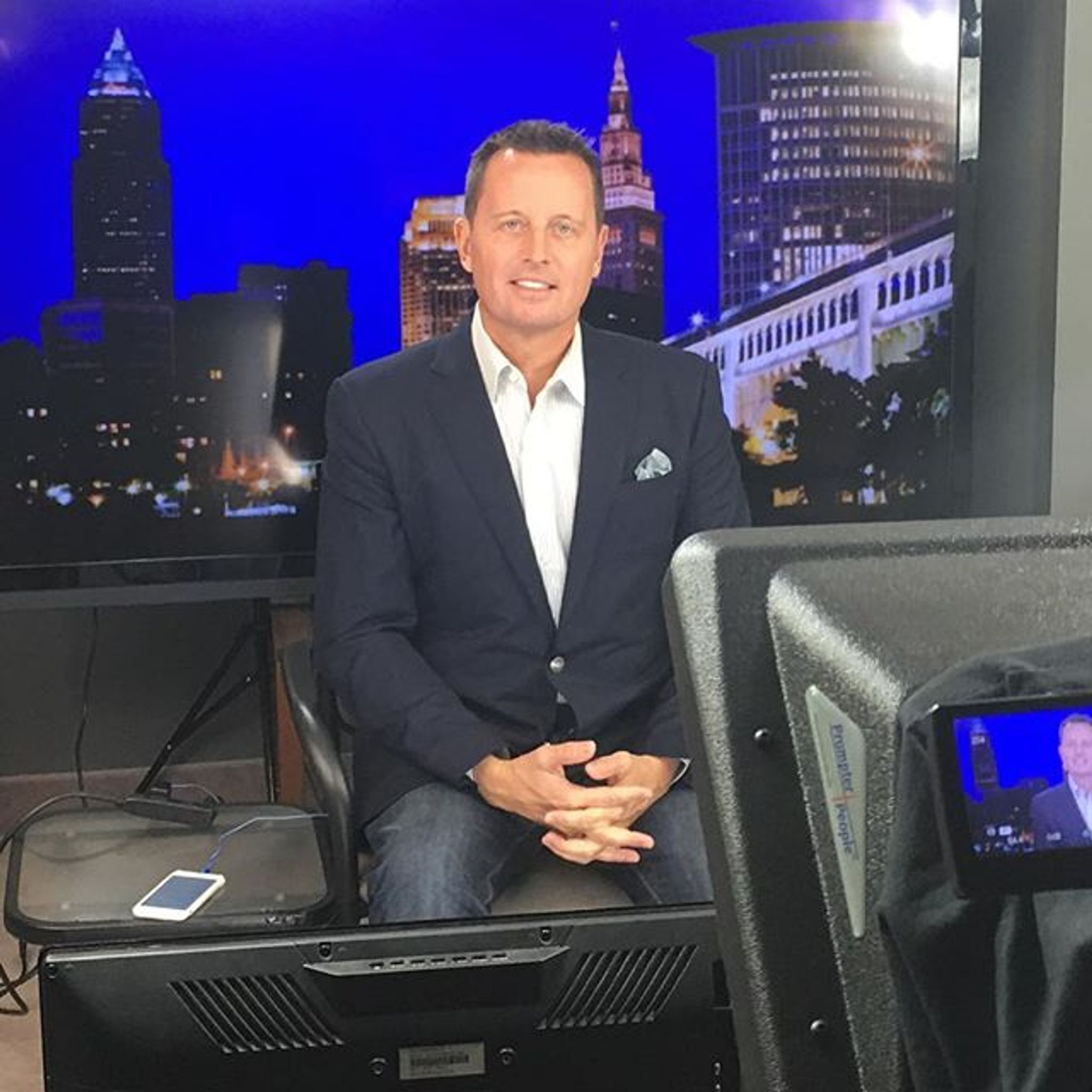
    U.S. Ambassador to Germany Richard Grenell said Monday that despite some differences President Trump and German Chancellor Angela Merkel are on the same side.

    U.S. Ambassador to Germany Richard Grenell said Monday that despite some differences, President Trump and German Chancellor Angela Merkel are on the same side.

    “I wish every American can see the way Donald Trump negotiates,” Mr. Grenell said on Fox News.

    He said Mr. Trump’s meeting with Ms. Merkel on Friday went well despite differences on the Iran nuclear agreement and trade policy.

    “He is a great negotiator and she — Angela Merkel — realizes that. They had a great give and take at the end of very tough negotiations. We have some difficult issues with Germany, but we’re totally on the same side,” he said.

    The two met just days after French President Emmanuel Macron came to the U.S. for Mr. Trump’s first official state visit. They also discussed the Iran deal and Mr. Trump criticized Germany for not paying enough in defense spending.

    “We need a reciprocal relationship, which we don’t have,” Mr. Trump said at a joint news conference. “We’re working on it. We have a far greater burden than we should have.”

  • ‪‪Donald Trump‬, ‪John F. Kelly‬, ‪Beyaz Saray‬‬

    White House Chief of Staff John F. Kelly on Monday denied that he said President Trump is an “idiot,” calling an NBC News story that said he had done so “total BS.”

    Kelly’s statement came about 45 minutes after NBC News published a report that described a number of fights between Trump and his embattled chief of staff. The outlet reported that Kelly often tells senior aides that they have to save the president from himself and his impulses — and that Trump does not understand policy.

    “He doesn’t even understand what DACA is. He’s an idiot,” Kelly told White House aides, according NBC News, which cites two White House officials present for the meeting. DACA refers to a program that protects from deportation young undocumented immigrants brought to the United States as children.

    “I spend more time with the President than anyone else and we have an incredibly candid and strong relationship. He always knows where I stand and he and I both know this story is total BS,” Kelly said in a statement released by the White House press office in response to the story.

  • Aimed at China, Trump’s tariffs are hitting closer to home

    President Donald Trump’s escalating dispute with China over trade and technology is threatening jobs and profits in working-class communities where his “America First” agenda hit home.

    WASHINGTON (AP) – President Donald Trump’s escalating dispute with China over trade and technology is threatening jobs and profits in working-class communities where his “America First” agenda hit home.

    The Commerce Department has received more than 2,400 applications from companies seeking waivers from the administration’s tariffs on steel and aluminum imports, which may result in duty payments of millions of dollars for larger businesses. The department has begun posting the requests online for public comment; several of the applications released so far suggest deep misgivings with Trump’s protectionist strategy, especially in areas where he won strong support during the 2016 election.

    The tariffs are aimed primarily at China for flooding the global market with cheap steel and aluminum. But they’ve also led to confusion and uncertainty, according to Associated Press interviews and a review of records. In Oklahoma, Texas and Wisconsin, for example, businesses operating in the furniture, energy and food sectors have outlined the financial difficulties they’d face if they’re not excused from the steel tariff.

    In Okmulgee, Oklahoma, dozens of jobs hang in the balance as office furniture giant Steelcase waits to hear back from the Commerce Department.

    A Steelcase subsidiary, PolyVision, operates a plant in Okmulgee that uses a special type of steel from Japan to manufacture a durable glass-like surface for whiteboards and architectural purposes. PolyVision “cannot and will not be able to procure” from U.S. companies the cold-rolled steel it requires “in a sufficient and reasonably available amount or of a satisfactory quality,” Steelcase said.

    Trump won most of the votes cast for president in Okmulgee County. Without a waiver, Steelcase warned, the “economic viability of PolyVision (and) the small town of Okmulgee” would be jeopardized.

    The waiver request also indicates that a $15 million plant expansion may be at risk. Steelcase and PolyVision are on the verge of making the investment, which would create new construction and manufacturing jobs, according to the request.

    Roger Ballenger, Okmulgee’s city manager, said he and other local officials are “very concerned about the situation with PolyVision.”

    The tariffs – 25 percent on imported steel and 10 percent on imported aluminum – are designed to protect and rebuild the U.S. companies that manufacture the metals. The U.S. temporarily exempted several major trading partners, including the European Union, Mexico and Canada.

    China, which was left on the target list, retaliated by imposing tariffs on $3 billion in U.S. products, including apples, pork and ginseng.

    Trump responded by adding more protectionist measures as punishment for Chinese theft of U.S. intellectual property. And Beijing punched back by proposing tariffs on $50 billion in U.S. products including small aircraft and soybeans – a direct threat to rural areas that were key to Trump’s victory.

    John Hritz, CEO of JSW Steel USA in Baytown, Texas, said his company is in lockstep with Trump’s approach. “We’re in favor of growing the steel industry in this country,” Hritz said. JSW Steel, owned by Indian conglomerate JSW Group, is embarking on a $500 million overhaul of the plant that it says will create hundreds of jobs.

    The growth would be welcomed in Baytown, where unemployment is 9.8 percent, more than double the national rate. Baytown is located partly in Harris County, which Democrat Hillary Clinton won, and partly in Chambers County, which Trump handily won.

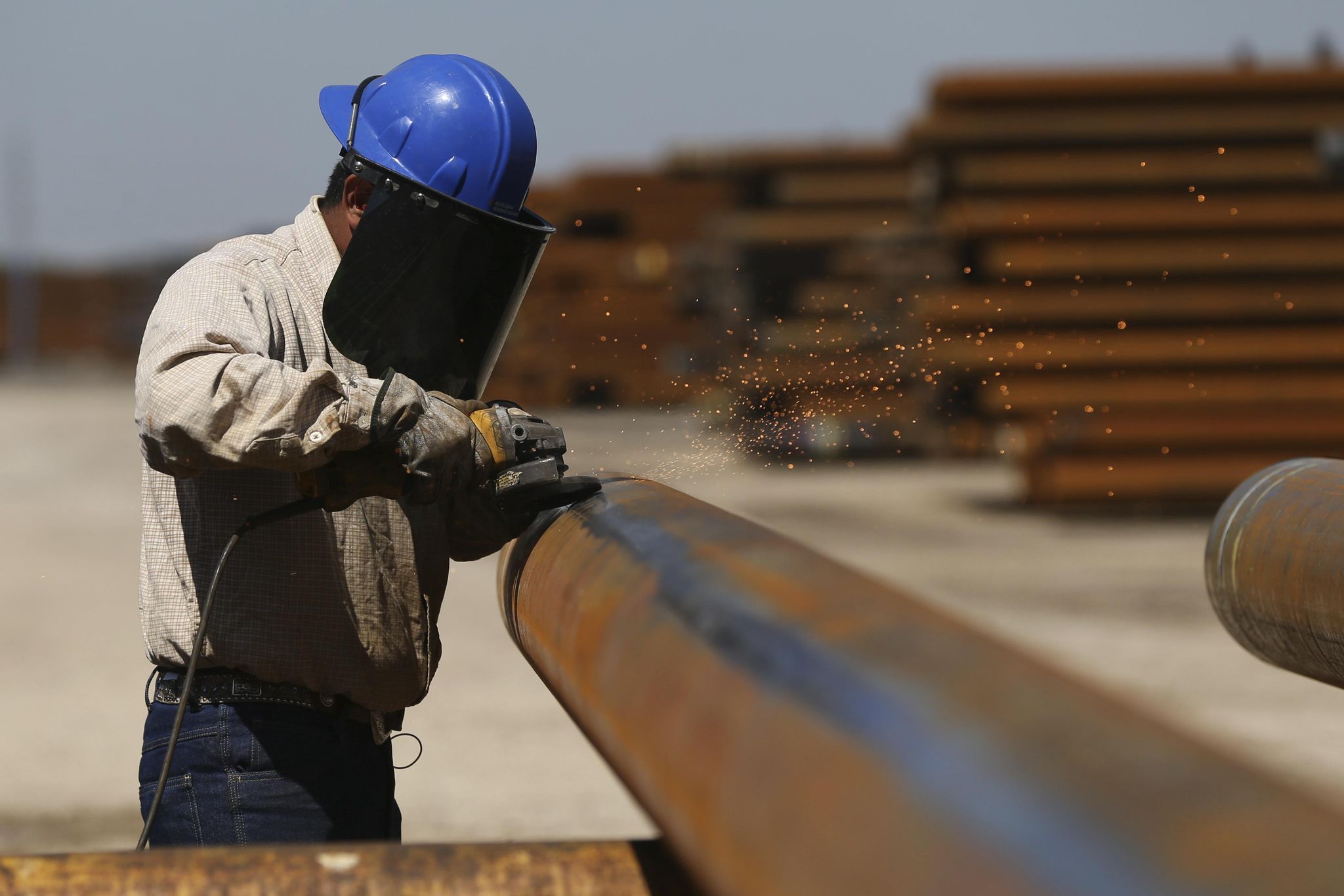
    The future is much murkier for another Baytown steel business, Borusan Mannesmann Pipe. Without a waiver, Borusan may face tariffs of $25 million to $30 million annually if it imports steel tubing and casing from its parent company in Turkey, according to information the company provided to the AP.

    Borusan said the Baytown production line would no longer be competitive and “jobs would be threatened” if it cannot import 135,000 metric tons of steel annually over the next two years. The pipes Borusan produces are used primarily as casing for oil and natural gas wells.

    But if Commerce says yes, Borusan will be able to unlock a $25 million investment in the Baytown facility as it seeks to become a “100 percent domestic supplier,” according to the waiver request. An additional $50 million expansion in pipe fabrication capacity would follow, the company said, leading to as many as 170 new jobs.

    Seneca Foods Corporation, the nation’s largest vegetable canner, said in its waiver application that it’s unclear, at best, if U.S. suppliers have the ability or willingness to expand their production in the long term to meet the company’s annual demand for tinplated steel.

    But “clearly they cannot meet demand in the short term,” Seneca told Commerce officials. That means Seneca has to buy a portion of what it needs from overseas.

    A person with knowledge of Seneca’s situation said the company would face a $2.25 million duty if the Commerce Department doesn’t approve its waiver request for 11,000 metric tons of tinplate it already agreed to purchase from China. The material is to be delivered this year and next, according to the waiver request. The person was not authorized to speak publicly and spoke to the AP on condition of anonymity.

    Seneca said it employs more than 400 people at can-making facilities in Wisconsin and Idaho and near its headquarters in New York’s Wayne County, where Trump bested Clinton. The company doesn’t warn layoffs are imminent if the waiver isn’t approved. Instead, the tariffs would likely come out of Seneca’s bottom line, the person said.

    ___

    Contact Richard Lardner on Twitter at http://twitter.com/rplardner

  • Emmanuel Macron, French president, in U.S. to visit Donald Trump

    Behind the pomp and circumstance of French President Emmanuel Macron’s visit to Washington starting Monday — including President Trump’s first state dinner for a fellow world leader since taking offi

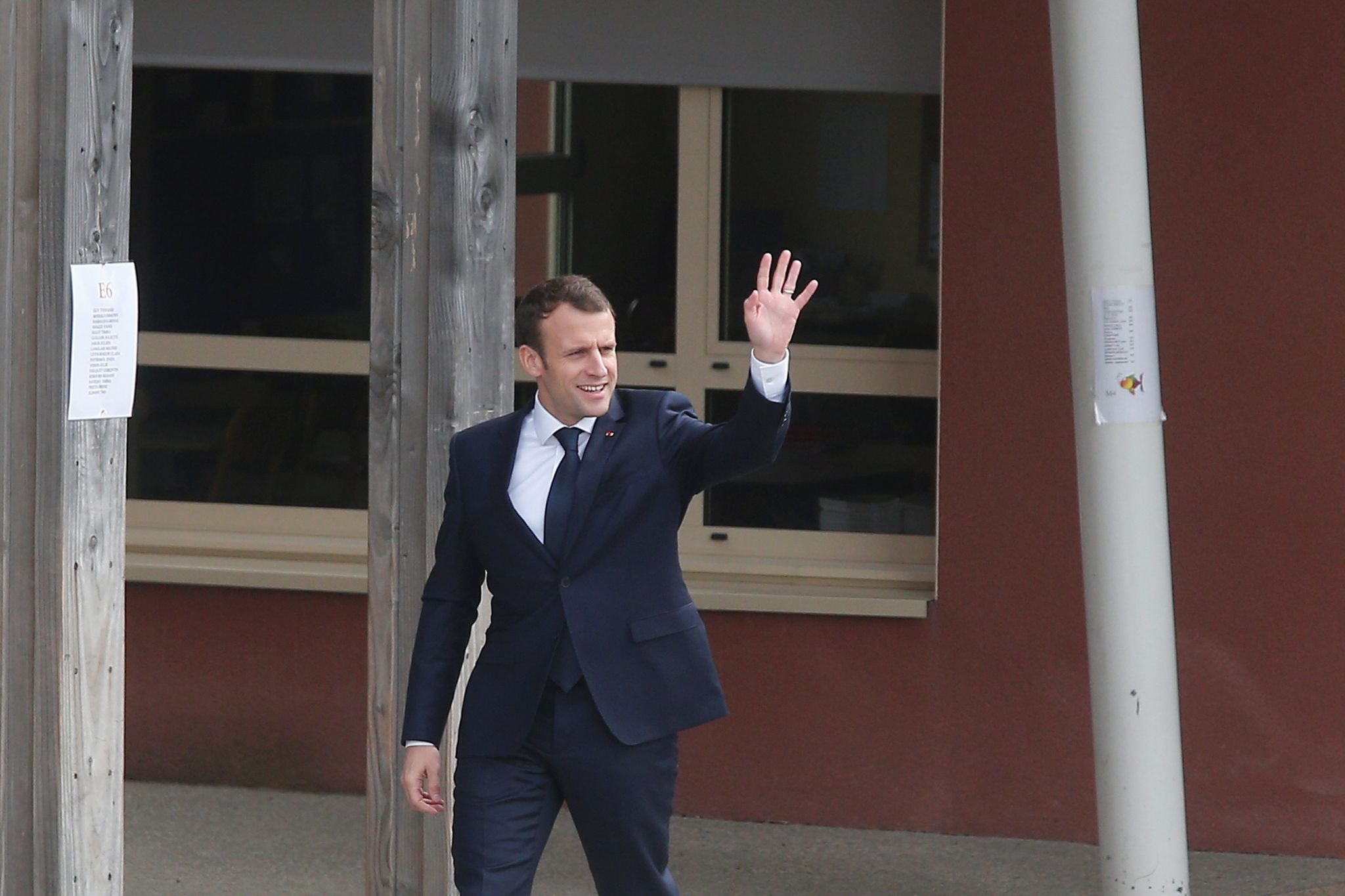
    Behind the pomp and circumstance of French President Emmanuel Macron’s visit to Washington starting Monday — including President Trump’s first state dinner for a fellow world leader since taking office — lies a calculated and hard-nosed campaign to position Paris as the White House’s best friend in Europe.

    Much is riding on the visit by Mr. Macron, the banker and political neophyte who captured the French presidency last year, topped by the fate of the Iran nuclear deal that Mr. Trump is poised to kill next month and that Mr. Macron desperately hopes to save.

    The three-day visit will be a high-profile test of Mr. Macron’s studied charm offensive with the unpredictable American president, weighing whether the young leader can parlay his personal rapport with Mr. Trump into White House moderation on issues such as the Iran deal and Washington’s new skepticism over such internationalist causes as climate change and free trade.

    With German Chancellor Angela Merkel coming to Washington at the end of the week, European leaders will get their last best chance to persuade Mr. Trump to change his mind, or at least hold his fire as EU capitals try to devise new penalties for Tehran that could keep Washington in the deal.

    Iranian Foreign Minister Mohammad Javad Zarif, on a visit to New York, increased the pressure on Mr. Macron Sunday by saying Washington’s withdrawal from the pact would only further diminish the U.S. standing among its allies and adversaries alike.

    Iran is ready to restart its nuclear program if the Trump administration leaves the 2015 nuclear agreement and reinstates sanctions, Mr. Zarif said.

    “We have put a number of options for ourselves, and those options are ready, including options that would involve resuming at a much greater speed our nuclear activities,” he added.

    Mr. Macron has unexpectedly emerged as one of the more moderate and accepting voices within the European Union concerning some of Mr. Trump’s unorthodox foreign policy stances.

    The 40-year-old French president has repeatedly defended Mr. Trump’s credibility on the world stage from criticism on several fronts, including his immigration ban from several Muslim countries, claims that Washington is abandoning its role as defender of the postwar liberal order, and views that he is creating a vacuum that China and Russia are filling.

    Other Western European leaders have struggled to get a read on Mr. Trump or even establish a personal working rapport, but the young English-speaking Mr. Macron has proved more deft.

    “I am not going to judge what should be your president, or to consider that because of these controversies or because of these investigations your president is less credible,” Mr. Macron told The Associated Press, dismissing any attempt to be drawn into the fierce U.S. controversy over Russian meddling in the 2016 presidential election.

    But Mr. Macron will be under intense scrutiny back home to prove that his personal bonhomie with Mr. Trump translates into policy successes, starting with the May 12 deadline under which Mr. Trump must decide whether to stay in the multilateral Iran nuclear deal.

    Policy payoffs

    Although the visit will undoubtedly include all the trappings of a high-level diplomatic visit between two longtime allies, political observers in the U.S. and Europe will be keeping a keen eye on how the leaders interact over several issues on which they have found themselves at odds.

    The two leaders are certain to discuss the impacts of Mr. Trump’s decision to withdraw from the Paris climate accord, which France has championed but the Trump administration argues unnecessarily regulates American industries and international companies. Mr. Macron is also a champion of free trade, while Mr. Trump has questioned the North American Free Trade Agreement, killed an Asian trade deal and put in deep freeze a proposed free trade accord with the European Union.

    But no topic will likely loom as large between the two leaders as Washington’s reported desire to withdraw from the 2015 nuclear deal with Iran that the Obama administration strongly supported.

    Mr. Trump and his national security team, led by newly installed National Security Adviser John R. Bolton, have repeatedly called for the dissolution of the nuclear deal despite the continuing support of other world powers, including Britain, France, Germany, Russia and China.

    If Mr. Trump effectively withdraws from the deal, the U.S. will reimpose sanctions that Iran says negate the main purpose of the accord.

    Proponents of the pact, including Mr. Macron and Ms. Merkel, say there is no tangible proof that Tehran has failed to comply with the nonproliferation elements of the Iran deal, even if Iran continues to test other military systems and remains a destabilizing force for American allies across the Middle East.

    More pointedly, Mr. Macron is expected to argue that the U.S. and its Western allies will have no good option to restrain Iran’s nuclear programs if Mr. Trump takes Washington out of the deal.

    French officials warn there is “no plan B” if the Iran deal collapses. Mr. Macron himself asked on Fox News, “What do you have as an alternative?”

    Iran’s Mr. Zarif said Sunday that the Bolton appointment showed Mr. Trump would rather overthrow the government in Tehran that negotiate with it.

    The U.S. “never abandoned the idea of regime change in Iran,” he said, adding that some are just “more explicit about stating it.”

    France, Germany, the United Kingdom and other key European allies say the deal is the best chance the West has to keep Iran from becoming a nuclear power, potentially threatening the U.S. and Israel with an atomic attack. A furious negotiation is underway to see if the Europeans can formulate a new set of sanctions and penalties for Tehran outside of the nuclear deal to persuade Washington to stay in it.

    Mr. Macron, who treated Mr. Trump to an envy-inducing military parade and a dinner in the Eiffel Tower during his trip to Paris last year, has shown a talent for gestures that impress the billionaire former real estate developer.

    The French president plans to present Mr. Trump with an oak tree sapling from the site of one of the first World War I battles involving American troops, the Battle of Belleau Wood, The Associated Press reported Sunday.

    It’s a sign of appreciation for the sacrifices America has made for France — and a subtle nod to Mr. Macron’s environmental agenda.

    He wants it planted in the White House gardens.

    • This article is based in part on wire service reports.

  • Mike Pompeo clears panel with Chris Coons ‘present’ vote

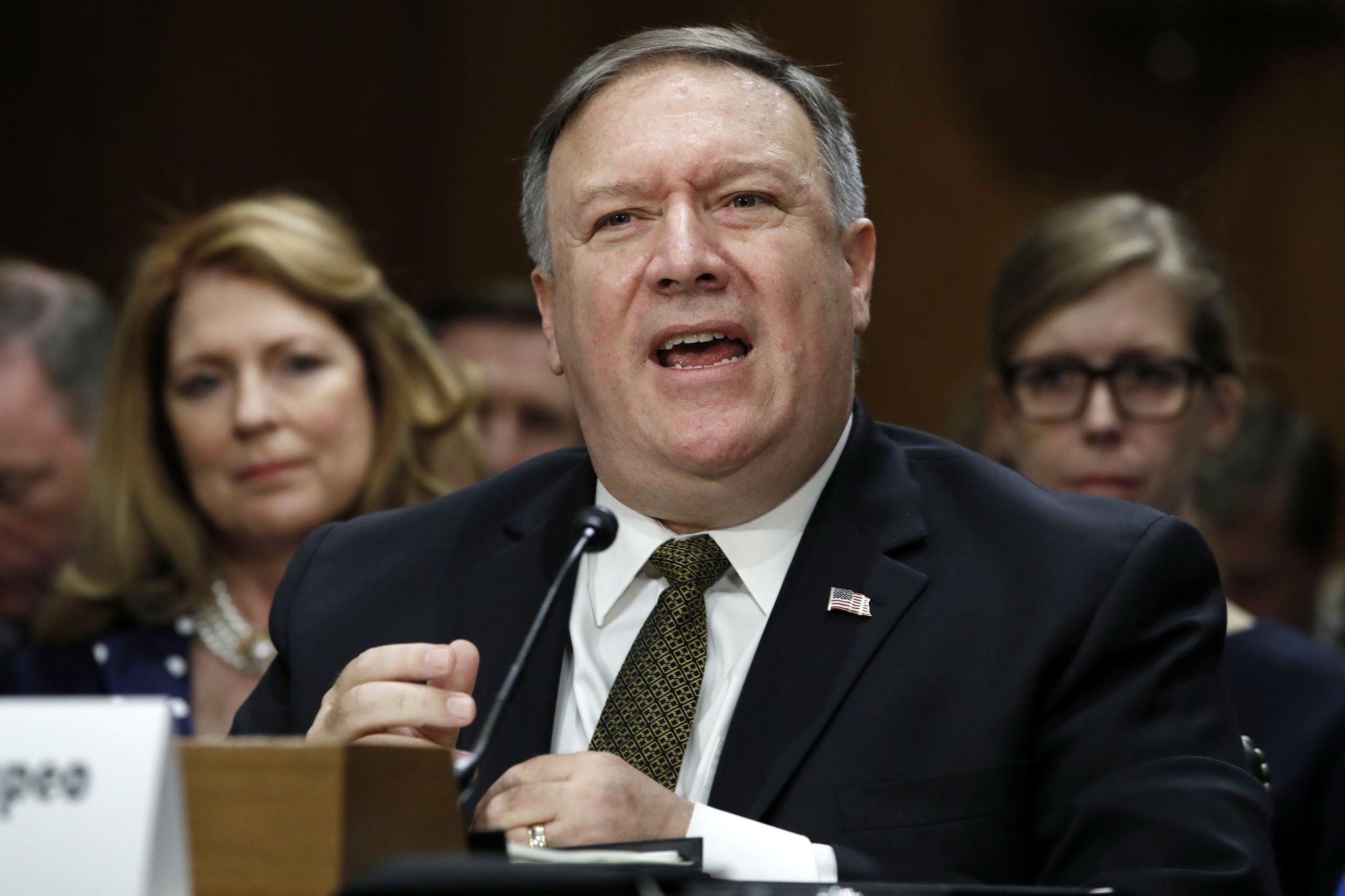
    A small bipartisan gesture at the end of a fiercely partisan fight Monday has put Mike Pompeo on course to Senate confirmation as the nation’s next secretary of state.

    A small bipartisan gesture at the end of a fiercely partisan fight Monday has put Mike Pompeo on course to Senate confirmation as the nation’s next secretary of state.

    During a day of wild parliamentary back-and-forth in the Senate Foreign Relations Committee, the former congressman from Kansas and outgoing CIA director secured the crucial vote of lone Republican holdout Sen. Rand Paul of Kentucky, only to face rejection from the panel because fellow Republican committee member Sen. Johnny Isakson of Georgia missed the Monday evening confirmation vote to attend a funeral back home.

    But Sen. Christopher A. Coons, Delaware Democrat, volunteered to vote “present” on the nominee, resulting in a party-line 11-9 vote — Mr. Isakson’s proxy vote in favor counting because of Mr. Coons’ gesture — recommending that the full Senate approve Mr. Trump’s pick to replace the fired Rex W. Tillerson.

    With at least three moderate Senate Democrats on record in support of Mr. Pompeo, the full Senate appears poised to confirm Mr. Pompeo.

    “The Pompeo nomination has now been reported out of the Foreign Relations Committee, and there are sufficient votes in the Senate to ensure that he will be confirmed this week as our nation’s next secretary of state,” Senate Majority Leader Mitch McConnell, Kentucky Republican, said minutes after the Senate panel wrapped up its work.

    But Mr. Paul’s change of heart and Mr. Coons’ “present” vote spared Mr. Trump and Mr. Pompeo an unprecedented rebuke at the committee level for one of the government’s highest posts.

    As Republicans complained repeatedly Monday, past secretary of state confirmation battles had never been so partisan. President Obama’s choices — Hillary Clinton and John F. Kerry — received more than 90 favorable votes.

    The vote also represented a rare lobbying win for President Trump on Capitol Hill. Mr. Trump and Mr. Pompeo talked repeatedly with the libertarian Mr. Paul in an effort to win his vote.

    It appeared for much of the day that Mr. Pompeo would have to win his nomination fight without the backing of the committee, but minutes before the vote, Mr. Paul announced that he had received assurances that Mr. Trump and Mr. Pompeo had heard and understood his reservations about the Iraq War, overseas adventurism and the perils of a foreign policy focused on “regime change.”

    “Having received assurances … I have decided to support his nomination to be our next Secretary of State,” Mr. Paul Tweeted on Monday afternoon.

    During a White House event with French President Emmanuel Macron, Mr. Trump said Mr. Paul “never let us down” and is “a good man.”

    Hours before the committee vote Monday, Mr. Trump slammed Democrats for opposing Mr. Pompeo, including a number who supported the West Point graduate for the CIA post just a year ago.

    “Hard to believe obstructionists may vote against Mike Pompeo for secretary of state,” Mr. Trump said in a tweet.

    Marc Short, White House legislative affairs director, suggested to reporters that the senator from Kentucky could change his position.

    A vote against Mr. Pompeo from the Senate committee could have forced Senate Republican leadership to take the unusual step of sending a top nomination to the full Senate without a favorable recommendation, which has not occurred since 1989.

    That year, the Armed Services Committee voted against John Tower, President George H.W. Bush’s pick for secretary of defense. The full Senate later rejected Mr. Tower as well.

    Despite the risk of a committee rebuke, Mr. Pompeo was on track to receive approval from a full Senate vote this week.

    On Monday, two Senate Democrats facing tough re-election bids, West Virginia’s Joe Manchin III and Indiana’s Joe Donnelly, announced their support for the nominee. Other centrist Democrats, including Virginia’s Mark R. Warner and Alabama’s Doug Jones, have not declared their positions.

    Those votes, along with previously announced support from Sen. Heidi Heitkamp, North Dakota Democrat, who is also up for re-election — looked to make the confirmation almost certain.

    Hawks and doves

    If confirmed, Mr. Pompeo will be fourth in line to the presidency.

    His nomination battle has been blamed on election-year political partisanship. Democrats questioned Mr. Pompeo’s stands on gay rights and other social issues in his confirmation hearing this month.

    “I understand the climate we are in,” Senate Foreign Relations Committee Chairman Bob Corker told reporters Monday. “I understand the polarization we have as a nation.”

    The Tennessee Republican said Mr. Pompeo was one of the most qualified nominees in history to be tapped as secretary of state, one who had proved his diplomatic skills with a secret mission to Pyongyang over the Easter weekend to help prepare for a proposed summit with North Korean leader Kim Jong-un.

    But several Democrats who backed Mr. Pompeo for the CIA said his comments as a hawkish lawmaker in Congress made him less-suited to be the nation’s top diplomat and the face of American foreign policy.

    Sen. Robert Menendez of New Jersey, the ranking Democrat on the Senate Foreign Relations Committee, expressed concerns that Mr. Pompeo, who has a much closer personal rapport with the president than Mr. Tillerson did, could be a yes man to Mr. Trump’s worst instincts.

    During his rocky tenure at the nation’s most influential diplomatic agency, Mr. Tillerson presided over a major budget cut, staff cutbacks and an overall demoralization of the diplomatic corps. Numerous senior positions remain empty. Senate Republicans argued Monday that Mr. Pompeo’s successful record managing the CIA would translate well to rebuilding staff and morale at Foggy Bottom.

    As CIA chief, Mr. Pompeo cultivated a close relationship with Mr. Trump by briefing him frequently in person on the world’s most sensitive matters and taking a small office on an upper floor of the Old Executive Office Building, just a short walk from the White House.

    “He has a very good relationship with the president,” Mr. Corker said Monday. “That is somewhat different from the last three secretaries of state we have had.”

    Since his election, even Mr. Trump publicly blasted the FBI and Justice Department for their roles in investigating Russia election meddling, Mr. Pompeo has largely shielded the CIA from the president’s wrath.

  • Supreme Court ruling on travel ban case to affect Trump’s agenda

    What the Supreme Court does with President Trump’s travel ban case, which reaches the justices this week, is likely to determine whether courts across the country give him the usual deference due a pr

    What the Supreme Court does with President Trump’s travel ban case, which reaches the justices this week, is likely to determine whether courts across the country give him the usual deference due a president and allow him leeway to pursue his immigration crackdown — or whether they join the anti-Trump resistance determined to thwart him at every turn.

    From battles in California, Illinois and Pennsylvania over sanctuary cities, to illegal immigrant teens gaining abortion rights, to the border wall, to Mr. Trump’s attempts to limit some paths to legal immigration and to cancel the Obama-era Deferred Action for Childhood Arrivals program for illegal immigrant Dreamers, immigration rights activists and the administration have been battling on nearly every front of the issue.

    Perhaps a dozen potentially major cases are working their way through the district and appeals courts. The president has not fared particularly well, with judges peering through his tweets, guessing at his motives and generally siding with the anti-Trump resistance.

    Mr. Trump is looking to get back on track with the justices because much of his agenda is riding on the outcome.

    Josh Blackman, a professor at the South Texas College of Law, said if the justices decide to read into Mr. Trump’s past statements and use them against him, given his prolific caustic remarks, “he should just resign because the courts can enjoin everything he does.”

    “If you don’t give the president the presumption of regularity that he’s due, the administration is done. It’s like impeachment without impeachment,” Mr. Blackman said.

    He has urged judges to be cautious in going down that route.

    Others cheer the judges who have used Mr. Trump’s words and actions against him.

    “By and large, the court decisions have pretty much stopped any kind of abuses from the Trump administration,” said David Leopold, a former president of the American Immigration Lawyers Association. “The courts have done very good in standing up for the rule of law in the face of all-out assaults on immigrants’ rights, and the rights of state and local officials to self-govern.”

    Indeed, the most recent appeals court ruling, last week’s decision tying Mr. Trump’s hands on sanctuary cities, used some of the strongest language yet. The three-judge panel, all appointed by Republican presidents, castigated the president for bordering on “tyranny.”

    That panel, of the 7th U.S. Circuit Court of Appeals, said the administration’s effort to add conditions to sanctuary cities applying for federal grant money was illegal because Congress has the power to control the purse strings and lawmakers didn’t include those conditions in the law.

    Similar issues are at play in the high court this week. Oral arguments are slated for Wednesday on whether Congress granted Mr. Trump powers to halt most migration and visits from countries he deems unsafe.

    The case involves the third version of the travel restrictions, which Mr. Trump describes as “extreme vetting” and opponents say is his campaign promise for a “Muslim ban.”

    Under the first policy, visitors and migrants from seven majority-Muslim countries identified by the Obama administration and Congress were almost completely banned from entering the U.S. That policy met with resistance from the courts, as did a follow-up second version that drew a slightly narrower net around who was banned.

    The third version involved a long review of travel conditions, and the State and Homeland Security departments came up with a list of Muslim and non-Muslim countries that either don’t share data with the U.S. or are otherwise unable to validate who their citizens are. Those people are severely restricted from entering the U.S.

    In briefing papers, Hawaii, which is leading the challenge, argued that Mr. Trump showed clear religious animus toward Muslims during the 2016 election and again while in office, which the state says should taint all of his actions in this sphere.

    But Solicitor General Noel Francisco says the legality of Mr. Trump’s actions should be judged on their merits, not on what he says.

    Even if the justices do refuse to look at Mr. Trump’s tweets — they didn’t use them in an order last year dealing with version 2.0 of the travel ban — they could conclude that the administration didn’t properly make the case that national security required such a broad travel ban.

    Those on both sides of the issue are looking for big signals.

    “In many ways, some of the biggest questions will be what the justices say about these fundamental separation of powers issues and where’s the line between what the president can do, or do these huge transformative policies he’s trying to put in play flout the will of Congress?” said David Gans, director of the citizenship program at the Constitutional Accountability Center.

    Those on both sides of the issue said the surge of immigration lawsuits against Mr. Trump over the past 15 months is unprecedented.

    “There’s no question about it,” said Mr. Leopold.

    He said Mr. Trump has spurred the litigation by being more aggressive than either President George W. Bush or President Obama in pushing the boundaries of immigration law. He also said activists have nowhere else to turn.

    “Congress has not been helpful. The courts have been the place. From the moment the travel ban hit until now — whether it’s sanctuary cities, whether it’s temporary protected status, whether it’s administrative decisions by [U.S. Citizenship and Immigration Services],” he said.

    He said he expects more to come.

    Already pending before the justices is a case involving pregnant illegal immigrant teens who jumped the border traveling alone and are in government custody. The American Civil Liberties Union has launched a class-action lawsuit arguing that the government has been hindering their right to have abortions.

    The justices have been staring at that case for three months but have not said whether they will hear it.

    Last week’s sanctuary city ruling could also tee up another case for the justices.

    Meanwhile, the high court tossed back to the appeals courts the DACA cases.

    About the only area where Mr. Trump has had success at the lower courts is on his proposed border wall, which a federal district judge this year ruled was legal and didn’t violate environmental laws. That case has been sent to the 9th U.S. Circuit Court of Appeals.

    Beneath the big constitutional and policy issues are dozens of smaller individual cases in which immigrants have challenged their deportations. Those cases used to generally be fought out in immigration courts, but regular Article III judges are increasingly intervening in those disputes — usually to Mr. Trump’s detriment.

    The judges’ determination to inject themselves could also be tested by the high court.

    “Historically, immigration decisions were just not subject to review,” Mr. Blackman said. “The courts are pushing the boundaries of what prudential merits are of reviewing immigration decisions.”