Tag: Law Crime

  • Jennifer Miller’s gun rights lawsuit sets off wide debate

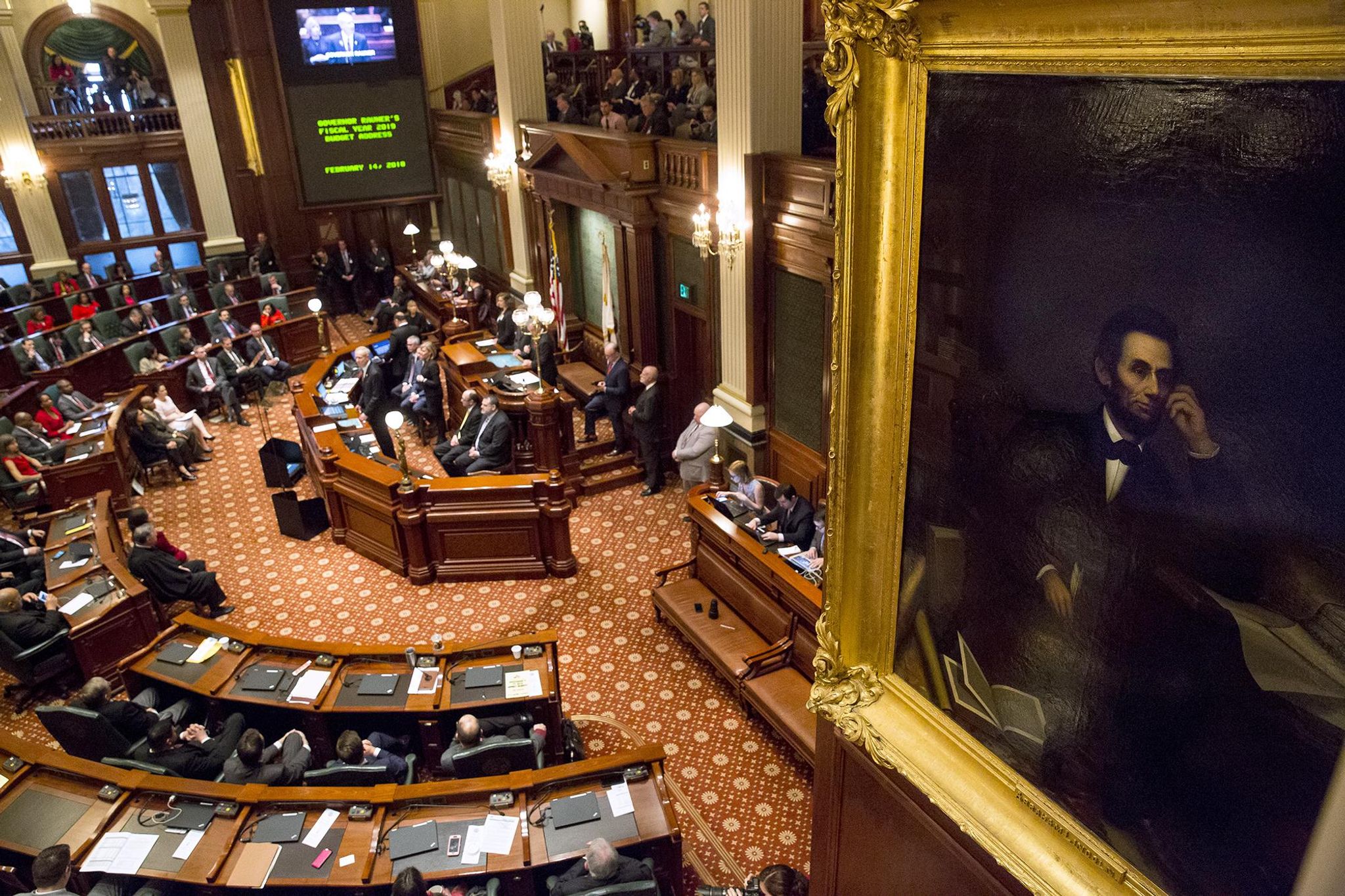
    An Illinois woman who runs a child care service out of her home is suing the state, saying its restrictions on day care facilities make it illegal for her to keep a gun in her house for self-defense.

    An Illinois woman who runs a child care service out of her home is suing the state, saying its restrictions on day care facilities make it illegal for her to keep a gun in her house for self-defense.

    Jennifer Miller’s lawsuit was filed in U.S. District Court for central Illinois after the state emerged as a battleground in the post-Parkland gun debate, with citizens and various localities trying to stake claims on either side of the issue.

    Mrs. Miller and her husband, Darin, both hold concealed-weapons permits. But Illinois’ rules prohibit handguns from being kept in day care homes, with exceptions only for law enforcement or others who have to carry guns for their jobs.

    Any firearms in other day care facilities have to be unloaded, kept under lock and stored separately from ammunition.

    The Millers say the rules mean they have to make a choice: give up their guns or have Mrs. Miller give up her day care.

    The state last month gave them a warning, the lawsuit says.

    Mrs. Miller has been a day care home licensee since last year and a day care home provider since 2016. Her husband is a special equipment operator for a paper producer in central Illinois — a job that would not require him to keep a gun in the house.

    Gun rights groups have taken up their cause.

    “We’re in court to make sure that the state cannot discriminate against day care operators who merely wish to exercise the rights we’ve restored in Illinois,” said Second Amendment Foundation founder Alan Gottlieb, whose group brought the lawsuit with the Illinois State Rifle Association and Illinois Carry.

    The lawsuit names Lisa Madigan, the state’s attorney general, and Beverly Walker, director of the state’s Department of Children and Family Services, as defendants.

    Ms. Madigan’s office declined to comment on the merits of the case.

    A spokeswoman for the Department of Children and Family Services said the agency couldn’t comment on pending litigation.

    It’s not clear how many people are affected by the day care rules, but pro-gun advocates say local cases such as this can turn into precedent-setting expansions of gun rights.

    Mr. Gottlieb pointed out that his group’s challenge to Chicago’s ban on handguns ultimately led to a 2010 U.S. Supreme Court decision affirming that states must respect an individual’s Second Amendment right to keep and bear arms.

    A separate legal challenge from the group also forced Illinois to allow the concealed carry of weapons in 2013, after courts found the state’s restrictions on the practice unconstitutional.

    Indeed, Illinois appears to be a hotbed of legal challenges over gun rights.

    The Second Amendment Foundation, the National Rifle Association and other gun rights advocates are suing to block the village of Deerfield, in suburban Chicago, from enforcing a ban on semi-automatic firearms.

    Meanwhile, Effingham County, located about 75 miles southeast of Springfield, recently moved in the other direction by pushing to become a “sanctuary” for gun owners if state lawmakers approve stricter gun controls.

    A resolution the county board passed last week reads in part: “If the Government of the State of Illinois shall infringe upon the inalienable rights granted by the Second Amendment, Effingham County shall become a ‘sanctuary county’ for all firearms unconstitutionally prohibited by the government of the State of Illinois.”

    Effingham County State’s Attorney Bryan Kibler acknowledged that the resolution was largely symbolic but said the county wanted to take a stand against a number of gun control bills that the state legislature is considering.

    “It’s symbolic … but it really proves that people in southern Illinois are getting tired of being pushed around,” Mr. Kibler said recently on Fox News.

  • Supreme Court ruling on travel ban case to affect Trump’s agenda

    What the Supreme Court does with President Trump’s travel ban case, which reaches the justices this week, is likely to determine whether courts across the country give him the usual deference due a pr

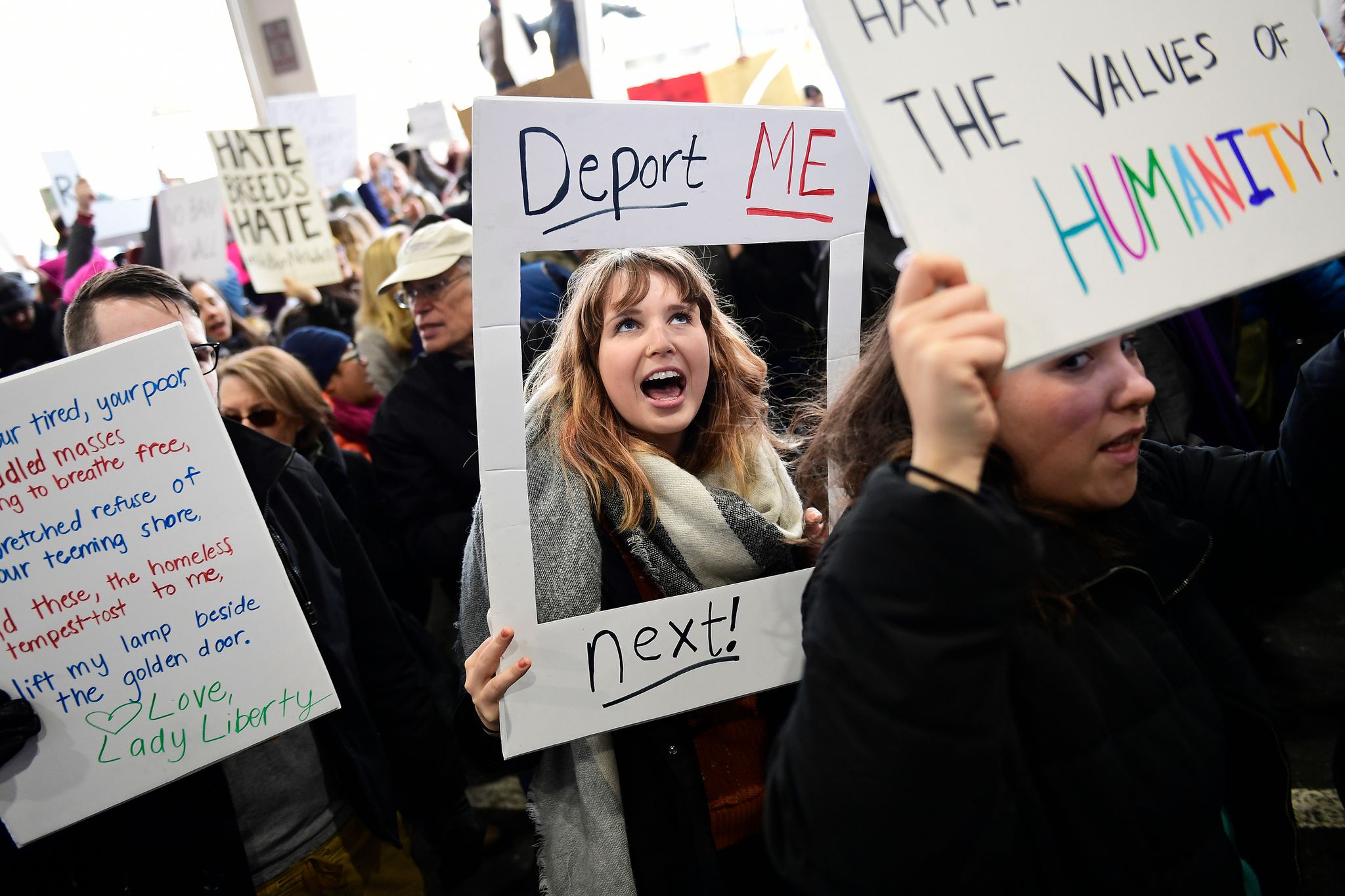
    What the Supreme Court does with President Trump’s travel ban case, which reaches the justices this week, is likely to determine whether courts across the country give him the usual deference due a president and allow him leeway to pursue his immigration crackdown — or whether they join the anti-Trump resistance determined to thwart him at every turn.

    From battles in California, Illinois and Pennsylvania over sanctuary cities, to illegal immigrant teens gaining abortion rights, to the border wall, to Mr. Trump’s attempts to limit some paths to legal immigration and to cancel the Obama-era Deferred Action for Childhood Arrivals program for illegal immigrant Dreamers, immigration rights activists and the administration have been battling on nearly every front of the issue.

    Perhaps a dozen potentially major cases are working their way through the district and appeals courts. The president has not fared particularly well, with judges peering through his tweets, guessing at his motives and generally siding with the anti-Trump resistance.

    Mr. Trump is looking to get back on track with the justices because much of his agenda is riding on the outcome.

    Josh Blackman, a professor at the South Texas College of Law, said if the justices decide to read into Mr. Trump’s past statements and use them against him, given his prolific caustic remarks, “he should just resign because the courts can enjoin everything he does.”

    “If you don’t give the president the presumption of regularity that he’s due, the administration is done. It’s like impeachment without impeachment,” Mr. Blackman said.

    He has urged judges to be cautious in going down that route.

    Others cheer the judges who have used Mr. Trump’s words and actions against him.

    “By and large, the court decisions have pretty much stopped any kind of abuses from the Trump administration,” said David Leopold, a former president of the American Immigration Lawyers Association. “The courts have done very good in standing up for the rule of law in the face of all-out assaults on immigrants’ rights, and the rights of state and local officials to self-govern.”

    Indeed, the most recent appeals court ruling, last week’s decision tying Mr. Trump’s hands on sanctuary cities, used some of the strongest language yet. The three-judge panel, all appointed by Republican presidents, castigated the president for bordering on “tyranny.”

    That panel, of the 7th U.S. Circuit Court of Appeals, said the administration’s effort to add conditions to sanctuary cities applying for federal grant money was illegal because Congress has the power to control the purse strings and lawmakers didn’t include those conditions in the law.

    Similar issues are at play in the high court this week. Oral arguments are slated for Wednesday on whether Congress granted Mr. Trump powers to halt most migration and visits from countries he deems unsafe.

    The case involves the third version of the travel restrictions, which Mr. Trump describes as “extreme vetting” and opponents say is his campaign promise for a “Muslim ban.”

    Under the first policy, visitors and migrants from seven majority-Muslim countries identified by the Obama administration and Congress were almost completely banned from entering the U.S. That policy met with resistance from the courts, as did a follow-up second version that drew a slightly narrower net around who was banned.

    The third version involved a long review of travel conditions, and the State and Homeland Security departments came up with a list of Muslim and non-Muslim countries that either don’t share data with the U.S. or are otherwise unable to validate who their citizens are. Those people are severely restricted from entering the U.S.

    In briefing papers, Hawaii, which is leading the challenge, argued that Mr. Trump showed clear religious animus toward Muslims during the 2016 election and again while in office, which the state says should taint all of his actions in this sphere.

    But Solicitor General Noel Francisco says the legality of Mr. Trump’s actions should be judged on their merits, not on what he says.

    Even if the justices do refuse to look at Mr. Trump’s tweets — they didn’t use them in an order last year dealing with version 2.0 of the travel ban — they could conclude that the administration didn’t properly make the case that national security required such a broad travel ban.

    Those on both sides of the issue are looking for big signals.

    “In many ways, some of the biggest questions will be what the justices say about these fundamental separation of powers issues and where’s the line between what the president can do, or do these huge transformative policies he’s trying to put in play flout the will of Congress?” said David Gans, director of the citizenship program at the Constitutional Accountability Center.

    Those on both sides of the issue said the surge of immigration lawsuits against Mr. Trump over the past 15 months is unprecedented.

    “There’s no question about it,” said Mr. Leopold.

    He said Mr. Trump has spurred the litigation by being more aggressive than either President George W. Bush or President Obama in pushing the boundaries of immigration law. He also said activists have nowhere else to turn.

    “Congress has not been helpful. The courts have been the place. From the moment the travel ban hit until now — whether it’s sanctuary cities, whether it’s temporary protected status, whether it’s administrative decisions by [U.S. Citizenship and Immigration Services],” he said.

    He said he expects more to come.

    Already pending before the justices is a case involving pregnant illegal immigrant teens who jumped the border traveling alone and are in government custody. The American Civil Liberties Union has launched a class-action lawsuit arguing that the government has been hindering their right to have abortions.

    The justices have been staring at that case for three months but have not said whether they will hear it.

    Last week’s sanctuary city ruling could also tee up another case for the justices.

    Meanwhile, the high court tossed back to the appeals courts the DACA cases.

    About the only area where Mr. Trump has had success at the lower courts is on his proposed border wall, which a federal district judge this year ruled was legal and didn’t violate environmental laws. That case has been sent to the 9th U.S. Circuit Court of Appeals.

    Beneath the big constitutional and policy issues are dozens of smaller individual cases in which immigrants have challenged their deportations. Those cases used to generally be fought out in immigration courts, but regular Article III judges are increasingly intervening in those disputes — usually to Mr. Trump’s detriment.

    The judges’ determination to inject themselves could also be tested by the high court.

    “Historically, immigration decisions were just not subject to review,” Mr. Blackman said. “The courts are pushing the boundaries of what prudential merits are of reviewing immigration decisions.”

  • Natalia Veselnitskaya: Fusion GPS co-founder Glenn Simpson ‘framed’ in production of Steele dossier

    A Russian lawyer who has employed Fusion GPS says co-founder Glenn Simpson was “framed” in the production of the infamous Christopher Steele dossier.

    A Russian lawyer who has employed Fusion GPS says co-founder Glenn Simpson was “framed” in the production of the infamous Christopher Steele dossier.

    Natalia Veselnitskaya provided the titillating assessment to The Associated Press in Moscow, where she also said Mr. Simpson’s most famous product, the anti-Trump dossier, is “absolute nonsense.”

    “She insisted that Glenn Simpson, whose firm Fusion GPS was hired to compile the dossier and who was questioned by the House Intelligence Committee in January, had been ‘framed,’ ” the AP story says.

    The story provides no context for who was doing the framing or why. Mr. Simpson’s attorney didn’t return a message seeking comment.

    The Veselnitskaya interview underscores the odd alliances of people in the Trump-Russia collusion narrative, now nearly two years old.

    Ms. Veselnitskaya is most famous for being the Russian lawyer who met on June 9, 2016, in Trump Tower with Donald Trump Jr. and other Trump campaign people.

    Russian contacts told Mr. Trump Jr. she wanted to dish dirt on Hillary Clinton. But the story provided by Mr. Trump Jr. and others is that she had no such information. Her gambit was to talk about removing U.S. economic sanctions on Russian oligarchs and businesses.

    At the time, Ms. Veselnitskaya was paying Mr. Simpson, via the law firm Baker Hostetler, to do investigative work for her client, Prevezon Holdings. The Justice Department in 2017 would announce that Prevezon laundered stolen Russian tax dollars and was paying back nearly $6 million.

    Prevezon is led by Denis Katsyv, a wealthy Russian who wants to remove U.S. sanctions.

    On June 9, 2016, a hearing on the civil forfeiture case brought Ms. Veselnitskaya to New York.

    The same Mr. Simpson who had begun the task in June 2016 of trying to destroy the Trump campaign by linking him to shady Russians was himself also working on behalf of a suspect Russian firm, Prevezon.

    That month, Mr. Steele, a British ex-spy, began sending memos to Mr. Simpson that would make up the dossier. He accused Mr. Trump and his people of an “extensive conspiracy” to collude with the Kremlin to interfere in the 2016 election by hacking Democratic Party computers. Mr. Steele’s sources: Moscow operatives.

    Mr. Steele was paid with money from the Democratic National Committee and the Clinton campaign.

    In congressional testimony, Mr. Simpson said the Baker Hostetler law firm described Mr. Katsyv as a “legitimate businessman He was presented to me as a successful real estate investor.”

    “You know, I don’t know the entire landscape of oligarchs in Russia, but these guys are obviously not significant oligarchs in Russia,” he testified. “That’s what we could tell. “

    Mr. Simpson said Prevezon’s troubles stemmed from a Russian crime family.

    “So Natalia is the one telling us this story because she is the lawyer for Prevezon and had apparently been involved in this extortion matter, and so she’s got all the information from the courts about this alleged shakedown,” he said. “And she was [introduced to me] as some kind of former government lawyer who’s the one who hired Baker.”

    The original charge against Prevezon came from human rights activist William Browder, owner of Hermitage Capital who was an investor in Moscow and then moved to Great Britain. He became a Fusion target, and news stories started appearing that bashed Mr. Browder.

    “We discovered, you know, many things about his activities in Russia and his general finances, his pattern of avoiding taxation, his use of offshore shell companies and tax haven jurisdictions, particularly in Cypress,” Mr. Simpson said.

    Mr. Simpson said he and Ms. Veselnitskaya never discussed the Trump Tower meeting when they met that day at a Prevezon court hearing or later at a dinner in Washington.

    There has been speculation that the Trump Tower session was a setup, but Mr. Simpson said he had nothing to do with the meeting which Democrats portray as Trump-Russia collusion.

    Mr. Browder accused Prevezon in the theft of $230 million in a tax-scheme tied to corrupt, high-level Kremlin officials. He said the fraud was uncovered by his lawyer, Sergei Magnitsky. Moscow prosecutors jailed Magnitsky, who ultimately was beaten to death in prison. He became a martyr for human rights and the name for U.S. Magnitsky Act, which sanctions Russia and other abusers. The law is adamantly opposed by Prevezon and Ms. Veselnitskaya for whom Fusion GPS toiled.

    Mr. Browder portrayed Mr. Simpson as a tool of Russian President Vladimir Putin for repeating “old and false Russian government attacks on me and Sergei Magnitsky.”

    In the AP interview, Ms. Veselnitskaya said she still has not been approached by special counsel Robert Mueller.

    She sat down for an interview last March, she said, with investigators for the Senate Select Committee on Intelligence at a hotel in Berlin. She said she repeated her story that the Trump Tower meeting was about sanctions, not collusion.

    As for Mr. Simpson’s Russian client, Prevezon, the Justice Department in 2013 had alleged that a portion of $230 million stolen from the Russian treasury were laundered through shell companies into Prevezon Holdings.

    “Prevezon Holdings laundered these fraud proceeds into its real estate holdings, including investment in multiple units of high-end commercial space and luxury apartments in Manhattan, and created multiple other corporations, also subject to the forfeiture action, to hold these properties,” the complaint said.

    In May 2017, Justice announced a settlement. Prevezon agreed to pay nearly $6 million, more than triple the amount the department could directly trace to the company.

    The announcement told the tragic story of Mr. Magnitsky.

    “An independent Russian human rights council concluded that Magnitsky’s arrest and detention were illegal, that Magnitsky was denied necessary medical care in custody, that he was beaten by eight guards with rubber batons on the last day of his life, and that the ambulance crew that was called to treat him as he was dying was deliberately kept outside of his cell for more than an hour until he was dead.”

    Mr. Browder was a victim of the money launder scheme. Organized crime operatives stole his firm’s identities and filed for fraudulent tax refunds, Justice said.

  • Justice Department’s attempts to influence investigations exposed in McCabe probe

    Tucked inside the inspector general’s report on former FBI Deputy Director Andrew McCabe was the story of an August 2016 phone call from a high-ranking Justice Department official who Mr. McCabe thoug

    Tucked inside the inspector general’s report on former FBI Deputy Director Andrew McCabe was the story of an August 2016 phone call from a high-ranking Justice Department official who Mr. McCabe thought was trying to shut down the FBI’s investigation into the Clinton Foundation while Hillary Clinton was running for president.

    The official was “very pissed off” at the FBI, the report says, and demanded to know why the FBI was still pursuing the Clinton Foundation when the Justice Department considered the case dormant.

    Former FBI officials said the fact that a call was made is even more stunning than its content.

    SEE ALSO: Justice Department to turn over 2016 election investigation documents to Congress

    James Wedick, who conducted corruption investigations at the bureau, said he never fielded a call from the Justice Department about any of his cases during 35 years there. He said it suggested interference.

    “It is bizarre — and that word can’t be used enough — to have the Justice Department call the FBI’s deputy director and try to influence the outcome of an active corruption investigation,” he said. “They can have some input, but they shouldn’t be operationally in control like it appears they were from this call.”

    Although the inspector general’s report did not identify the caller, former FBI and Justice Department officials said it was Matthew Axelrod, who was the principal associate deputy attorney general — the title the IG report did use.

    Mr. McCabe thought the call was out of bounds.

    He told the inspector general that during the Aug. 12, 2016, call the principal associate deputy attorney general expressed concerns about FBI agents taking overt steps in the Clinton Foundation investigation during the presidential campaign.

    “According to McCabe, he pushed back, asking ‘are you telling me that I need to shut down a validly predicated investigation?’” the report said. “McCabe told us that the conversation was ‘very dramatic’ and he never had a similar confrontation like the PADAG call with a high-level department official in his entire FBI career.”

    In a footnote to the report, the inspector general says the Justice official agreed with the description of the call but objected to seeing that “the Bureau was trying to spin this conversation as some evidence of political interference, which was totally unfair.”

    Mr. Axelrod, whom the Federal Register and Justice Department documents at the time identified as the principal associate deputy attorney general and whose LinkedIn page says he held that position from February 2015 through January 2017, didn’t respond to repeated requests last week from The Washington Times for comment.

    Ron Hosko, a former assistant director at the FBI, wondered if the call to Mr. McCabe was made because Justice Department officials believed he would be more sympathetic than the FBI’s New York field office, which was overseeing the Clinton Foundation investigation.

    As the election approached, questions surrounded Mr. McCabe’s objectivity with regard to the Clinton investigation. His wife, running for a state Senate seat in Virginia in 2015, had accepted a nearly $700,000 donation from an organization linked to Virginia Gov. Terry McAuliffe. A longtime Clinton confidant, Mr. McAuliffe chaired Mrs. Clinton’s 2008 presidential campaign.

    Mr. McCabe recused himself from the Clinton investigation three weeks before Election Day.

    “You run the risk of more publicity by going to the field,” Mr. Hosko said. “If I am that agent and I’ve been told to shut down something I’ve been working on, I’m screaming bloody murder.”

    Mr. Axelrod quit the Justice Department on Jan. 30, 2017, the same day President Trump fired his boss, Deputy Attorney General Sally Q. Yates, for refusing to defend his travel ban executive order.

    He is now a lawyer in the Washington office of British law firm Linklaters LLP.

    In a March 2017 interview with The New York Times, Mr. Axelrod said he left the department earlier than he had planned.

    “It was always anticipated that we would stay on for only a short period,” he said of himself and Ms. Yates. “For the first week we managed, but the ban was a surprise. As soon as the travel ban was announced there were people being detained and the department was asked to defend the ban.”

    Ms. Yates also didn’t respond to multiple requests for comment from The Times.

    Those familiar with Justice Department operations said they don’t believe the principal associate deputy attorney general would have made the McCabe call without consulting with his supervisor, which would have been Ms. Yates.

    “In my experience these calls are rarely made in a vacuum,” said Bradley Schlozman, who worked as counsel to the PADAG during the Bush administration. “The notion that the principle deputy would have made such a decision and issued a directive without the knowledge and consent of the deputy attorney general is highly unlikely.”

    Hans von Spakovsky, a former Justice Department official who is now a legal fellow at the conservative Heritage Foundation, said the proper chain of command for the Justice Department to follow up on an investigation would involve the head of the Criminal Division, not the PADAG, calling the FBI.

    “There is no way I would have ever called the FBI on my own unless I raised concerns with my boss or my boss told me to do so,” he said. “I have a hard time believing this guy did this without consulting with Sally Yates unless he was a complete lone ranger and off the reservation.”

    The inspector general is examining the way the FBI and Justice Department handled investigations into Mrs. Clinton during the election.

    The report on Mr. McCabe was a separate matter, stemming from questions about a media leak he made to try to protect his reputation, the inspector general said.

  • DHS vows caravan will be arrested, prosecuted if it enters U.S.

    Homeland Security Secretary Kirstjen Nielsen on Monday promised members of the illegal immigrant caravan making its way to the U.S. border that they could face criminal charges if they jump the border

    Homeland Security Secretary Kirstjen Nielsen on Monday promised members of the migrant caravan making its way toward the U.S. that they could face criminal charges if they jump the border despite all the warnings.

    The migrants insist they are refugees seeking asylum from specific oppression at home, not rank-and-file illegal immigrants trying to reunite with family or get a better life in the U.S. They said they will make their case.

    Ms. Nielsen said if they are seeking a safe place from their Central American homes, then they should stop in Mexico, where they currently are traveling and where authorities are able to provide asylum.

    “If you enter the United States illegally, let me be clear: You have broken the law. And we will enforce the law through prosecution of illegal border crossers,” she said.

    She made the announcement hours after President Trump said he had ordered her to refuse entry to the caravan.

    “It is a disgrace. We are the only Country in the World so naive!” Mr. Trump said on Twitter.

    Ms. Nielsen didn’t say she would stop the caravan. She did say her department will use the tools it is allowed under U.S. law, such as detaining people while their asylum claims are pending, to try to ensure people aren’t taking advantage of the system.

    She also said the Justice Department is sending personnel to the border so that those who attempt to claim asylum can have quick hearings and be deported if they don’t qualify.

    Asylum has turned into an Achilles’ heel of the immigration system, with many migrants having learned how to game the system and lodging claims when they are caught at the border. The claims alone often buy them years of tentative legal status in the U.S. while they await court hearings.

    The caravan of Central Americans — mostly Hondurans — has been snaking toward the U.S. for nearly a month. Perhaps 1,500 people mustered at the southern border of Mexico before Easter.

    Hundreds who originally were part of the caravan have dropped out after asking to stay in Mexico or being deported.

    The remainder — organizers claim some 600 are still part of the caravan — say they are determined to make it to the U.S.

    “People have a legal right, under U.S. law and international agreements signed by the U.S., to seek asylum in the U.S.A.,” said Pueblo Sin Fronteras, the group behind the caravan.

    “Trump has railed against the caravan, but migrants have the right to request asylum in the U.S. and should not be turned away by border officials unless they fail to pass initial security screenings,” the group said.

    U.S. Citizenship and Immigration Services, which will process the applications, is woefully behind on its statistics, but as of seven months ago nearly 300,000 people were waiting for asylum decisions. That backlog grew by nearly 100,000 cases over the previous year.

    Analysts said more migrants learned the “magic words” they would need to say to get on the asylum track.

    Ms. Nielsen, in a statement Monday, demanded that Congress change laws to close “loopholes.”

    Immigrant rights advocates bristle at the term loophole. They say the law is in place for humanitarian protection reasons and that rotten conditions in countries such as Honduras are creating legitimate refugees.

    Asylum is supposed to require proof of persecution because of membership in a particular class, such as race, sex or religion. Analysts say those definitions have been stretched so far that women who have suffered from abusive spouses can sometimes be deemed to have been persecuted. Gang violence endemic to the region also has been used to justify asylum claims, creating a massive pool of potential claimants.

    Indeed, a report by a Jesuit organization working in Honduras this month found that nearly half of those surveyed said they or someone they know is considering emigrating and that the overwhelming reason was to escape the dreariness of their home or to reunite with family.

    Fewer than 1 in 5 say they would be fleeing violence. Indeed, the total saying violence is pushing them out of their home country has dropped 33 percent over the past few years.

  • Justice Department awards $1M grant to Parkland first responders

    The Department of Justice said Monday it will award a $1 million grant to defray some of the overtime costs racked up by local law enforcement officials in response to the shooting deaths of 17 people

    The Department of Justice said Monday it will award a $1 million grant to defray some of the overtime costs racked up by local law enforcement officials in response to the shooting deaths of 17 people at a Parkland, Florida, high school in February

    Attorney General Jeff Sessions said the grant demonstrates the department’s commitment to helping first responders.

    “The school shooting in Parkland shocked and horrified the nation, but the community and law enforcement at all levels have shown resilience and determination,” Mr. Sessions said. “As I told our state and local partners back in February, the Department of Justice stands ready to help them in any way we can. Today we offer $1 million to support the police who have been working overtime in the aftermath of this tragedy. They can be sure about this: we have their backs.”

    The Bureau of Justice Assistance, a Justice Department arm that provides funds to improve safety across the country, will award the grant. It will be distributed to the Florida Department of Law Enforcement, which coordinates police and other agencies throughout the state.

    More than 18 local, state and federal law enforcement agencies responded to the Feb. 14 shooting at Marjorie Stoneman Douglas High School, the Justice Department said. Local, state and county agencies incurred several million dollars in costs, including securing crime scenes and operating command centers.

    Last month, the Department of Education awarded Broward County Public Schools, where Marjory Stonemason Douglas High School is located, a $1 million grant to help students recover from trauma resulting from the shooting.

  • Former North Carolina cop indicted for beating female suspect

    A federal grand jury has indicted a former Hickory, North Carolina, police officer accused of beating a female suspect and falsifying reports to cover it up, the Justice Department said Monday.

    A federal grand jury has indicted a former Hickory, North Carolina, police officer accused of beating a female suspect and falsifying reports to cover it up, the Justice Department said Monday.

    Robert George, 45, of Hickory was indicted on charges of use of excessive force and obstruction of justice, prosecutors said.

    On Nov. 11, 2013, Mr. George “slammed [female suspect] face first to the ground” while she was handcuffed, then falsified police reports about the incident, saying the woman fell, prosecutors said in court filings.

    Mr. George was terminated from the Hickory Police Department in 2014 after an internal investigation found departmental policies were violated, court documents disclosed.

  • Eric Holder: Starbucks should have used ‘common sense’ in arrest of black men

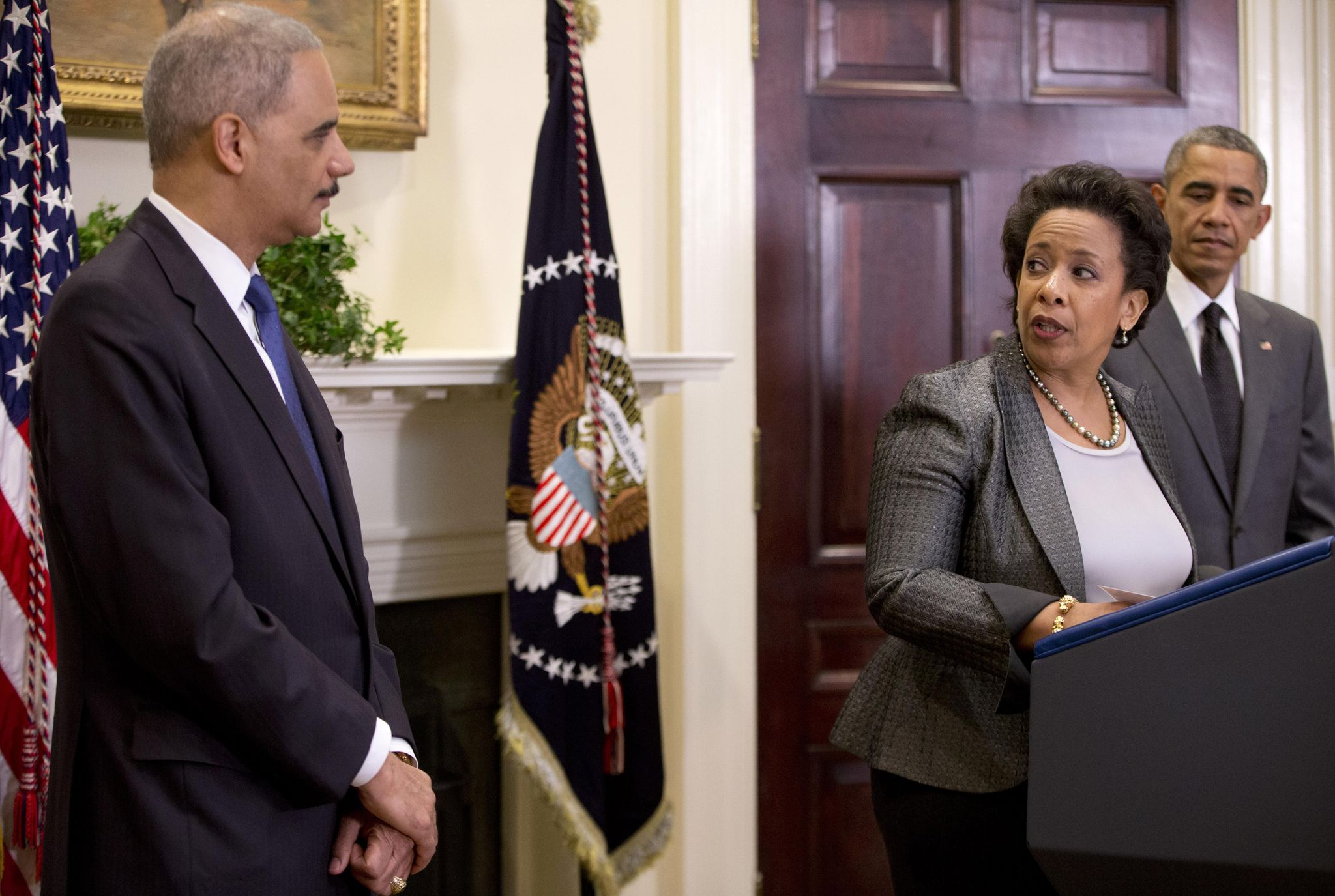
    Former Attorney General Eric Holder is questioning the recent arrest of two black men in a Philadelphia Starbucks.

    PHILADELPHIA — Former Attorney General Eric Holder is questioning the recent arrest of two black men in a Philadelphia Starbucks.

    During remarks at the National Constitution Center Monday night, Holder said common sense should have been used in the situation and that the manager should have thought twice about calling police.

    Rashon Nelson and Donte Robinson were handcuffed and arrested on April 12 after a Starbucks employee called police because they hadn’t bought anything in the store. The two men told The Associated Press that they were waiting for a business contact to arrive.

    The former Obama administration official is helping create a training curriculum for Starbucks along with other civil rights experts that will address racial bias. The chain will close 8,000 stores on May 29 to undergo the training.

  • Algerian military plane crashes, killing 257 people

    Algeria’s defense ministry said Wednesday 257 people have died when a military plane carrying soldiers and their families crashed soon after takeoff in a farm field in northern Algeria.

    Algeria’s defense ministry said Wednesday 257 people have died when a military plane carrying soldiers and their families crashed soon after takeoff in a farm field in northern Algeria.

    The ministry said in a statement that 247 passengers and 10 crew members were killed. It said most of the victims are soldiers and their relatives. It says the victims’ bodies have been transported to the Algerian army’s central hospital in the town of Ain Naadja for identification.

    The crash occurred Wednesday soon after takeoff from the Boufarik air base southwest of the capital Algiers.

  • Saudi Arabia 9/11 lawsuit can proceed, judge rules

    A lawsuit accusing the Saudi Arabian government of complicity in the Sept. 11 terrorist attacks, and seeking billions of dollars in damages, can go forward, a judge ruled Wednesday.

    A lawsuit accusing the Saudi Arabian government of complicity in the Sept. 11 terrorist attacks, and seeking billions of dollars in damages, can go forward, a judge ruled Wednesday.

    U.S. District Judge George Daniels in Manhattan dismissed Saudi Arabia’s motion to dismiss the case on the grounds of lack of proof of official complicity.

    But Judge Daniels said the plaintiffs — victims’ relatives and their families — can “narrowly articulate a reasonable basis for this Court to assume jurisdiction under [the Justice Against Sponsors of Terrorism Act] over Plaintiffs’ claims against Saudi Arabia.”

    Judge Daniels said he would “allow Plaintiffs limited jurisdictional discovery” of evidence against Saudi Arabia.

    JASTA, passed by Congress in 2016 over President Barack Obama’s veto and Saudi warnings of damage to international relations, created an exception under U.S. law to claims of sovereign immunity by foreign governments. The new law allows U.S. citizens to sue foreign governments in federal court for acts that kill Americans on U.S. soil.

    James Kreindler, a lawyer for many of the plaintiffs, told Reuters news agency he was “delighted” by the judge’s letting the lawsuit go ahead.

    “We have been pressing to proceed with the case and conduct discovery from the Kingdom of Saudi Arabia, so that the full story can come to light, and expose the Saudi role in the 9/11 attacks,” he told the British wire service.

    On Sept. 11, 2001, 19 Al Qaeda terrorists — 15 of them Saudi citizens — hijacked four planes and slammed two of them into the World Trade Center and one into the Pentagon. One crashed into a field in Pennsylvania, apparently ditching a planned attack on Congress because of a passenger uprising. All told, nearly 3,000 people were killed.

    The 9-11 Commission absolved the Saudi government of official or direct complicity in the attacks, but said it could not rule out the possibility that “charities with significant Saudi government sponsorship diverted funds to Al-Qaeda.”

    Judge Daniels did limit the plaintiffs’ case on the facts though.

    He said he would allow the 9-11 families to argue that Saudi Arabia was responsible for the activities of an imam at King Fahd Mosque in California, and Omar al-Bayoumi, said to be an intelligence officer.

    Mr. al-Bayoumi and imam Fahad al Thumairy purportedly helped two of the terrorists integrate into U.S. life and prepare for the attacks.

    But he threw out as beyond his jurisdiction claims that two Saudi banks — National Commercial Bank and Al Rajhi Bank — and the construction company owned by the estranged family of al-Qaeda chief Osama bin Laden, had helped finance the attacks.