Tag: Social Issues

  • DHS vows caravan will be arrested, prosecuted if it enters U.S.

    Homeland Security Secretary Kirstjen Nielsen on Monday promised members of the illegal immigrant caravan making its way to the U.S. border that they could face criminal charges if they jump the border

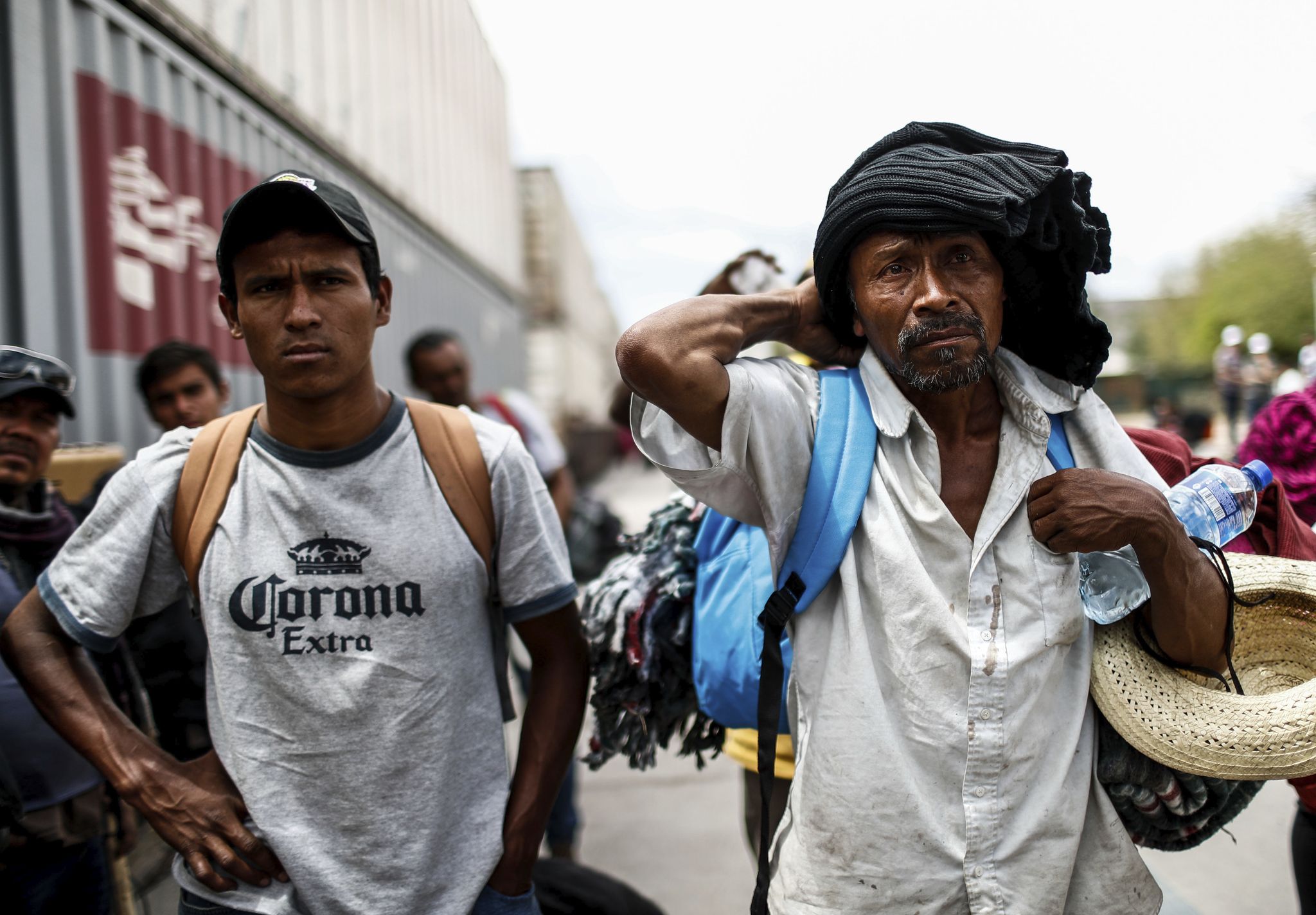
    Homeland Security Secretary Kirstjen Nielsen on Monday promised members of the migrant caravan making its way toward the U.S. that they could face criminal charges if they jump the border despite all the warnings.

    The migrants insist they are refugees seeking asylum from specific oppression at home, not rank-and-file illegal immigrants trying to reunite with family or get a better life in the U.S. They said they will make their case.

    Ms. Nielsen said if they are seeking a safe place from their Central American homes, then they should stop in Mexico, where they currently are traveling and where authorities are able to provide asylum.

    “If you enter the United States illegally, let me be clear: You have broken the law. And we will enforce the law through prosecution of illegal border crossers,” she said.

    She made the announcement hours after President Trump said he had ordered her to refuse entry to the caravan.

    “It is a disgrace. We are the only Country in the World so naive!” Mr. Trump said on Twitter.

    Ms. Nielsen didn’t say she would stop the caravan. She did say her department will use the tools it is allowed under U.S. law, such as detaining people while their asylum claims are pending, to try to ensure people aren’t taking advantage of the system.

    She also said the Justice Department is sending personnel to the border so that those who attempt to claim asylum can have quick hearings and be deported if they don’t qualify.

    Asylum has turned into an Achilles’ heel of the immigration system, with many migrants having learned how to game the system and lodging claims when they are caught at the border. The claims alone often buy them years of tentative legal status in the U.S. while they await court hearings.

    The caravan of Central Americans — mostly Hondurans — has been snaking toward the U.S. for nearly a month. Perhaps 1,500 people mustered at the southern border of Mexico before Easter.

    Hundreds who originally were part of the caravan have dropped out after asking to stay in Mexico or being deported.

    The remainder — organizers claim some 600 are still part of the caravan — say they are determined to make it to the U.S.

    “People have a legal right, under U.S. law and international agreements signed by the U.S., to seek asylum in the U.S.A.,” said Pueblo Sin Fronteras, the group behind the caravan.

    “Trump has railed against the caravan, but migrants have the right to request asylum in the U.S. and should not be turned away by border officials unless they fail to pass initial security screenings,” the group said.

    U.S. Citizenship and Immigration Services, which will process the applications, is woefully behind on its statistics, but as of seven months ago nearly 300,000 people were waiting for asylum decisions. That backlog grew by nearly 100,000 cases over the previous year.

    Analysts said more migrants learned the “magic words” they would need to say to get on the asylum track.

    Ms. Nielsen, in a statement Monday, demanded that Congress change laws to close “loopholes.”

    Immigrant rights advocates bristle at the term loophole. They say the law is in place for humanitarian protection reasons and that rotten conditions in countries such as Honduras are creating legitimate refugees.

    Asylum is supposed to require proof of persecution because of membership in a particular class, such as race, sex or religion. Analysts say those definitions have been stretched so far that women who have suffered from abusive spouses can sometimes be deemed to have been persecuted. Gang violence endemic to the region also has been used to justify asylum claims, creating a massive pool of potential claimants.

    Indeed, a report by a Jesuit organization working in Honduras this month found that nearly half of those surveyed said they or someone they know is considering emigrating and that the overwhelming reason was to escape the dreariness of their home or to reunite with family.

    Fewer than 1 in 5 say they would be fleeing violence. Indeed, the total saying violence is pushing them out of their home country has dropped 33 percent over the past few years.

  • Justice Department awards $1M grant to Parkland first responders

    The Department of Justice said Monday it will award a $1 million grant to defray some of the overtime costs racked up by local law enforcement officials in response to the shooting deaths of 17 people

    The Department of Justice said Monday it will award a $1 million grant to defray some of the overtime costs racked up by local law enforcement officials in response to the shooting deaths of 17 people at a Parkland, Florida, high school in February

    Attorney General Jeff Sessions said the grant demonstrates the department’s commitment to helping first responders.

    “The school shooting in Parkland shocked and horrified the nation, but the community and law enforcement at all levels have shown resilience and determination,” Mr. Sessions said. “As I told our state and local partners back in February, the Department of Justice stands ready to help them in any way we can. Today we offer $1 million to support the police who have been working overtime in the aftermath of this tragedy. They can be sure about this: we have their backs.”

    The Bureau of Justice Assistance, a Justice Department arm that provides funds to improve safety across the country, will award the grant. It will be distributed to the Florida Department of Law Enforcement, which coordinates police and other agencies throughout the state.

    More than 18 local, state and federal law enforcement agencies responded to the Feb. 14 shooting at Marjorie Stoneman Douglas High School, the Justice Department said. Local, state and county agencies incurred several million dollars in costs, including securing crime scenes and operating command centers.

    Last month, the Department of Education awarded Broward County Public Schools, where Marjory Stonemason Douglas High School is located, a $1 million grant to help students recover from trauma resulting from the shooting.

  • Sex Ed Sit Out draws parents alarmed by pro-choice, pro-gay teachings

    Parents participate Monday in the Sex Ed Sit Out, an international demonstration to protest what rally organizers say is a campaign by pro-choice and gay rights organizations to force their ideologies

    “Mom, you won’t believe what my teacher’s talking about right now.”

    That is the text message Regina Young, a parent in North Carolina’s Charlotte-Mecklenburg Schools, said she received from her seventh-grade daughter one day.

    “Before I could even respond to her text,” Ms. Young said, “she told me how uncomfortable she was to hear her teacher tell stories about her transgender home.”

    Ms. Young was just one parent who participated Monday in the Sex Ed Sit Out, an international demonstration to protest what rally organizers say is a campaign by pro-choice and gay rights organizations to force their ideologies on children through public education.

    The movement began among parents in Charlotte, North Carolina, but spread to 16 cities in four countries in the months leading up to the event. According to the Sit Out’s website, rallies were also held in Calgary, Alberta; Mulgrave, Australia; Bloomington, Indiana; and London.

    For the Sit Out, parents were asked to pull their children out of school for the day, accompanied by a note to the principal explaining the absence as a protest against “pornographic” sex education.

    It’s the latest culture war to be fought on the grounds of America’s public schools, closely following national walkouts against guns and abortion.

    On Monday, parents picked out two organizations for particular scorn: Planned Parenthood and the Human Rights Campaign.

    The nation’s largest abortion provider and America’s leading LGBT rights advocacy group, respectively, have written sex education curricula that public and private schools across the nation have adopted.

    Welcoming Schools, the pamphlet written by the Human Rights Campaign, is marketed to elementary school educators as a guide to prevent “bias-based bullying.”

    Ms. Young said forcing radical sex education on children is a “form of bullying” itself.

    “This is not about bullying,” she said. “We already have a policy against bullying. Why can a school teach and promote a sexual agenda to our children and violate our parental rights, giving permission to more of what’s happening and what happened to my daughter? It is not acceptable.”

    At the demonstration in Charlotte, Tami Fitzgerald, executive director of the NC Values Coalition, said the rhetoric about bullying is a “Trojan horse” to give the gay rights movement “complete access to our kids in public schools.”

    She said Ms. Young’s story is representative of what hundreds of other parents have told her.

    “About a year ago this time, we began receiving phone calls from parents, teachers and counselors in CMS, Charlotte-Mecklenburg Schools,” Ms. Fitzgerald said. “They were saying, ‘Please help us. You cannot believe what they are teaching our children in public schools.’”

    Welcoming Schools includes a list of children’s books that promote gay and transgender rights. Two of the books on the list, “Red: A Crayon’s Story,” about a blue crayon that identifies as a red crayon, and “Jacob’s New Dress,” about a boy who wants to wear a dress to school, were read to kindergarten students in Charlotte-Mecklenburg Schools, Ms. Fitzgerald said.

    Protesters held up signs that read: “Let kids be kids,” “My child my choice” and “How dare you take funding to destroy my child’s innocence!”

    Caryl Ayala, a former public school teacher, said about 15 people participated in the protest she organized in Austin, Texas.

    “We are uniting with parents across the globe to demand that our rights as parents be respected regarding the teaching of sexuality and sexual orientation,” Ms. Ayala said.

    Laura-Lynn Thompson attended a demonstration outside of the Parliament building in Victoria, British Columbia. She estimated the attendance at 100 to 150.

    “We have had enough, and we’re not going to take it anymore,” Ms. Thompson said. “Canada is a nation that has a Charter of Rights, which include freedom of religion and freedom of conscience. Our rights have been trampled by the sex-ed curriculum in our schools.”

    Heidi Pezdek, a member of Indiana’s Salt & Light chapter, helped organize the rally in Bloomington and estimated the number of participants at 40 to 50. She said walking into schools these days is like “walking into Sodom and Gomorrah. It’s all about sex.”

    Leading social conservatives also backed the demonstrations.

    The Rev. Franklin Graham said parents need to be aware of what public schools are teaching their children.

    “Your children are in danger of being exposed to ‘Pornography 101’ under the guise of sex education in many schools,” Mr. Graham wrote in Facebook. “Today some parents across the country are pulling their students out in protest of the sexualized school curriculum being promoted by the progressive agenda. Know what is being taught in your child’s school and be prepared to walk out. I encourage you to be involved, know what’s going on, and let your voice be heard.”

  • Eric Holder: Starbucks should have used ‘common sense’ in arrest of black men

    Former Attorney General Eric Holder is questioning the recent arrest of two black men in a Philadelphia Starbucks.

    PHILADELPHIA — Former Attorney General Eric Holder is questioning the recent arrest of two black men in a Philadelphia Starbucks.

    During remarks at the National Constitution Center Monday night, Holder said common sense should have been used in the situation and that the manager should have thought twice about calling police.

    Rashon Nelson and Donte Robinson were handcuffed and arrested on April 12 after a Starbucks employee called police because they hadn’t bought anything in the store. The two men told The Associated Press that they were waiting for a business contact to arrive.

    The former Obama administration official is helping create a training curriculum for Starbucks along with other civil rights experts that will address racial bias. The chain will close 8,000 stores on May 29 to undergo the training.

  • FDA announces push to slash nicotine in cigarettes

    The Food and Drug Administration launched a historic effort Thursday to try to end cigarette addiction, proposing to slash the level of nicotine in smokes in an attempt to curb what remains a deadly p

    The Food and Drug Administration launched a historic effort Thursday to try to end cigarette addiction, proposing to slash the level of nicotine in smokes in an attempt to curb what remains a deadly public health issue.

    FDA Commissioner Scott Gottlieb said the proposal is part of a broader effort to cut smoking rates from 15 percent of Americans to about 1 percent by the end of the century. The plan calls for encouraging future generations to use safer products and for legacy smokers to quit or seek less-risky alternatives such as nicotine patches or candy.

    “We believe the public health benefits and the potential to save millions of lives, both in the near and long term, support this effort,” Dr. Gottlieb said.

    The effort is being launched after years of progress. Smoking rates have dropped from more than 40 percent in the 1960s to 15 percent after years of public education, clean air rules and excise taxes on tobacco products.

    Rates among high school students rose to 36 percent in the 1990s but sank to the midteens this decade.

    Tobacco use remains the leading cause of preventable death in the U.S., killing 480,000 per year, the FDA said. That is far above the rate of opioid overdose deaths, which reached 42,000 in 2016, prompting an emergency response from Washington.

    The agency’s push is based on rules Congress passed in 2009 giving the FDA explicit power to regulate the manufacture, distribution and marketing of tobacco products.

    Under that law, the FDA forced changes to packaging and pushed retailers to move tobacco products behind checkout counters.

    In this latest phase, regulators plan to examine the role flavors play in encouraging tobacco use and vowed to be vigilant about attempts to target children as future users.

    The agency also gave notice that it will propose rules to govern how much nicotine should be allowable in cigarettes, with an eye toward protecting public health.

    Cigarettes generally contain 1.1 to 1.7 milligrams of nicotine, the notice said. The FDA is considering cutting that to 0.3 to 0.5 milligrams.

    The FDA also wants to consider the trade-offs of reducing nicotine content, such as whether smokers would turn to illicitly imported products or simply smoke more cigarettes.

    It also must determine how nicotine levels should be reduced. Options include genetic engineering by tobacco growers and changes in manufacturing.

    The agency estimates that its framework can result in 8 million fewer tobacco-related deaths by 2100.

    “Cigarettes are the only legal consumer product that, when used as intended, will kill half of all long-term users,” Dr. Gottlieb said. “Given their combination of toxicity, addictiveness, prevalence and effect on nonusers, it’s clear that to maximize the possible public health benefits of our regulation, we must focus our efforts on the death and disease caused by addiction to combustible cigarettes.”

    The Campaign for Tobacco-Free Kids urged the FDA to act expeditiously and demanded enhanced, more graphic health warnings on cigarette packs.

    “There is no other single action our country can take that would prevent more young people from smoking or save more lives,” campaign President Matthew L. Myers said. “This is truly a once-in-a-lifetime opportunity to greatly accelerate progress in reducing tobacco use — the nation’s No. 1 cause of preventable death — and bring us closer to eliminating the death and disease it causes.”

    The American Lung Association hailed the move as an “important step forward.” Leading tobacco companies responded with restraint, saying they anticipated the move and would be a part of the discussion.

    “As this process gets underway, we look forward to working with FDA on its science-based review of nicotine levels in cigarettes and to build on the opportunity of establishing a regulatory framework that is based on tobacco harm reduction and recognizes the continuum of risk,” said James Figlar, executive vice president of research and development for R.J. Reynolds Tobacco Co.

    Dr. Gottlieb said he hopes existing smokers shift from traditional cigarettes to less-dangerous products containing nicotine, though he stopped short of endorsing electronic cigarettes, which the FDA is still evaluating.

    “The jury’s still out on the value of those products as alternatives to combustible tobacco,” Dr. Gottlieb said.

    The agency said it does not know how long its nicotine-slashing effort will take but that it has no immediate effect on products in the pipeline or are sitting on shelves now.

    Altria Group Inc., the parent company of Philip Morris USA, said it is pleased that the FDA noted the distinction between regular cigarettes and noncombustible products. It cited an FDA study that said more than half of the roughly 40 million adult smokers in the U.S. are interested in “satisfying, but less harmful, nicotine alternatives to cigarettes.”

    “That’s why we invest in developing a compelling portfolio of noncombustible products, while conducting the necessary science to bring them to market,” spokesman David Sutton said. “A portfolio approach is important because we know that not all smokers are looking for the same experience.”

  • Donald Trump, Texas sanctuary city fight backed by appeals court

    States have the power to punish sanctuary cities within their borders and to force local police and sheriff’s departments to cooperate in turning illegal immigrants over to the federal government for

    States have the power to punish sanctuary cities within their borders and to force local police and sheriff’s departments to cooperate in turning over illegal immigrants to the federal government for deportation, an appeals court ruled Tuesday in upholding a Texas law.

    The 3-0 decision by a panel of the 5th U.S. Circuit Court of Appeals marks a major victory for President Trump, who has demanded punishment for sanctuary cities that thwart the federal government to protect illegal immigrants.

    The judges didn’t go that far, but they did say the federal government’s detainer requests, which ask local governments to hold illegal immigrants for pickup, are legal. Localities can refuse based on their own resources, the court ruled — but the detainer requests are legal, the judges said.

    Texas Gov. Greg Abbott, a Republican, praised the ruling.

    “Law is in effect,” he said on Twitter.

    Known as SB4, the legislation Mr. Abbott signed last year requires police to determine the legal status of those they encounter during their duties.

    The law also punished local elected officials, police chiefs and other law enforcement leaders who enacted or carried out sanctuary policies that refused cooperation with U.S. Immigration and Customs Enforcement.

    The law explicitly said local jurisdictions should comply with detainer requests.

    Immigrant rights advocates and a number of Texas cities objected. They said detainers forced state or local police to hold illegal immigrants beyond their usual release time, infringing on their Fourth Amendment rights.

    But Judge Edith H. Jones, writing the court’s opinion, said it’s not clear that illegal immigrants are covered by the Fourth Amendment. Beyond that, she said, federal detainer requests are legitimate.

    She said that under the Trump administration’s policy, ICE officers must issue administrative warrants to accompany their detainer requests. Those warrants serve as statements of probable cause that local police can rely on to hold someone — just as they would do for any other police officer who makes a valid request.

    “Here the ICE-detainer mandate itself authorizes and requires state officers to carry out federal detention requests,” Judge Jones wrote.

    The court did rule part of Texas’ law that prohibited local elected officials from endorsing sanctuary policies to be problematic because it could be seen as an infringement on the officials’ free speech rights. But she said the state can prevent a locality from adopting or enforcing a sanctuary policy and can impose penalties on officials who attempt to create sanctuaries.

    Sanctuary cities are jurisdictions that have policies limiting or, in their more extreme forms, thwarting cooperation with ICE deportation efforts.

    The Obama administration opposed sanctuary cities, but Mr. Trump took that policy to a new level by going to war with sanctuaries, particularly in California.

    His administration filed a lawsuit last week challenging three California sanctuary laws. On Tuesday, Mr. Trump — while visiting San Diego to tour prototypes of his border wall — said he wants Congress to strip federal grant money from sanctuaries in the upcoming spending bill.

    Mr. Trump’s threats have been unpersuasive. The number of sanctuaries has expanded dramatically during his first 14 months in office.

    Texas, however, had been a rare bright spot for the Trump administration. State officials have moved to back him up in opposing sanctuaries.

    SB4 had been slated to go into effect Sept. 1, just days after a federal district judge issued a broad injunction.

    Judge Orlando Garcia asserted that the law would erode trust between police and immigrant communities, making them less safe.

    “The mandates, penalties and exacting punishments under SB4 upset the delicate balance between federal enforcement and local cooperation and violate the United States Constitution,” Judge Garcia wrote.

    The 5th Circuit last year quickly stayed much of Judge Garcia’s blockade, and Tuesday’s ruling was an even bigger spanking for the Clinton-appointed judge.

    Lee Gelernt, an American Civil Liberties Union lawyer who appeared before the 5th Circuit during oral arguments, said the court did leave open the possibility that Texas law could be illegal as it was carried out.

    “We are exploring all legal options going forward. The court made clear that we remain free to challenge the manner in which the law is implemented, so we will be monitoring the situation on the ground closely,” he said.

    He said localities can still object to detainer requests based on a lack of resources or other nonimmigration restraints.

    Andre Segura, legal director of the ACLU of Texas, said illegal immigrants still have the right to remain silent when questioned about their immigration status.

  • Border arrest video inflames debate ahead of Trump visit

    The illegal immigrant whose arrest by Border Patrol in southern California has gone viral online was a fairly high-level operator in an alien smuggling ring affiliated with a cartel, sources told The

    The illegal immigrant whose arrest by Border Patrol in southern California has gone viral online was a fairly high-level operator in an alien smuggling ring affiliated with a cartel, sources told The Washington Times.

    The woman, Perla Morales-Luna, was nabbed by agents last week while walking with her daughters, according to videos of the arrest posted on Facebook Thursday.

    The videos garnered more than 10 million views in less than 24 hours and ignited a searing debate over immigration enforcement just days before President Trump is due to visit the area to look at prototypes of his planned border wall.

    Immigrant-rights groups said the video of agents separating the woman from her children is evidence of an immigration operation run amok, spreading fear in communities.

    Activists said these kinds of cases aren’t singular — but this time there were several bystanders who caught it on video.

    Pedro Rios, program director at the American Friends Service Committee’s San Diego office, said it showed “the level of impunity that agents operate with.”

    “When agents essentially snatch a mother from her children without any consideration of welfare and safety, knowing they’re being videotaped, I think there is a level of comfort that the enforcement agencies have in operating in this way,” he said.

    Several Border Patrol sources said Ms. Morales was being mistakenly portrayed. They said she was not a low-level cartel flunky but was “intimately involved” in human smuggling operations, which made her a priority target for agents.

    “They were looking for her,” one source said.

    In an official statement, U.S. Customs and Border Protection said Ms. Morales was arrested “for being in the country illegally” as part of a targeted operation.

    She was being held by Homeland Security pending deportation proceedings.

    William Baker, her lawyer, told The Times that they’ll ask for her to be released and reunited with her three U.S. citizen daughters while she fights the deportation case against her.

    And he said the fact that the Border Patrol is pursuing immigration proceedings against her rather than charging her with smuggling crimes undercuts the agents’ claims of criminal behavior.

    “A mom walking with children on the street shouldn’t be treated in that matter,” he said.

    The video made the rounds of social media Thursday and Friday, and sparked outrage from Latino advocates and anti-Trump progressive activists.

    “Your tax dollars at work,” said Frank Sharry, executive director of America’s Voice, on Twitter. “Mother ripped away from her crying daughters by Border Patrol agents on a Southern California street corner. America in the age of Trump. Meanwhile, Congress on verge of giving Trump’s deportation force billions more.”

    Mr. Trump has proposed $25 billion to build new and replacement fencing along the U.S.-Mexico border, and to hire more agents and expand technology to stop migrants attempting to sneak in.

    The plans have stalled in Congress, where Democrats who just five years ago voted for a massive wall-building campaign now oppose it. Mr. Trump has insisted his wall, as well as major policy changes to legal immigration, must be part of any deal to legalize illegal immigrant “Dreamers.”

  • Donald Trump right on immigration, gang violence, Sweden finds

    Sweden’s prime minister, who criticized President Trump last year for blaming Swedish violence on Muslim refugees, said Tuesday that he’s cracking down on immigration and gang violence to make Sweden

    Sweden’s prime minister, who criticized President Trump last year for blaming Swedish violence on Muslim refugees, said Tuesday that he’s cracking down on immigration and gang violence to make Sweden great again.

    At a White House news conference with Mr. Trump at his side, Prime Minister Stefan Löfven spoke of his own Trump-like agenda of implementing tougher laws on immigration and crime, and of spending more money on law enforcement.

    “We have our share of domestic challenges, no doubt about that,” Mr. Lofven said. “We are dealing with it every day, allocating more resources to the police, more resources to the security police, tougher laws on crime, tougher laws on terrorism.”

    Not only that, he said Sweden’s crackdown on immigration and gangs is working.

    “We can see some results now in our three major cities, decrease in shootings because we’re attacking the organized crime very tough,” the prime minister said. “And we’ll keep on doing that. There is no space in Sweden for organized crime. They decrease freedom for ordinary people.”

    It sounded very much like Mr. Trump’s rhetoric against the MS-13 gang members that he seeks to deport in larger numbers, and his policies to limit migration from certain Muslim-majority countries until better screening is in place to weed out potential terrorists.

    The president, who enjoys being right as much as anyone, told the audience in the East Room that he had been correct about Sweden all along.

    “Certainly you have a problem with immigration, it’s caused problems in Sweden,” Mr. Trump told a Swedish journalist. “I was one of the first ones to say it. I took a little heat, but that was OK. I proved to be right. But you do have a problem. I know the problem will slowly disappear, hopefully rapidly disappear.”

    A year ago, soon after Mr. Trump took office, he was roundly criticized in the U.S. media and in Europe for blaming a rise in crime in Sweden on an influx of Muslim refugees.

    “You look at what’s happening last night in Sweden,” the president said back then at a rally in Florida. “Sweden. Who would believe this? Sweden. They took in large numbers. They’re having problems like they never thought possible.”

    At the time, Swedish officials said they didn’t know what Mr. Trump was talking about. Some people accused Mr. Trump of responding to an erroneous news report.

    A year ago, Mr. Lofven chided Mr. Trump publicly, saying “We must all take responsibility for using facts correctly and for verifying anything we spread.”

    But on Tuesday at the White House, the prime minister had changed his tune. He noted that Sweden had received 163,000 refugees in 2015, with most arriving in a span of a few months.

    “We inherited a legislation that was not sustainable, legislation on migration,” Mr. Lofven said. “We changed the legislation, so now we have decreased the number of refugees, and we’re also putting pressure on the other European Union countries to take their share of the responsibility.”

    The New York Times reported last weekend that Sweden has experienced a rise in clan-like violence, including gangs using hand grenades, that accompanied an influx of immigrants from certain parts of Europe and the Middle East. There have been more than 100 incidents involving military-grade explosives in the Stockholm metro area, which police have attributed to an “arms race” among immigrant gangs, the paper reported.

    The story said there were few such incidents in Sweden until 2014, but since then, the number of explosions and seizures of grenades has risen.

    Mr. Lofven refuted recent reports that immigrant-related crime in Sweden had become so bad that authorities had designated “no-go zones” deemed too dangerous to enter.

    “We also have problems with organized crime in Sweden, shootings,” he said. “But it’s not like you have these ‘no-go’ zones.”

    Until recently, Sweden had the most generous immigration laws in Europe. Former Prime Minister Fredrik Reinfeldt in 2014 made a famous speech urging Swedes to “open their hearts” to refugees seeking shelter.

    But in 2016, as problems grew, Sweden enacted a law valid for three years that makes family reunification of refugees more difficult. The law stopped recent immigrants with residency permits from bringing their immediate family members to Sweden.

    In the U.S., Mr. Trump wants to end so-called “chain migration,” which he says has allowed an immigrant to sponsor numerous relatives to follow him or her, with not enough vetting of the family members.

    Mr. Lofven, again sounding a lot like Mr. Trump, said Sweden is overcoming its immigration and crime problems with a thriving economy.

    “Sweden has high growth,” he said. “Unemployment is going down. We have high investment rates. We have a strong, strong economy.”

  • ‘Dreamers’ turn ire on Democrats as DACA deadline passes

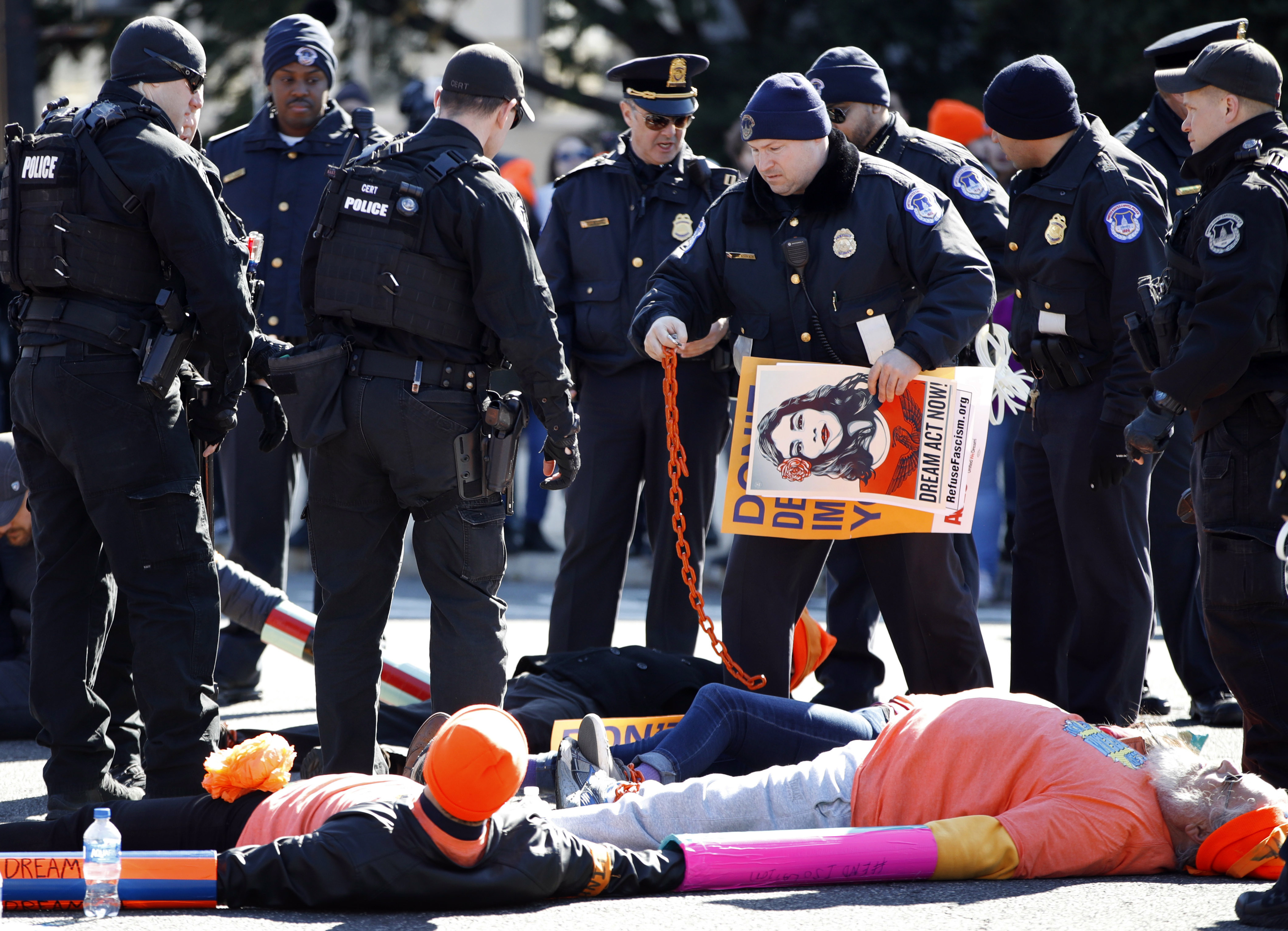
    Illegal immigrant Dreamers descended on Democrats’ national headquarters in Washington on Monday, staging a sit-in and vowing to make sure the party gets at least some of the blame as Congress slipped

    Illegal immigrant Dreamers descended on Democrats’ national headquarters in Washington on Monday, staging a sit-in and vowing to make sure the party gets at least some of the blame as Congress slipped past President Trump’s March 5 deadline for action on DACA.

    While the deadline lacked the urgency it once had, thanks to several court decisions keeping the Obama-era tentative deportation amnesty going, it maintains much of its political salience.

    The protesters who blocked the doors to the Democratic National Committee on Monday said there is blame to spread around, but they wanted to make sure Democrats felt much of the pressure, accusing the party’s leaders of a decade of betrayal culminating in this week’s failure.

    SEE ALSO: Judge rules Trump’s DACA phaseout legal

    “This party has shown me nothing but pain,” said Maria Duarte, a DACA recipient dressed in pink Hello Kitty pajamas and clutching a stuffed animal as she blocked the doors. She was choked with emotion as she shouted through a bullhorn, saying she “lost family members” to enforcement under the Obama administration.

    President Obama created the Deferred Action for Childhood Arrivals program in June 2012 as he was campaigning for re-election. The protesters said the move was designed to stave off potential electoral disaster.

    More than 800,000 people won protection over the years, and some 683,000 people are currently protected. They have renewable two-year stays of deportation and are entitled to work permits, which can earn them driver’s licenses, Social Security numbers and even some taxpayer benefits.

    But the program was legally suspect. Facing threats of a lawsuit, Mr. Trump last year announced a phaseout, giving Congress six months to come up with a more permanent solution.

    Now it’s the phaseout that is legally troubled. Two federal courts have ordered Mr. Trump to keep processing renewal applications, making the March 5 deadline less critical.

    Yet a third federal judge ruled late Monday, upholding Mr. Trump’s phaseout. For now, the decision does not surmount the original two court rulings, but Judge Roger W. Titus’ 30-page opinion does give some legal heft as the Justice Department defends the president’s decisions in higher courts.

    Activists, meanwhile, said March 5 remained the critical political deadline, serving as a milepost with midterm elections looming and both sides looking to avoid blame on an issue where an overwhelming majority of voters believe the Dreamers deserve legal status.

    DNC Chairman Tom Perez said it was Mr. Trump’s “cruel and reckless decision” to phase out DACA that spurred “an unnecessary crisis.”

    “And now his arbitrary deadline has passed without any action from the president or Republicans in Congress,” Mr. Perez said.

    Indeed, most immigrant rights groups, while wishing Democrats had fought more strenuously, do place blame on Mr. Trump and defend a program that they used to decry as a Band-Aid solution.

    But the activists who protested outside DNC headquarters Monday said Democrats missed too many chances to help.

    “You are losing people in this party,” said Roberto Juarez, an organizer with the Seed Project, which staged Monday’s protest. He held up his voter registration card and recounted his days of working to elect Mr. Obama in 2008.

    “I lied to my community because I told them we could pass immigration reform in the first 100 days if we voted him in,” Mr. Juarez said. “What happened? More deportations than any other president.”

    Protesters said Democrats had multiple chances to force the issue over the past few months by holding up government funding until legal status was granted.

    Democrats did force a brief government shutdown in January but quickly relented in exchange for promises of a Senate debate.

    When that debate began, however, it was anticlimactic. Democrats first blocked the freewheeling floor fight all sides had expected, and every plan was defeated when the voting finally began.

    The most promising option, a proposal negotiated by moderates from both parties and embraced as Democrats’ leading option, fell six votes shy of the 60 needed to overcome a filibuster. That plan would have coupled a generous pathway to citizenship and a tentative deportation amnesty for all 11 million illegal immigrants with border wall funding and small limits on chain migration.

    The House, meanwhile, has shunned a floor debate altogether.

    A group of conservatives, led by Rep. Bob Goodlatte, Virginia Republican and chairman of the House Judiciary Committee, has written a bill that offers a continuation of the DACA program — with critical congressional approval — in exchange for major enforcement enhancements and changes to legal immigration policy.

    But House Republican leaders who tested the bill’s popularity among their ranks say it’s short of the support needed and it’s unclear whether they can bridge the gap.

    Democrats predict that if Republicans relented and brought up one of several bipartisan bills, such as a proposal to extend a generous pathway to citizenship in exchange for promises of future border security, there would be majority support to pass it.

    At a press conference Monday, members of the Congressional Hispanic Caucus said it was “shameful” for Republican leaders not to hold votes. They also predicted that Mr. Trump would take the brunt of the blame.

    “Let’s all be clear that President Trump ended DACA. The responsibility lies on his shoulders,” Rep. Raul Ruiz, California Democrat, told reporters at the press conference.

    The White House said Mr. Trump has done his part, pointing to his middle-ground proposal that coupled citizenship rights for up to 1.8 million illegal immigrants with a plan to build his border wall, limit the chain of family migration and change the law to allow for faster deportations of new illegal immigrants.

    Democrats, though, called the enforcement changes too harsh, while House conservatives said the amnesty was too generous.

    White House press secretary Sarah Huckabee Sanders said it was “absolutely terrible that Congress has failed to act.”

    “The president gave Congress six months, and he also gave them a plan,” she said. “They claim to want to fix DACA. The president laid out a pathway and an exact way to do that. They failed to address it, but we’re still hopeful that Congress will actually do their jobs, show up and get something done and fix this problem, not kick it down the road and not continue to ignore it.”

  • Tyler Watson, Oregon man, sues Walmart, Dick’s Sporting Goods over gun policies

    Tyler Watson’s lawsuit filed Monday claims he faced age discrimination when he tried to buy a rifle in February at a store owned by Dick’s in Medford.

    PORTLAND, Ore. — A 20-year-old man in southern Oregon has filed a lawsuit against Dick’s Sporting Goods and Walmart after he says they refused to sell him a rifle.

    The Oregonian/OregonLive reports Tyler Watson’s lawsuit filed Monday claims he faced age discrimination when he tried to buy a rifle in February at a store owned by Dick’s in Medford.

    Watson says he was also refused when he attempted to buy a gun at the Grants Pass Walmart.

    Dick’s and Walmart restricted gun sales in the wake of the Feb. 14 Florida high school massacre. The lawsuit is believed to be the first filed over the new gun policies.

    Oregon law allows residents to buy shotguns or rifles starting at age 18.

    Walmart spokesman Randy Hargrove told The Oregonian/OregonLive that the retailer will defend its new policy. A representative from Dick’s hasn’t responded to a request for comment.