Tag: Law Crime

  • Donald Trump, Texas sanctuary city fight backed by appeals court

    States have the power to punish sanctuary cities within their borders and to force local police and sheriff’s departments to cooperate in turning illegal immigrants over to the federal government for

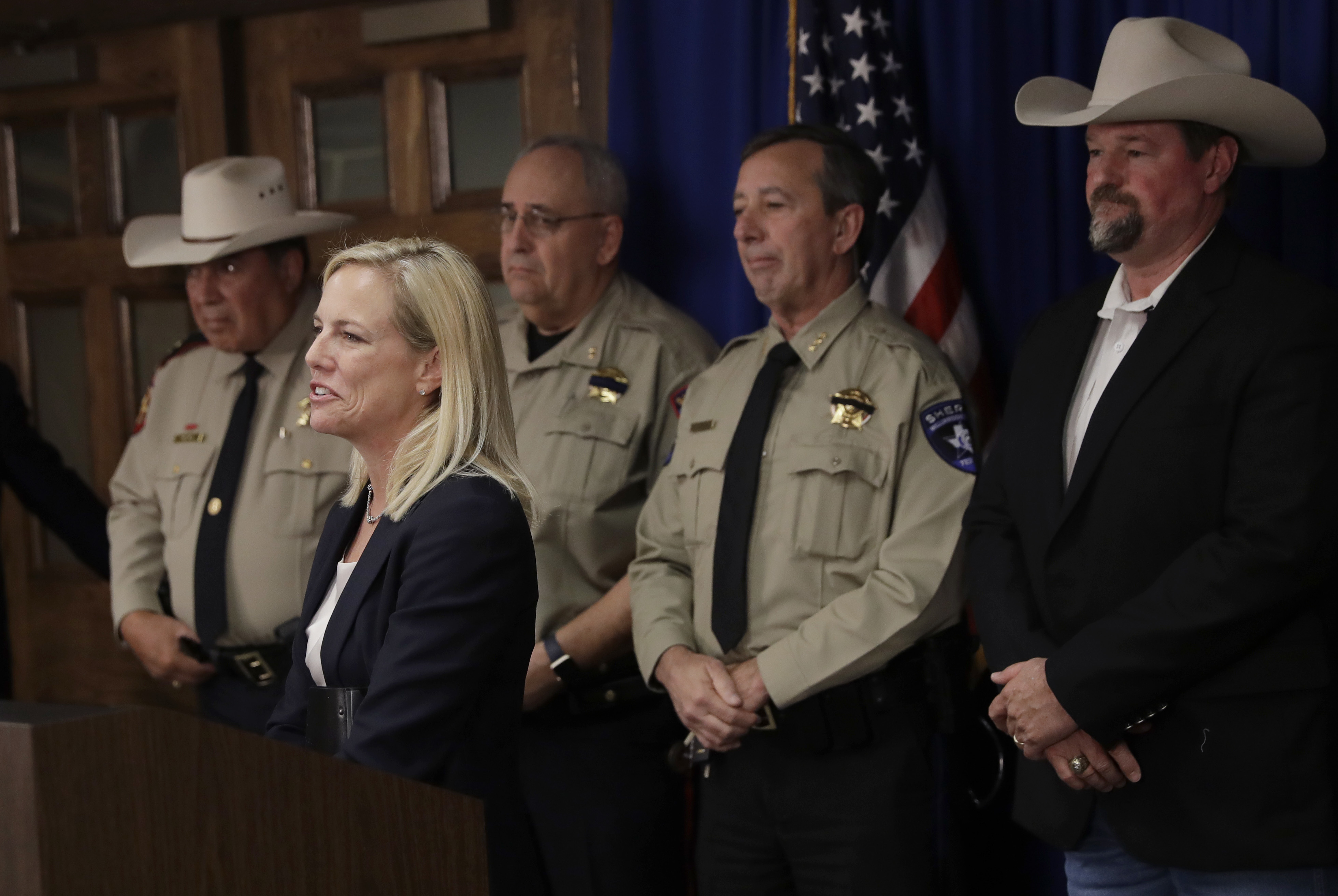
    States have the power to punish sanctuary cities within their borders and to force local police and sheriff’s departments to cooperate in turning over illegal immigrants to the federal government for deportation, an appeals court ruled Tuesday in upholding a Texas law.

    The 3-0 decision by a panel of the 5th U.S. Circuit Court of Appeals marks a major victory for President Trump, who has demanded punishment for sanctuary cities that thwart the federal government to protect illegal immigrants.

    The judges didn’t go that far, but they did say the federal government’s detainer requests, which ask local governments to hold illegal immigrants for pickup, are legal. Localities can refuse based on their own resources, the court ruled — but the detainer requests are legal, the judges said.

    Texas Gov. Greg Abbott, a Republican, praised the ruling.

    “Law is in effect,” he said on Twitter.

    Known as SB4, the legislation Mr. Abbott signed last year requires police to determine the legal status of those they encounter during their duties.

    The law also punished local elected officials, police chiefs and other law enforcement leaders who enacted or carried out sanctuary policies that refused cooperation with U.S. Immigration and Customs Enforcement.

    The law explicitly said local jurisdictions should comply with detainer requests.

    Immigrant rights advocates and a number of Texas cities objected. They said detainers forced state or local police to hold illegal immigrants beyond their usual release time, infringing on their Fourth Amendment rights.

    But Judge Edith H. Jones, writing the court’s opinion, said it’s not clear that illegal immigrants are covered by the Fourth Amendment. Beyond that, she said, federal detainer requests are legitimate.

    She said that under the Trump administration’s policy, ICE officers must issue administrative warrants to accompany their detainer requests. Those warrants serve as statements of probable cause that local police can rely on to hold someone — just as they would do for any other police officer who makes a valid request.

    “Here the ICE-detainer mandate itself authorizes and requires state officers to carry out federal detention requests,” Judge Jones wrote.

    The court did rule part of Texas’ law that prohibited local elected officials from endorsing sanctuary policies to be problematic because it could be seen as an infringement on the officials’ free speech rights. But she said the state can prevent a locality from adopting or enforcing a sanctuary policy and can impose penalties on officials who attempt to create sanctuaries.

    Sanctuary cities are jurisdictions that have policies limiting or, in their more extreme forms, thwarting cooperation with ICE deportation efforts.

    The Obama administration opposed sanctuary cities, but Mr. Trump took that policy to a new level by going to war with sanctuaries, particularly in California.

    His administration filed a lawsuit last week challenging three California sanctuary laws. On Tuesday, Mr. Trump — while visiting San Diego to tour prototypes of his border wall — said he wants Congress to strip federal grant money from sanctuaries in the upcoming spending bill.

    Mr. Trump’s threats have been unpersuasive. The number of sanctuaries has expanded dramatically during his first 14 months in office.

    Texas, however, had been a rare bright spot for the Trump administration. State officials have moved to back him up in opposing sanctuaries.

    SB4 had been slated to go into effect Sept. 1, just days after a federal district judge issued a broad injunction.

    Judge Orlando Garcia asserted that the law would erode trust between police and immigrant communities, making them less safe.

    “The mandates, penalties and exacting punishments under SB4 upset the delicate balance between federal enforcement and local cooperation and violate the United States Constitution,” Judge Garcia wrote.

    The 5th Circuit last year quickly stayed much of Judge Garcia’s blockade, and Tuesday’s ruling was an even bigger spanking for the Clinton-appointed judge.

    Lee Gelernt, an American Civil Liberties Union lawyer who appeared before the 5th Circuit during oral arguments, said the court did leave open the possibility that Texas law could be illegal as it was carried out.

    “We are exploring all legal options going forward. The court made clear that we remain free to challenge the manner in which the law is implemented, so we will be monitoring the situation on the ground closely,” he said.

    He said localities can still object to detainer requests based on a lack of resources or other nonimmigration restraints.

    Andre Segura, legal director of the ACLU of Texas, said illegal immigrants still have the right to remain silent when questioned about their immigration status.


  • Border arrest video inflames debate ahead of Trump visit

    The illegal immigrant whose arrest by Border Patrol in southern California has gone viral online was a fairly high-level operator in an alien smuggling ring affiliated with a cartel, sources told The

    The illegal immigrant whose arrest by Border Patrol in southern California has gone viral online was a fairly high-level operator in an alien smuggling ring affiliated with a cartel, sources told The Washington Times.

    The woman, Perla Morales-Luna, was nabbed by agents last week while walking with her daughters, according to videos of the arrest posted on Facebook Thursday.

    The videos garnered more than 10 million views in less than 24 hours and ignited a searing debate over immigration enforcement just days before President Trump is due to visit the area to look at prototypes of his planned border wall.

    Immigrant-rights groups said the video of agents separating the woman from her children is evidence of an immigration operation run amok, spreading fear in communities.

    Activists said these kinds of cases aren’t singular — but this time there were several bystanders who caught it on video.

    Pedro Rios, program director at the American Friends Service Committee’s San Diego office, said it showed “the level of impunity that agents operate with.”

    “When agents essentially snatch a mother from her children without any consideration of welfare and safety, knowing they’re being videotaped, I think there is a level of comfort that the enforcement agencies have in operating in this way,” he said.

    Several Border Patrol sources said Ms. Morales was being mistakenly portrayed. They said she was not a low-level cartel flunky but was “intimately involved” in human smuggling operations, which made her a priority target for agents.

    “They were looking for her,” one source said.

    In an official statement, U.S. Customs and Border Protection said Ms. Morales was arrested “for being in the country illegally” as part of a targeted operation.

    She was being held by Homeland Security pending deportation proceedings.

    William Baker, her lawyer, told The Times that they’ll ask for her to be released and reunited with her three U.S. citizen daughters while she fights the deportation case against her.

    And he said the fact that the Border Patrol is pursuing immigration proceedings against her rather than charging her with smuggling crimes undercuts the agents’ claims of criminal behavior.

    “A mom walking with children on the street shouldn’t be treated in that matter,” he said.

    The video made the rounds of social media Thursday and Friday, and sparked outrage from Latino advocates and anti-Trump progressive activists.

    “Your tax dollars at work,” said Frank Sharry, executive director of America’s Voice, on Twitter. “Mother ripped away from her crying daughters by Border Patrol agents on a Southern California street corner. America in the age of Trump. Meanwhile, Congress on verge of giving Trump’s deportation force billions more.”

    Mr. Trump has proposed $25 billion to build new and replacement fencing along the U.S.-Mexico border, and to hire more agents and expand technology to stop migrants attempting to sneak in.

    The plans have stalled in Congress, where Democrats who just five years ago voted for a massive wall-building campaign now oppose it. Mr. Trump has insisted his wall, as well as major policy changes to legal immigration, must be part of any deal to legalize illegal immigrant “Dreamers.”

  • Tyler Watson, Oregon man, sues Walmart, Dick’s Sporting Goods over gun policies

    Tyler Watson’s lawsuit filed Monday claims he faced age discrimination when he tried to buy a rifle in February at a store owned by Dick’s in Medford.

    PORTLAND, Ore. — A 20-year-old man in southern Oregon has filed a lawsuit against Dick’s Sporting Goods and Walmart after he says they refused to sell him a rifle.

    The Oregonian/OregonLive reports Tyler Watson’s lawsuit filed Monday claims he faced age discrimination when he tried to buy a rifle in February at a store owned by Dick’s in Medford.

    Watson says he was also refused when he attempted to buy a gun at the Grants Pass Walmart.

    Dick’s and Walmart restricted gun sales in the wake of the Feb. 14 Florida high school massacre. The lawsuit is believed to be the first filed over the new gun policies.

    Oregon law allows residents to buy shotguns or rifles starting at age 18.

    Walmart spokesman Randy Hargrove told The Oregonian/OregonLive that the retailer will defend its new policy. A representative from Dick’s hasn’t responded to a request for comment.

  • Christopher McCray guilty of taking kickbacks from Afghanistan business

    A former government contractor pleaded guilty Monday to accepting illegal kickbacks from an Afgahn company in exchange for assistance in obtaining U.S. government subcontracts, the Department of Justi

    A former government contractor pleaded guilty Monday to accepting illegal kickbacks from an Afghan company in exchange for assistance in obtaining U.S. government subcontracts, the Department of Justice said.

    Christopher McCray, 55, of Jonesboro, Georgia and Chattanooga, Tennessee, pleaded guilty to one count of accepting illegal kickbacks. He entered his plea before U.S. District Judge Mark H. Cohen of the Northern District of Georgia.

    McCray will be sentenced on June 14.

    As part of the plea deal, McCray admitted that he managed subcontracts for an American company that moved cargo for the Army and Air Force from Bagram Airfield to military bases throughout Afghanistan. When the contractor needed McCray to take a bigger role in the distribution, he could influence the choice of subcontractor picked for the job, the Justice Department said.

    McCray’s employer eventually entered into an agreement with an Afghan company that secretly agreed to kick back to McCray 15 percent of the revenues it would receive on the contract, court documents alleged.

    McCray admitted that he received secret payments from December 2012 to May 2014 and that he and the Afghan trucking company maintained separate invoices so the deal could not be detected.

    The company paid McCray in cash, then by wires sent to his bank in Atlanta and then by Western Union payments to his mother, who would deposit the payments as cash into McCray’s bank account.

    The FBI, Air Force, and Army investigated the case.

  • Moscow lawmaker: ‘Death penalty’ for anyone interfering in Russian election

    The outspoken deputy of Russia’s communist party said Monday that any foreign official — including from the United States — found guilty of “interfering” in Russia’s upcoming presidential election s

    The outspoken deputy of Russia’s communist party said Monday that any foreign official — including from the United States — found guilty of “interfering” in Russia’s upcoming presidential election should face the death penalty or up to 25 years in prison.

    “That’s the worst crime that there is, other than rape and murder,” said Leonid Kalashnikov, who’s also a key committee chief in Russia’s State Duma or lower house of parliament, according to news reports in Moscow.

    While the death penalty has been constitutionally banned in Russia since 1996, Mr. Kalashnikov suggested in an interview with the state-run RIA Novosti news agency that a “constitutional order” may be needed to restore it and deal with any foreign meddling in the election slated for March 18.

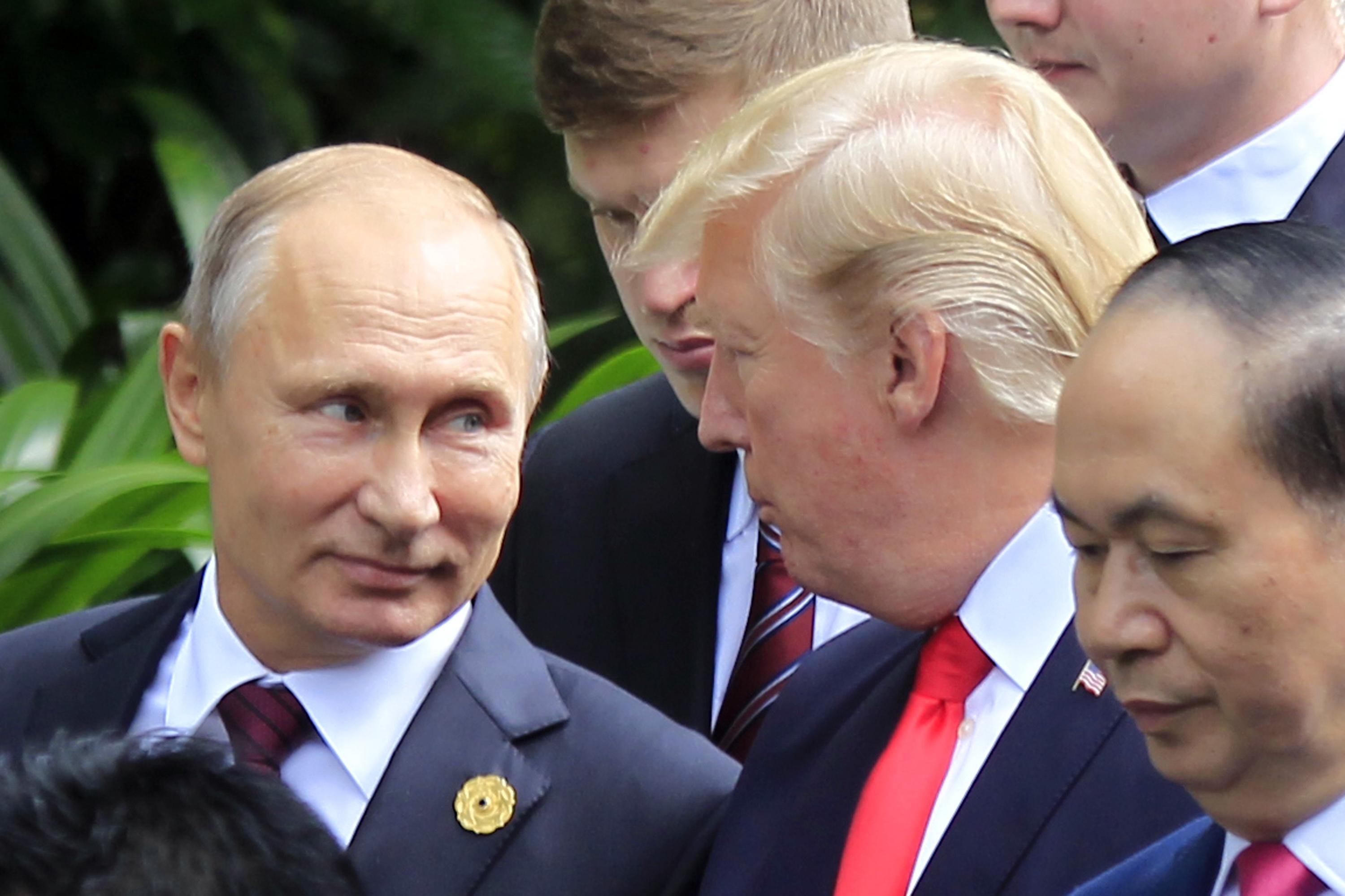
    Russian President Vladimir Putin is seeking a second consecutive — and fourth overall — term in the election, which will be the first of its kind in Russia since 2012.

    According to a report by The Moscow Times, Mr. Kalashnikov’s comments came as a top Russian diplomat claimed Monday to have evidence of ongoing U.S. attempts to undermine the electoral process.

    Deputy Russian Foreign Minister Sergey Rybakov made the assertion at a meeting of the Russian Federation Council or upper house of parliament, during which he claimed that Moscow is ramping up its efforts to identify and block the alleged “interference” by U.S.-backed operatives.

    “The Russian Foreign Ministry streamlined efforts to collect the relevant information,” Mr. Rybakov said according to the state-owned Tass news agency in Moscow. “That concerns both attempts to meddle in our affairs and broader detrimental efforts of this kind that the U.S. stoops to committing.”

    While few details were given on the actual nature or goals of the alleged U.S.-backed meddling, Mr. Rybakov claimed broadly that “opponents” of Russia are attempting to “sway young people and work in the regions.”

    “The focus of this struggle will center on the information space,” he said. “Information warfare will grow far bitterer, and that’s something we will have to live with during the upcoming period.”

    The Tass news agency claimed to have obtained an annual assessment Monday by an upper house “commission on the protection of state sovereignty” that exposed “numerous signs of interference from abroad” in Russia’s electoral process between 2011 and 2017.

    Kremlin spokesman Dmitry Peskov, meanwhile, made international headlines Monday by asserting that the United States has a “rich tradition” of interfering in the internal affairs of Russia and other nations around the world.

    The flurry of allegations from Moscow come amid ongoing federal government investigations in Washington over accusations that Russian operatives engaged in an expansive hacking and digital propaganda campaign aimed at undermining the 2016 U.S. presidential election.

    Last month saw the U.S. Justice Department level indictments against 13 Russian citizens and two entities on charges their meddling activities amounted to conspiracy to defraud the United States.

    Mr. Putin said in an interview with NBC News that aired Sunday that Russia will “never” extradite the 13 individuals charged, even as he insisted they didn’t act on behalf of his government.

    The Associated Press noted that the United States has no extradition treaty with Moscow and can’t compel it to hand over citizens, and a provision in Russia’s constitution prohibits extraditing its citizens to foreign countries.

  • Upskirting victims push to fill loophole in Alabama law

    Six months after a stranger snapped a photo up Tatum Hollon’s dress in Walmart, she walked out of her local courthouse feeling robbed of justice. The judge dismissed the charge against the man who too

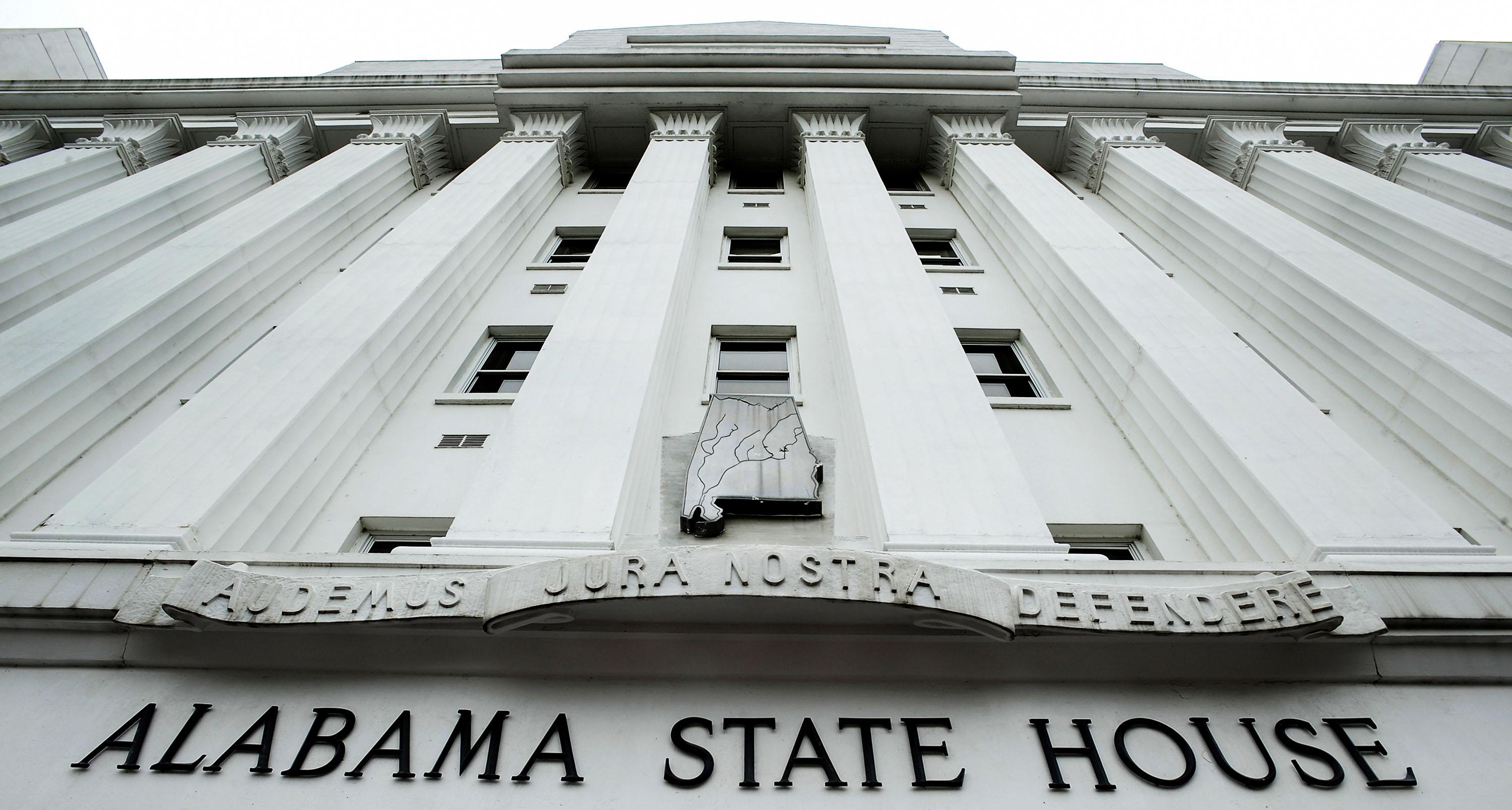
    MONTGOMERY, Ala. (AP) — Six months after a stranger snapped a photo up Tatum Hollon’s dress in Walmart, she walked out of her local courthouse feeling robbed of justice. The judge dismissed the charge against the man who took the photo because no law existed to prosecute his actions.

    “It felt like I was violated all over again,” Hollon, 36, a stay-at-home mom from Prattville, told The Associated Press. “We came forward and they said, we’d love to help but there’s nothing we can do. And it breaks you.”

    Her case caught the attention of Sen. Clyde Chambliss, a Republican and father of three daughters from Prattville, who introduced a bill to criminalize what has come to be called upskirting. All U.S. states prohibit photography of individuals in a private place like a dressing room where they can expect privacy. More than half also ban upskirting and photos of intimate body parts in a public place. Last week, Missouri Gov. Eric Greitens was indicted for allegedly taking a photo of a nude or partially nude woman in 2015 and transmitting it in a way that could be accessed by a computer.

    Chambliss’ bill would make taking a picture or video of a person’s intimate body parts without consent and with a reasonable expectation of privacy a misdemeanor. If the images are distributed with sexual intent, it would be a felony punishable by up to two years in prison. The bill passed the Senate and moves to the House for a final vote.

    Hollon was in Prattville’s Walmart in April 2017 when a man crouched behind her and took a picture up her dress. The next day, Hollon reported to the police because she wanted to protect her 15-year-old daughter in the future, she said as her eyes welled with tears.

    Michelle Lunsford, 46, a sales associate from Millbrook, had a similar experience with the same man in Prattville’s Lowes a month earlier. After she saw Hollon post a video of the man on Facebook, the women pressed charges together. Prattville prosecutors tried to use Alabama’s aggravated criminal surveillance law that prohibits photography in private places to convict the perpetrator, but stores didn’t qualify as private.

    Barry Matson, the Executive Director of Alabama’s Office of Prosecution Services, has encountered cases of inappropriate photos taken from cameras hidden in shoes or installed inside tanning salons. He said there’s a loophole in current legislation: although child pornography laws protect minor victims, the same safeguards don’t exist for adults in Alabama.

    The bill initially received pushback for charging everyone – regardless of their age – with a felony. The legislation was amended to only charge individuals over 16 with a felony. Tim Thrasher, the regional director for Alabama’s Youth Advocate Programs, said he was concerned about harsh penalties for teenagers and suggested education as a deterrent.

    The bill also exempts Department of Corrections officers who conduct strip searches or investigations in jails, sparking some concern.

    “If they’re acting within the furtherance of their duties, that’s a good exception,” said Brad Ekdahl, Prattville city prosecutor. “If they’re using and making videos for sexual gratification, that’s a different issue.” Situations would be prosecuted case-by-case, he said.

    Hollon and Lunsford don’t know what happened to the photos their perpetrator took. Nearly a year later, the women are wary in public. Hollon carries pepper spray and a taser in her purse and plans to get a pistol permit. Lunsford said she tells her 9-year-old daughter to wear shorts under her dress when they go shopping.

    “If this bill does get passed, they’re not going to get away with it. That’s my justice,” Lunsford said. “It’s nice knowing our daughters are protected.”

  • Man convicted of killing woman who rejected $8 offer for sex

    A jury has convicted a man of killing a woman who rejected his $8 offer for sex.

    ATLANTA (AP) — A jury has convicted a man of killing a woman who rejected his $8 offer for sex.

    The Atlanta Journal-Constitution reports that jurors on Friday convicted Felix Shirley of murder in the January 2017 killing of Misha Moore.

    Citing the Fulton County District Attorney’s Office, the newspaper says Shirley was sentenced to life in prison, plus five years.

    The newspaper says Shirley had just ended his shift at the Mercedes-Benz Stadium when Moore approached him. As the two began walking together, Shirley handed Moore $8 for sex. When she told him it wasn’t enough, authorities say Shirley threw her against a wall, kicked and beat her, then shot her with a .22-caliber revolver.

    The slaying was captured on surveillance video. Moore’s body was found at the bottom of a stairwell.

  • Md. AG defends Hillary Clinton lawyers against bar complaint

    Maryland Attorney General Brian Frosh’s office offered a new explanation Friday for why the state has refused to pursue a bar complaint against Hillary Clinton’s lawyers over their role in deleting he

    ANNAPOLIS — Maryland Attorney General Brian Frosh’s office offered a new explanation Friday for why the state has refused to pursue a bar complaint against Hillary Clinton’s lawyers over their role in deleting her emails: They changed the rules.

    Mr. Frosh’s office said a rules change last year — after the complaint was filed against David E. Kendall, Cheryl Mills and Heather Samuelson — gives them permission to ignore a complaint brought by Ty Clevenger, a crusading lawyer who says he’s being stonewalled because of politics.

    The case has taken a number of twists, with bar counsel, charged with reviewing lawyer complaints, initially saying Mr. Clevenger wasn’t aggrieved — though the rules at the time didn’t require that proof. Then at a state circuit court hearing the attorney general’s office called Mr. Clevenger’s complaint “frivolous.”

    Now, in oral argument at Maryland’s highest court Friday, state lawyers said a rules change that had been in place before the circuit hearing — but which they forgot about at the time — gives them permission to refuse to investigate any complaints from people who don’t have personal knowledge.

    In this case, they said, Mr. Clevenger is getting his information from press reports, which they said is no longer enough to force a probe.

    “The reason for denying the complaint here is he had no personal knowledge,” said Michele J. McDonald, who argued the case for Mr. Frosh, a Democrat, and the state bar.

    Under questioning by one judge, she specifically said that while the state had advanced the “frivolous” argument before, it was no longer standing by that one.

    Mr. Clevenger expressed frustration afterward, saying it’s “a moving target from one hearing to the next.”

    “We’ve got three lawyers who are accused of destroying more than 30,000 pieces of evidence that were sought by multiple subpoenas,” he said. “Any average lawyer who had intentionally destroyed one piece of evidence would have been disbarred. Period.”

    “Let’s not kid ourselves. This is political,” he said.

    Kicking off Friday’s oral argument, the state lawyers tried to get the Court of Appeals, Maryland’s equivalent to a supreme court, to clear the courtroom, kick out reporters and the public and shut down the webcast.

    Ms. McDonald said the bar rules are designed to protect the “integrity” of the court process, and Mrs. Clinton’s lawyers deserved privacy from unfair accusations.

    The court refused to close the hearing.

    “Isn’t this a problem of once the cat’s out of the bag, how do you get it back in?” said Judge Clayton Greene Jr.

    Mr. Clevenger says the old rules were clear and the state had to investigate any complaint brought before it. He said that doesn’t mean the state had to bring charges, but it must at least probe the matter.

    A circuit court had agreed with him last year, and ordered the investigation into Mr. Kendall, Ms. Mills and Ms. Samuelson.

    The Court of Appeals put that on hold in order to take the case.

    On Friday, Ms. McDonald argued that the circuit court, which had ordered an investigation, had overstepped its powers and only the Court of Appeals could force a probe.

    At this point, Ms. McDonald said, any request would also have to happen under the new rules that took effect last summer — after Mr. Clevenger’s complaint, but before the lower court’s hearing — that allow complaints to be tossed because the complainer doesn’t have knowledge.

    “That rule became effective August 1, 2017 and applies to all pending litigation as well as future complaints,” Ms. McDonald told The Washington Times in an email Friday after the hearing. “Under that rule, it is clear that Bar Counsel has discretion to decline a complaint that is not based on personal knowledge but instead is derived from published news reports of third party sources.”

    She also dismissed Mr. Clevenger’s complaint that Mr. Kendall and the other lawyers are being treated better than a non-politically connected lawyer would have been. She said a complaint about another lawyer that wasn’t based on personal knowledge “could likewise be declined under this rule.”

    The judges did not give a sense for when they might rule.

    Mr. Clevenger said after the hearing he is seeking members of Congress who were involved in the investigation into Mrs. Clinton’s emails to come forward and file complaints, which would meet the definition of someone with personal knowledge.

    The case is part of the fallout from Mrs. Clinton’s decision as State Department secretary to forgo a department-based account and instead use a secret account tied to a server she kept at her New York home.

    When her account became known during the probe into the 2012 Benghazi terrorist attack Mrs. Clinton turned over about half of her more than 60,000 messages from her time as secretary, but deleted 30,000 messages she said were not work-related.

    Subsequent investigation by the FBI found out that many of them were in fact work-related.

    The FBI investigation said Ms. Mills and Mr. Kendall oversaw the review and deletion process, while Ms. Samuelson did the review and reported to the others. They suggested the emails be deleted in late 2014 — though the actual deletion didn’t happen under late March 2015, or weeks after a subpoena was issued by a House investigation.

  • 4 charged in fake ID operation that netted $4.7M in bitcoin

    Four people accused of operating a large-scale fake ID operation that netted investigators $4.7 million in bitcoin have been indicted by a federal grand jury in Ohio.

    TOLEDO, Ohio (AP) — Four people accused of operating a large-scale fake ID operation that netted investigators $4.7 million in bitcoin have been indicted by a federal grand jury in Ohio.

    The four from the Toledo area are facing federal charges announced Thursday that include making false identification documents and possessing document-making equipment.

    The group was arrested in early February after investigators seized electronic bitcoin wallets, computers, printers and gold and silver bars inside a Toledo home.

    Ohio authorities began investigating in 2015 after receiving several fake ID cards from a bar in Springfield. A college student told investigators his friends bought IDs from Reddit.

    Documents say buyers had to follow specific instructions to hide the transactions and use bitcoins, digital money that isn’t tied to a bank or government.