Blog

  • Company in Cuba plane crash had received safety complaints

    The Mexican charter company whose 39-year-old plane crashed in Havana had been the subject of two serious complaints about its crews’ performance over the last decade, according to authorities in Guya

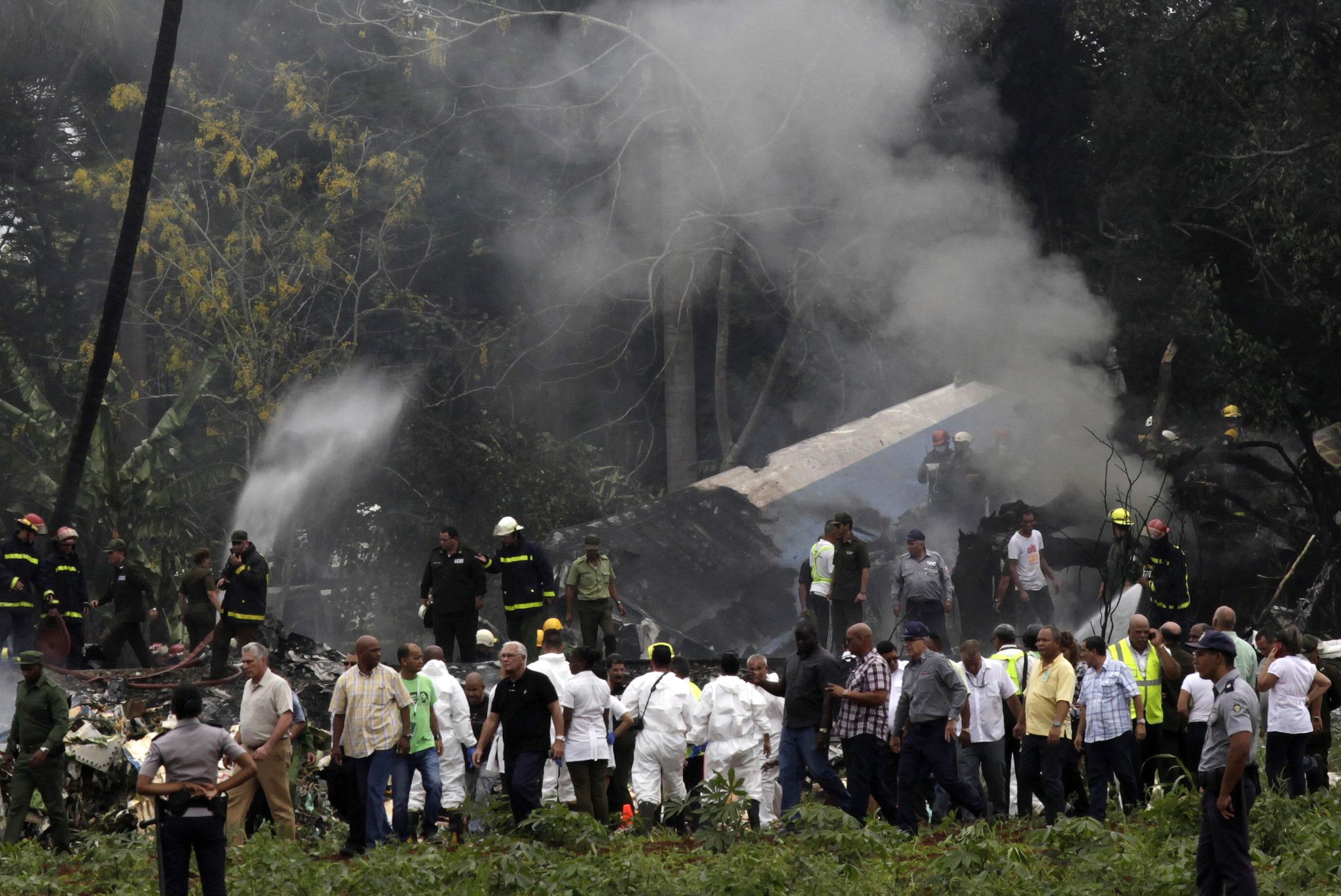
    HAVANA (AP) – The Mexican charter company whose 39-year-old plane crashed in Havana had been the subject of two serious complaints about its crews’ performance over the last decade, according to authorities in Guyana and a retired pilot for Cuba’s national airline.

    Mexico’s government said late Saturday that its National Civil Aviation Authority will carry out an operational audit of Damojh airlines to see if its “current operating conditions continue meeting regulations” and to help collect information for the investigation into Friday’s crash in Cuba that left 110 dead.

    The plane that crashed, a Boeing 737, was barred from Guyanese airspace last year after authorities discovered that its crew had been allowing dangerous overloading of luggage on flights to Cuba, Guyanese Civil Aviation Director Capt. Egbert Field told The Associated Press on Saturday.

    The plane and crew were being rented from Mexico City-based Damojh by EasySky, a Honduras-based low-cost airline. Cuba’s national carrier, Cubana de Aviacion, was also renting the plane and crew in a similar arrangement known as a “wet lease” before the aircraft veered on takeoff to the eastern Cuban city of Holguin and crashed into a field just after noon Friday, according to Mexican aviation authorities.

    A Damojh employee in Mexico City declined to comment, saying the company would be communicating only through written statements. Mexican authorities said Damojh had permits needed to lease its aircraft and had passed a November 2017 verification of its maintenance program. They announced a new audit late Saturday.

    Cuban Transportation Minister Adel Yzquierdo Rodriguez told reporters Saturday afternoon that Cubana had been renting the plane for less than a month under an arrangement in which the Mexican company was entirely responsible for maintenance of the aircraft. Armando Daniel Lopez, president of Cuba’s Institute of Civil Aviation, told the AP that Cuban authorities had not received any complaints about the plane in that month. He declined to comment further.

    Yzquierdo said it was routine for Cuba to rent planes under a variety of arrangements because of what he described as the country’s inability to purchase its own aircraft due to the U.S. trade embargo on the island. Cuba has been able to buy planes produced in other countries, including France and Ukraine, but has pulled many from service due to maintenance problems and other issues.

    “It’s normal for us to rent planes,” he said. “Why? Because it’s convenient and because of the problem of the blockade that we have. Sometimes we can’t buy the planes that we need, and we need to rent them.”

    He said that with Damojh, “the formula here is that they take care of the maintenance of the aircraft. That’s their responsibility.”

    He said Cuba didn’t have pilots certified to fly the Boeing, so it had hired the Mexican crew with the expectation that they were fully trained and certified by the proper authorities.

    Yzquierdo also said the jet’s “black box” voice recorder had been recovered and that Cuban officials had granted a U.S. request for investigators from Boeing to travel to the island.

    Eyewitness and private salon owner Rocio Martinez said she heard a strange noise and looked up to see the plane with a turbine on fire.

    “It had an engine on fire, in flames, it was falling toward the ground,” Martinez said, adding that the plane veered into the field where it crashed, avoiding potential fatalities in a nearby residential area.

    Field told AP that the Boeing 737 with tail number XA-UHZ had been flying four routes a week between Georgetown, Guyana, and Havana starting in October 2016. Cubans do not need visas to travel to Guyana, and the route was popular with Cubans working as “mules” to bring suitcases crammed with goods back home to the island, where virtually all consumer products are scarce and more expensive than in most other countries.

    After Easy Sky canceled a series of flights in spring 2017, leaving hundreds of Cubans stranded at Guyana’s main airport, authorities began inspecting the plane and discovered that crews were loading excessive amounts of baggage, leading to concerns the aircraft could be dangerously overburdened and unbalanced. In one instance, Guyanese authorities discovered suitcases stored in the plane’s toilet.

    “This is the same plane and tail number,” Guyanese Infrastructure Minister David Patterson said. He and other Guyanese authorities said they did not immediately know if the crew suspended last May was the same one that died in Friday’s crash. Damojh operates three Boeing 737s, two 737-300s and the 737-201 that crashed Friday, according to Mexican officials.

    Ovidio Martinez Lopez, a pilot for Cubana for over 40 years until he retired six years ago, wrote in a post on Facebook that a plane rented from the Mexican company by Cubana briefly dropped off radar while over the city of Santa Clara in 2010 or 2011, triggering an immediate response by Cuban aviation security officials. As a result, Cuban officials suspended a captain and co-pilot for “serious technical knowledge issues,” and Cuba’s Aviation Security authority issued a formal recommendation that Cubana stop renting planes and crews from Damojh, Martinez wrote.

    “They are many flight attendants and security personnel who refused to fly with this airline,” Martinez wrote. “On this occasion, the recommendation was overlooked and they rented from them again.”

    Contacted by AP in Havana, Martinez confirmed his Facebook account but declined to comment further.

    Mexican officials said the Boeing 737-201 was built in 1979.

    Mexican aviation authorities said a team of experts would fly to Cuba on Saturday to take part in the investigation.

    ____

    Associated Press writers Andrea Rodriguez in Havana and Maria Verza in Mexico City contributed to this report.
  • Prince Charles to walk Meghan Markle down the aisle

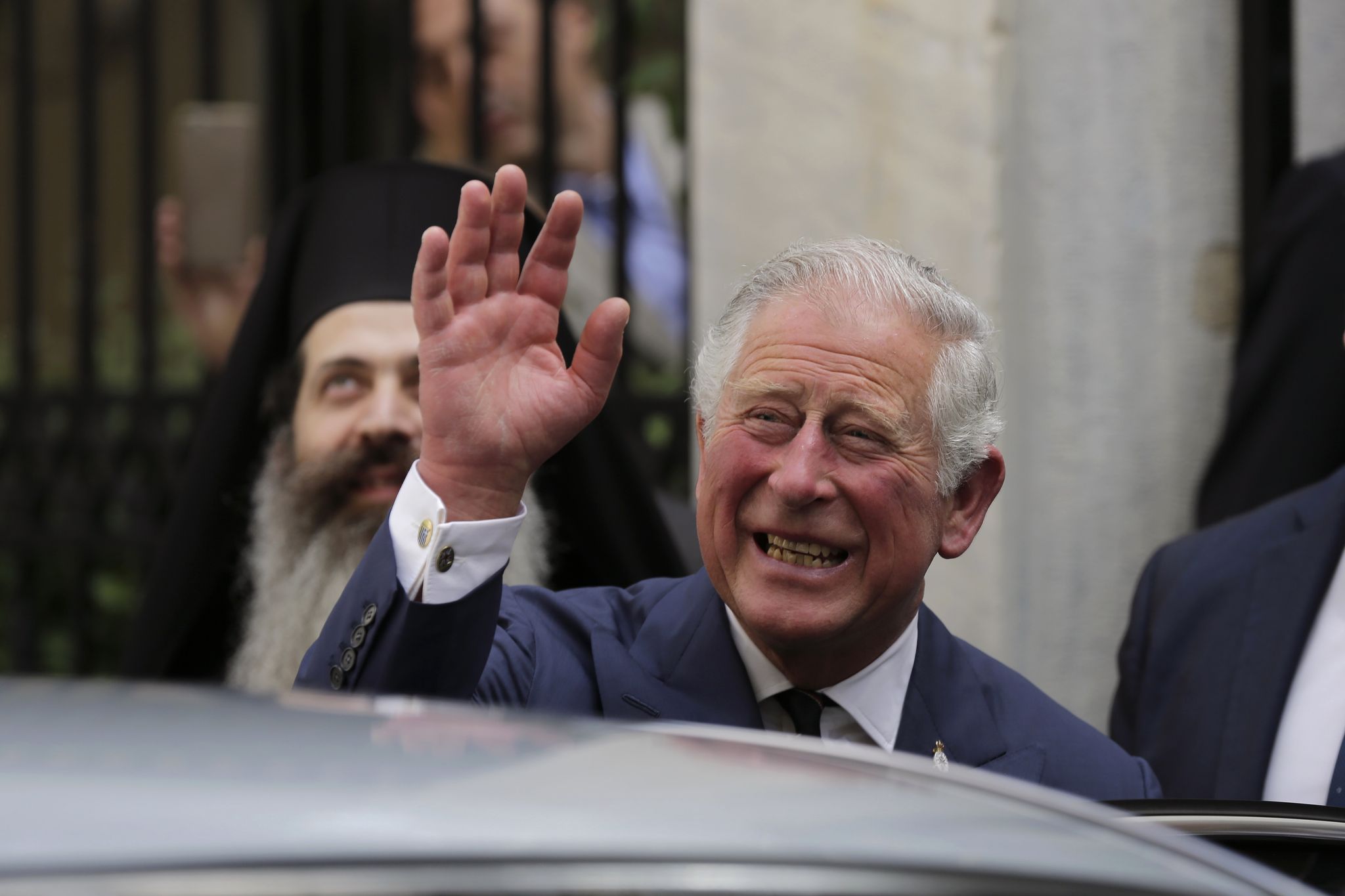
    Kensington Palace says Prince Charles will walk Meghan Markle down the aisle at the royal wedding.

    WINDSOR, England (AP) — Kensington Palace says Prince Charles will walk Meghan Markle down the aisle at the royal wedding.

    The father of groom Prince Harry stepped in after Markle’s dad fell ill days before the wedding and was unable to fly to Britain.

    Markle appealed for people to give Thomas Markle “the space he needs to focus on his health” amid reports he had had a heart procedure.

    The palace said Friday that Markle’s future father-in-law, the heir to the British throne, would walk Markle down the aisle at St. George’s Chapel in Windsor on Saturday. The palace says he “is pleased to be able to welcome Ms. Markle to the Royal Family in this way.”

  • South Korea downplays North Korea’s threats to cancel talks

    South Korea said Friday it believes North Korea remains committed to improving relations despite strongly criticizing Seoul over ongoing U.S.-South Korean military drills and insisting it will not ret

    SEOUL, South Korea (AP) — South Korea said Friday it believes North Korea remains committed to improving relations despite strongly criticizing Seoul over ongoing U.S.-South Korean military drills and insisting it will not return to talks unless its grievances are resolved.

    South Korean Unification Ministry spokesman Baek Tae-hyun said Seoul expects North Korea to faithfully abide by the agreements between its leader, Kim Jong-un, and South Korean President Moon Jae-in at their summit last month. The leaders issued a vague vow on the “complete denuclearization” of the peninsula and pledged permanent peace.

    “We are just at the starting point and we will not stop or waver as we move forward for peace in the Korean Peninsula,” Baek said.

    North Korea has taken repeated verbal shots at Washington and Seoul since canceling a high-level meeting with South Korea on Wednesday and threatening to scrap next month’s planned summit between Kim and U.S. President Donald Trump, saying it won’t be unilaterally pressured into relinquishing its nuclear weapons.

    The North’s threat cooled what had been an unusual flurry of diplomatic moves from a country that last year conducted a provocative series of weapons tests that had many fearing the region was on the edge of war. It also underscored South Korea’s delicate role as an intermediary between the U.S. and North Korea and raised questions over Seoul’s claim that Kim has a genuine interest in dealing away his nukes.

    Analysts said it’s unlikely that North Korea intends to scuttle all diplomacy. More likely, they said, is that it wants to gain leverage ahead of the talks between Kim and Trump, scheduled for June 12 in Singapore.

    Kim has declared his nuclear force is complete and announced a halt to nuclear and intercontinental ballistic missile tests while inviting foreign journalists to witness the dismantling of his nuclear test site between May 23 and 25. North Korea invited journalists from the United States, South Korea, China, Russia and Britain to witness the dismantling process, but on Friday it did not respond after Seoul sent a list of South Korean journalists who were picked to go, the Unification Ministry said.

    Baek spoke hours after Ri Son Gwon, chairman of a North Korean agency that deals with inter-Korean affairs, accused South Korea’s government of being “an ignorant and incompetent group devoid of the elementary sense of the present situation, of any concrete picture of their dialogue partner and of the ability to discern the present trend of the times.”

    In comments published by the North’s Korean Central News Agency, Ri said the “extremely adventurous” U.S.-South Korean military drills were practicing strikes on strategic targets in North Korea, and accused the South of allowing “human scum to hurt the dignity” of the North’s supreme leadership.

    Ri was apparently referring to a news conference held at South Korea’s National Assembly on Monday by Thae Yong Ho, a former senior North Korean diplomat who defected to the South in 2016. Thae said it’s highly unlikely that Kim would ever fully relinquish his nuclear weapons or agree to a robust verification regime.

    Ri said it will be difficult to resume talks with South Korea “unless the serious situation which led to the suspension of the North-South high-level talks is settled.”

    Senior officials from the two Koreas were to sit down at a border village on Wednesday to discuss how to implement their leaders’ agreements to reduce military tensions along their heavily fortified border and improve overall ties, but the North canceled the meeting.

    In Washington, Trump said Thursday that nothing has changed with respect to North Korea after its warning. He said North Korean officials are discussing logistical details of the meeting with the U.S. “as if nothing happened.”

    Trying to address the North Korean concerns, Trump said if Kim were to agree to denuclearize, “he’ll get protections that would be very strong.”

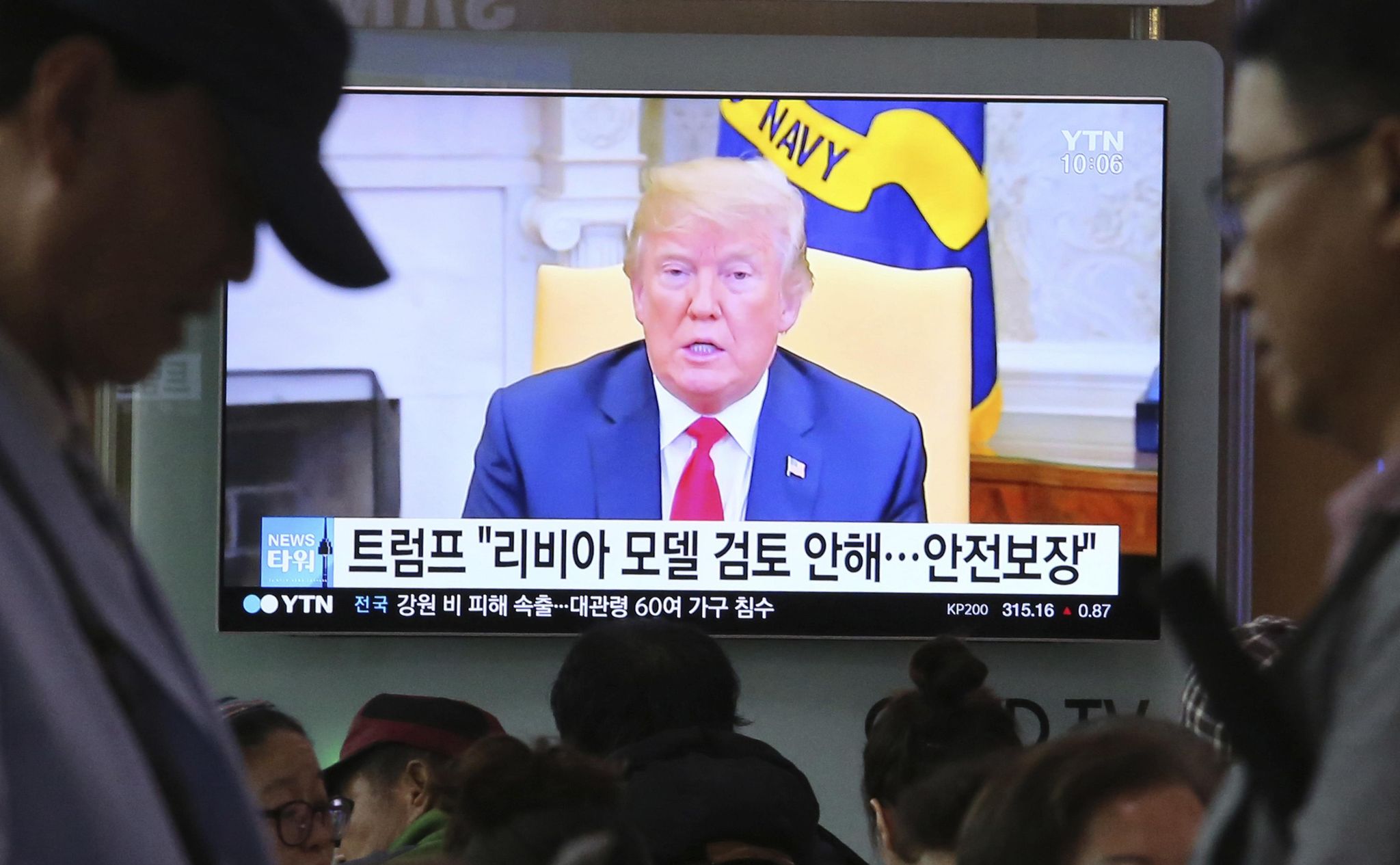
    But Trump warned that failure to make a deal could have grave consequences for Kim. Mentioning what happened in Libya when it gave up its nuclear program, Trump said, “That model would take place if we don’t make a deal.”

    “The Libyan model isn’t the model we have at all. In Libya we decimated that country.” Trump added. “There was no deal to keep Gadhafi.”

    Some analysts say bringing up Libya, which dismantled its rudimentary nuclear program in the 2000s in exchange for sanctions relief, jeopardizes progress in negotiations with the North.

    Kim took power weeks after former Libyan leader Moammar Gadhafi’s gruesome death at the hands of rebel forces amid a popular uprising in October 2011. North Korea has frequently used Gadhafi’s death to justify its own nuclear development in the face of perceived U.S. threats.

  • Argentina’s peso plunge incites frustation at Mauricio Macri

    The return of the pesos bears and a sharp rise in the U.S. dollar have left Argentina — and a number of developing countries including Brazil, Mexico, South Africa and Russia — reeling again, desper

    BUENOS AIRES — A shopping trip to Miami or a beach vacation in Brazil is far beyond Samuel Rivas’ budget. Nevertheless, the 57-year-old cabdriver was on a desperate hunt for foreign currency Wednesday in the Argentine capital’s financial district.

    “It’s the only way I can make my money count — by buying dollars,” Mr. Rivas explained below the red digits flashing the Maguitur exchange office’s current values. “Because the day I want to trade in my car, if I saved in pesos, it’ll be totally devalued.”

    His strategy — which has become a near-universal pastime in a country facing a 25 percent annual inflation rate and where everything including real estate and international airfare is priced in U.S. dollars — has turned into a crisis again in the past two weeks as the Argentine peso lost almost 18 percent of its value against the greenback.

    The frustration on the streets is compounded because many Argentines thought they put such indignities in the rearview mirror with the election of center-right businessman Mauricio Macri as president in late 2015.

    A 2001 government default was followed by 12 years of leftist rule that left Argentina struggling to rebuild its treasury and clean up its reputation in the global financial circle.

    But the return of the currency bears and a sharp rise in the U.S. dollar have left Argentina — and a number of developing countries including Brazil, Mexico, South Africa and Russia — reeling again, desperately trying to bolster the value of their currencies without undermining local growth.

    The issue has particular resonance here, with many Argentines talking of a “here we go again” feeling.

    The dollar, worth just short of 21 pesos at the end of April, was selling this week for about 25 pesos. The decline was so steep that it unnerved locals long accustomed to the ever-weakening currency, which was once pegged to U.S. tender. On the day Mr. Macri was elected in December 2015, the dollar was worth barely over 9 pesos.

    It also prompted a frenzied response from central bankers, who sought to prop up the peso by hiking interest rates by almost 13 points, to 40 percent, and by selling off some $9 billion in foreign currency reserves. The peso hit a historic low against the dollar on Monday, although there was faint sign it was firming up by Wednesday.

    With a booming U.S. economy and the Federal Reserve raising interest rates, investor money that flooded into emerging markets such as Argentina is heading back to the U.S., putting huge pressure on countries that failed to prepare.

    Carmen Reinhart, a Harvard economist specializing in international finance, turned heads this week when she told the Bloomberg News service that the emerging market economies are showing “more cracks now than they did five years ago and certainly at the time of the [2008] global financial crisis.”

    Mr. Macri, under increasing pressure 15 months ahead of a likely re-election bid, has acknowledged the anxiety, though he was quick to declare that the “currency turbulence” had been overcome.

    “Clearly, what happened this week is that the world has decided that the velocity at which we had committed to reducing the fiscal deficit is not enough,” Mr. Macri told reporters at the Olivos presidential residence on Wednesday. “So we’ll need to speed things up.”

    The president, a onetime business associate of Donald Trump whose acumen with money was supposed to be one of his strongest assets, has called for a grand bargain with opposition leftist lawmakers, governors and union leaders to further rein in deficit spending, which he insisted was the source of all of Argentina’s financial troubles.

    For all the efforts of Buenos Aires to set its house in order and restore its good credit, recent events have been a sharp reminder of the country’s vulnerability to trends and forces beyond its borders and beyond its control.

    Vulnerable

    “It’s a vulnerability because we depend on the world to lend us money, something we must change,” Mr. Macri said. “We Argentines have dragged along this problem, which weighs down all of society. So I believe it’s time to tell the truth: No more shortcuts, no more patches.”

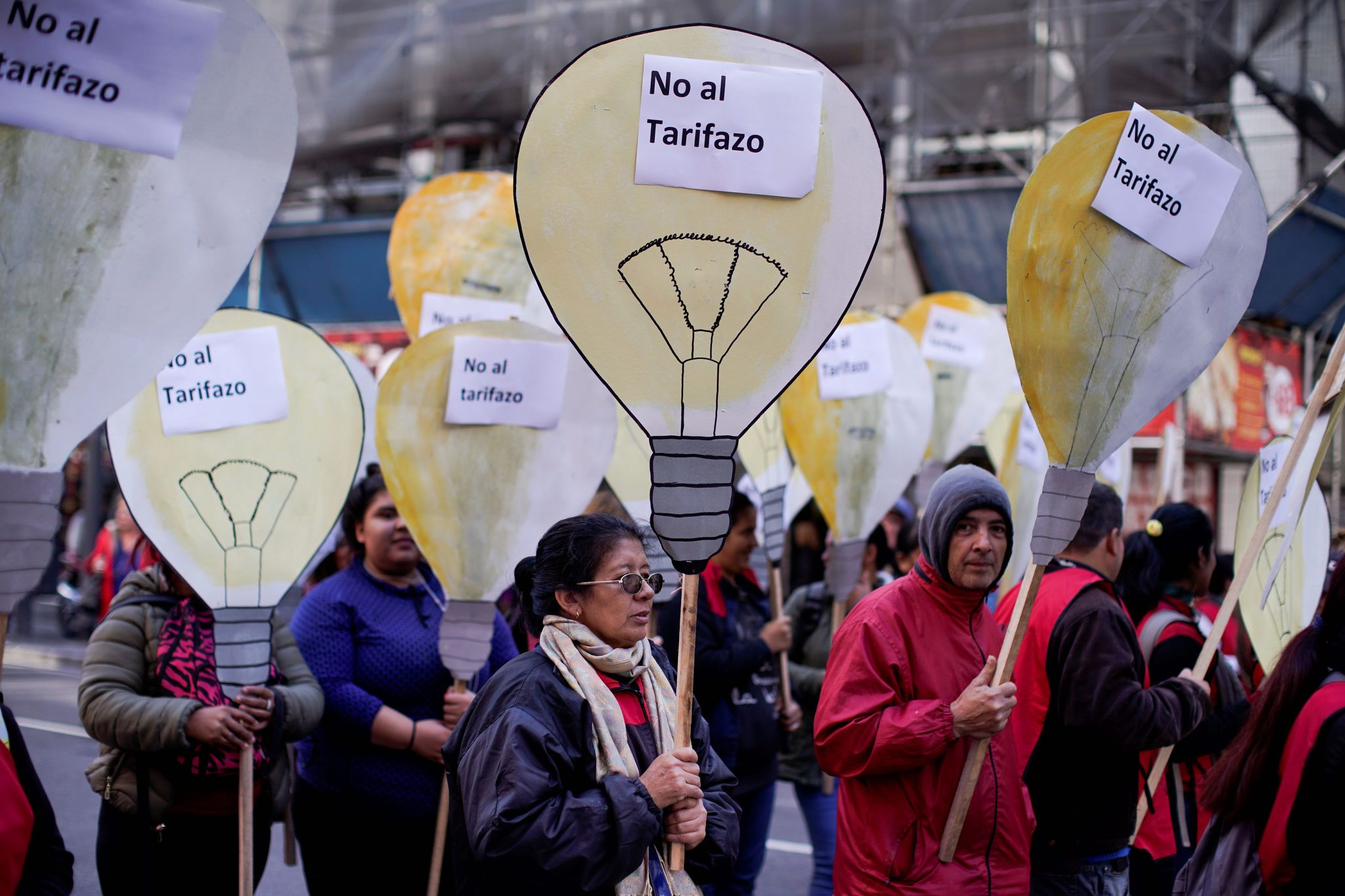
    Those words may well sound ominous to many overwhelmed Argentines who, in the wake of the administration’s cuts to government subsidies, have seen their utility bills and public transport costs triple or quadruple in a matter of months.

    Mr. Macri’s May 8 decision to ask the International Monetary Fund for a $30 billion line of credit, ostensibly intended to inspire confidence, seems to have done just the opposite given Argentina’s troubled history with international lenders.

    “It’s a sensitive topic [because] it reminds us … of somewhat traumatic experiences the country lived through,” said Mariano de Vedia, a political commentator for the La Nacion daily. “That doesn’t mean the [IMF] negotiations won’t be positive. But there’s an old saying: ‘He who scalded himself with milk cries when he sees a cow.’”

    Popular unease is not enough of a reason to seek financing elsewhere, Mr. Macri insisted, especially because it could mean an additional $1 billion in interest per year.

    “The [IMF] is a serious institution with which one makes good or bad deals; we’ll make a good deal,” Mr. Macri said. “We’re talking about hundreds of schools we can build, with the [savings] in interest, we’re talking about thousands of miles of freeway. … This must be a time of pragmatism.”

    But to Emilio Massucco, who owns a small electronics store a few blocks from the Maguitur office, there is nothing pragmatic about looking to international powers that be to fix Argentina’s problems.

    “I’d like for us to not depend on the dollar,” Mr. Massucco said while sitting in front of a rack adorned by a sizable Argentine flag. “I’d like for the country to be run in a way so as to not depend on the [IMF], of course, not depend on another country’s economy, especially that of the United States.”

    While Mr. Macri praised his economic advisers Wednesday, the peso meltdown was affecting the wallets of bargain hunters along Florida Street, the busting Buenos Aires shopping mile where dozens of unlicensed money changers offer their services with their trademark, high-decibel cries of “Cambio, cambio.”

    “You see it reflected in the value of a spare part of a cellphone, a tablet, whatever,” said Mr. Massucco, whose store sits inside the street’s Galeria Jardin electronics mall. “Buying from a wholesaler with a 30-day check means exacerbated dollar futures. … The dollar causes [price] hikes of all kinds.”

    A day after the government gained some breathing room by avoiding a feared sell-off of short-term Lebac bonds, the 45-year-old entrepreneur’s confidence in official assurances that the worst is over was limited at best.

    “The market has calmed down, and the Central Bank regulated things in some way,” Mr. Massucco said. “But even so, there still is latent instability and uncertainty.”

    All but certain, though, is that the government’s annual inflation target of 15 percent — already boosted from the 10 percent estimate — has become wholly illusory. Unidentified officials warned this week that 20 percent and even 25 percent were more realistic objectives.

    Amateur Milton Friedmans

    The close link to inflation — and thus the costs of everyday products — is why ordinary Argentines keep a close eye on dollar values.

    At the solidly named Sterling Cafe just five doors down from the Central Bank, Daniel Mendez Garcia sounded more like an economist than a coffee shop co-owner.

    “You know what’s happening? You spend more. You have new price tags and old salaries,” Mr. Mendez said as he chatted with one of his regulars, a retired central banker. “Money in the street contracts, so there’s less in sales. It’s math; no need to be a guru [like] Milton Friedman.”

    Unlike others, the 20-year coffee veteran insisted he won’t preemptively charge his customers more. But in a country with an $8 billion trade deficit, how much the peso is or isn’t worth will still make a difference.

    “We only change the menu prices when they raise prices for me,” Mr. Mendez said. “[But] coffee will get more expensive now because it’s imported. There’s nothing you can do about it.”

    In the meantime, halfhearted acknowledgments of errors — with Central Bank President Federico Sturzenegger conceding that markets were not “convinced” by his monetary policy and Mr. Macri faulting himself for being “too optimistic” — have done little to tame tempers.

    “The self-criticism helps if you can gain something for the future,” Mr. Mendez said. “Otherwise, you can just commit hara-kiri.”

    It’s advice Mr. Macri may want to heed if he wants to remain in office beyond October of next year, especially since voters have already shown an uncharacteristic amount of patience as they await his administration’s long-promised economic revival.

    “In a way, [he] has been weakened; it just so happens that no other sector, party or candidate has tapped into this situation,” said Mr. de Vedia, the La Nacion analyst. “The [peso crisis] further delays the recovery, and that causes frustration and dissatisfaction.”

    If any doubts remain as to just how present American legal tender is on Argentines’ minds, the president might do well do ditch his limousine and take a subway ride around Buenos Aires.

    “Just 20 pesos,” a street vendor hawking ballpoint pens yelled on Wednesday in a crowded B line wagon: “If the dollar keeps rising on me, I don’t know for how much longer I’ll be able to sell them at 20 pesos.”

  • Donald Trump to meet South Korean president amid uncertainty over Kim Jong-un summit

    President Trump will host South Korean President Moon Jae-in at the White House next week for a meeting expected to center on clarifying expectations for an upcoming summit with North Korea’s Kim Jong

    President Trump will host South Korean President Moon Jae-in at the White House next week for a meeting expected to center on clarifying and aligning the expectations that Washington and Seoul have for Mr. Trump’s upcoming summit with North Korea’s Kim Jong-un.

    The Moon visit Tuesday comes amid uncertainty over the planned June 12 summit after North Korea threatened this week to pull out amid anger over National Security Advisor John R. Bolton’s claims that Washington seeks a quick, verifiable, “Libya model” denuclearization from Pyongyang.

    President Trump walked back Mr. Bolton’s assertions Thursday, telling reporters “the Libyan model isn’t a model that we have at all when we’re thinking of North Korea,” and stressing that if Mr. Kim is serious about abandoning his nuclear program, Washington will provide the North Korean leader’s regime with “protections.”

    While those comments hang in the backdrop, national security sources say the White House is scrambling behind-the-scenes to nail down exactly what its expectations are for the highly-anticipated summit with Mr. Kim in Singapore.

    That’s where President Moon comes in, says Hak-Soon Paik, the head North Korea analyst at the Sejong Institute, a top South Korean think tank.

    Mr. Paik, who’s in Washington ahead of Mr. Moon’s visit to the White House, says it “comes at an opportune moment” for both South Korea and the U.S.

    “On the U.S. side, the administration has a chance to hear directly from the South Korean president what his views toward what Mr. Trump’s expectations should be for the upcoming summit with Kim,” Mr. Paik told The Washington Times on Friday.

    “For the South Korean side,” he said, “this is a moment to advise Mr. Trump directly on Seoul’s view of what would or would not amount to a successful [summit].”

    The Moon visit comes roughly a month after Mr. Trump held a similar meeting with Japanese Prime Minister Shinzo Abe to soak in his perspective on how a one-on-one with Mr. Kim should play out.

    A top aid to Mr. Abe said at the time that the Japanese premier told Mr. Trump to demand Mr. Kim meet a hard deadline of 2020 to permanently surrender his nuclear programs and that no sanctions relief for Pyongyang should be granted until the deadline is met.

    Katsuyuki Kawai, the special adviser for foreign affairs to Mr. Abe from Japan’s ruling Liberal Democratic Party, said Mr. Abe also pressed Mr. Trump to realize “America is in a stronger position than Chairman Kim” and that North Korean denuclearization has to occur before Mr. Trump faces a potentially difficult re-election campaign in just two years.

    Sources close to Mr. Moon have told The Times the South Korean president is likely to offer similar advice next week, with particular emphasis on the timeline the administration should demand for denuclearization.

    One source said Mr. Moon will attempt to make the case that at least a year, if not considerably longer, will be needed in order for any kind of successful, verifiable denuclearization to occur.

  • Ebola outbreak isn’t a global emergency yet: WHO

    The Ebola outbreak in the Democratic Republic of Congo is not considered a global health emergency — at least not yet, the World Health Organization announced Friday, saying it is hopeful it can stam

    The Ebola outbreak in the Democratic Republic of Congo is not considered a global health emergency — at least not yet, the World Health Organization announced Friday, saying it is hopeful it can stamp out the widening outbreak despite fear the disease will travel along the Congo River “highway” to major capitals.

    In the U.S., meanwhile, the Centers for Disease Control and Prevention said it has a dozen disease fighters who are ready to help the ground effort, if needed.

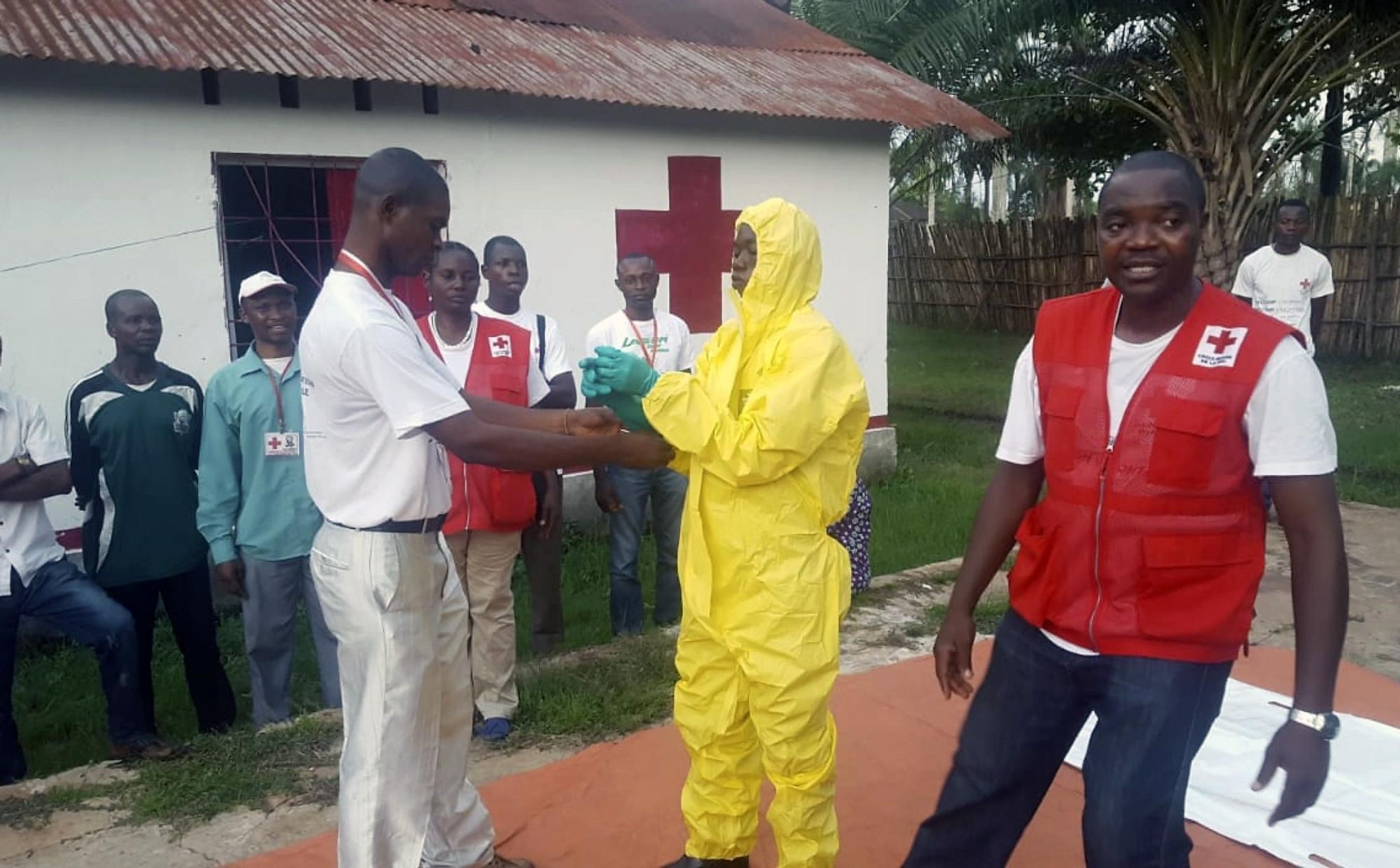
    The outbreak in the DRC, where Ebola is endemic, has resulted in 45 reported cases, of which 14 have been confirmed, and 25 people have died. Three of the reported cases involve health care workers.

    However, the robust response on the ground provides “a strong reason to believe that this situation can be brought under control,” said Dr. Robert Steffen, the chairman of WHO’s emergency committee.

    Vaccination of people at risk of infection will begin Sunday, according to WHO.

    Director-General Tedros Adhanom Ghebreyesus said the shots flown in from Switzerland are just one part of the global response to the outbreak centered in the remote area of Bikoro, although one case appeared in Mbandaka, a city of more than 1 million people.

    Global responders are setting up mobile labs, isolating patients and tracking down contacts are risk of infection.

    “This is a vaccine that we believe can help us,” Dr. Ghebreyesus said. “But we will not just rely on the vaccine.”The CDC said it submitted the names of 12 people from its Atlanta headquarters to the Global Outbreak Alert and Response Network (GOARN), from which the WHO can draw personnel to support lab diagnostics, vaccinate “rings” of at-risk people and help local health workers protect themselves against infection.

    Logistics in the affected region are challenging, however, so responders on the ground will likely have to establish an aircraft link before drafting the CDC’s people. If that happens, WHO will pay for their activity through the response network.

    As it stands, the WHO is citing the swift response in declining to name the outbreak a public health emergency of international concern.

    To constitute such an emergency, it must be “serious, unusual or unexpected” situation that requires an international response to contain, and there must be a high risk of spread across borders.

    WHO said it could reconsider its determination if things worsen.

    It has warned nine neighboring countries to stiffen their defenses against Ebola — particularly the Central African Republic, the Republic of Congo and Angola, given river routes in the area.

    There are dozens of small ports along the Congo River, a major artery that flows from the affected area of DRC to its capital, Kinshasa, and Brazzaville, the capital of the Republic of Congo.

    “That, of course, has very significant traffic across very porous borders there,” Dr. Steffen said.

    Ebola is a serious illness that is transmitted to people from wild animals and spreads from human to human through the bodily fluids of people who exhibit symptoms. About half of those who contract Ebola die from it.

    WHO officials said they’re looking to avoid a repeat of the 2013-2016 outbreak that killed more than 11,000 people in West Africa.

    The organization, the public health arm of the U.N., was criticized for failing to react fast enough to that outbreak, before it spiraled out of control.

    Global responders quickly stamped out an Ebola outbreak in DRC last year, and front-line workers on the ground have been supportive during this latest round, according to WHO.

    Dr. Ghebreyesus said local officials in Bikoro were worried about WHO personnel who arrived. They thought they might catch Ebola, and didn’t expect the foreigners to be there.

    “We were really moved and touched, because they are not caring about their life — they were caring about our lives,” he said.

    Dr. Ghebreyesus praised the officials for being the ones on the front line.

    “We have to also share the risk,” he said.

  • Windsor gears up for royal wedding, embraces Harry, Meghan

    Meghan Markle will have an heir to the British throne walk her down the aisle – and have her mother and friends on hand for support – when she marries Prince Harry at Windsor Castle.

    WINDSOR, England (AP) — Meghan Markle will have an heir to the British throne walk her down the aisle – and have her mother and friends on hand for support – when she marries Prince Harry at Windsor Castle.

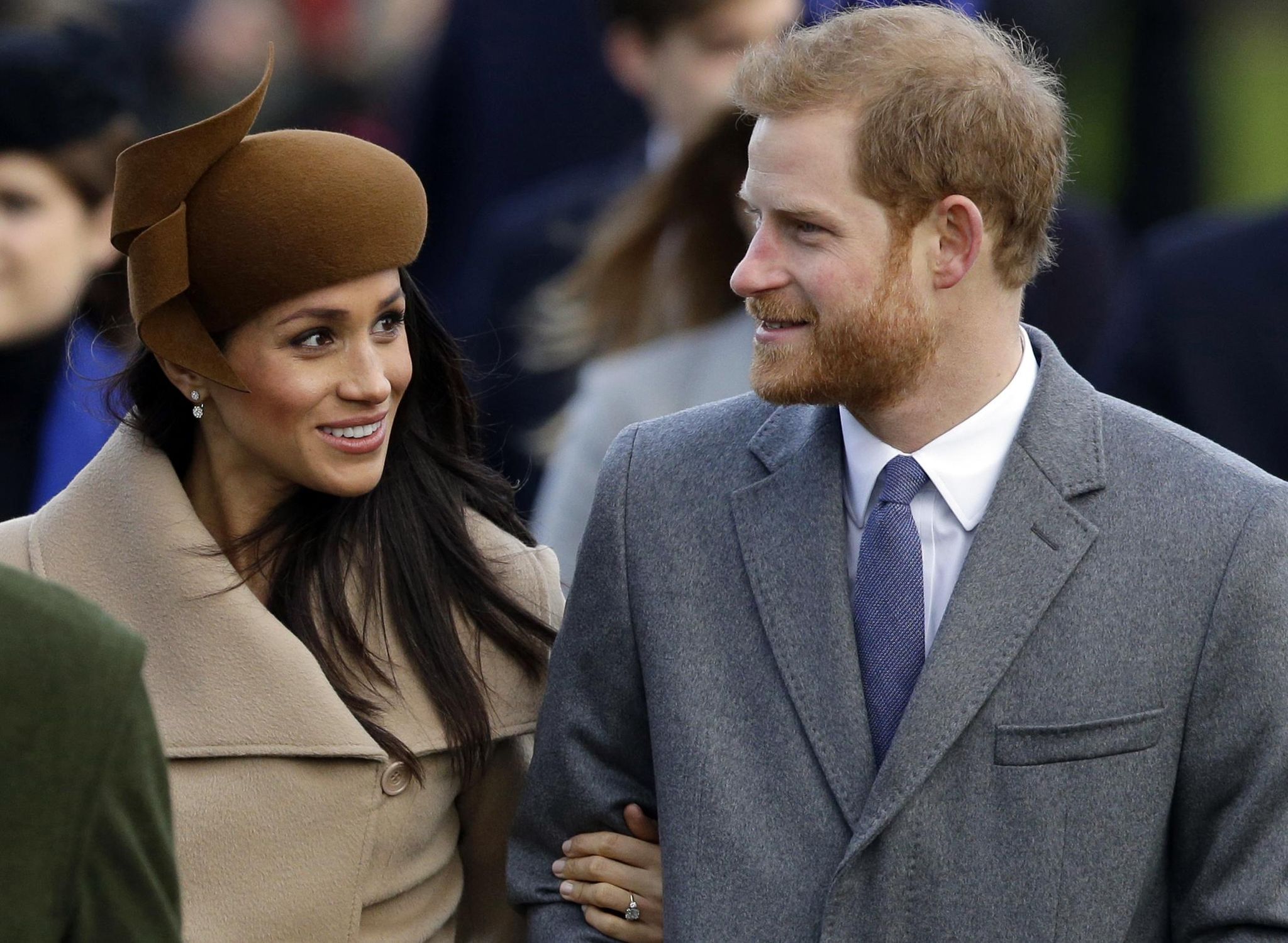
    Friday’s announcement that Markle has asked her future father-in-law Prince Charles to offer a supporting elbow, stepping in for Markle’s father after he became ill, meant arrangements were almost complete for Saturday’s royal wedding.

    The event’s mix of royalty, celebrity, pomp and ceremony has drawn stratospheric levels of interest around the world and will be broadcast live to tens of millions.

    Kensington Palace said Prince Charles “is pleased to be able to welcome Ms. Markle to the royal family in this way” after Markle’s father Thomas was unable to attend due to illness.

    Thousands of well-wishers descended Friday on Windsor amid final preparations for the wedding, which has drawn royal fans and an international media throng to the castle town and royal residence 25 miles (40 kilometers) west of London.

    Union Jacks have been unfurled, security barriers and police patrols put into place and fans were already camping out to capture the prime viewing positions for Saturday’s royal carriage ride through the town.

    Harry and Prince William, his brother and best-man, delighted royal fans when they emerged from Windsor Castle late Friday afternoon to greet well-wishers.

    If Harry was feeling nervous, he didn’t show it. The smiling prince gave a thumb’s up and answered “Great, thank you” when asked how he was feeling on the eve of his wedding. The 33-year-old prince accepted a teddy bear from one well-wisher as he chatted to people from Britain, the United States, Canada and elsewhere.

    Tens of thousands of spectators, including many Americans who have come in support of the California-born Markle, are expected in Windsor to soak up the royal atmosphere. British police say they will be subject to airport-style security scanners and bag searches. Metal barriers have also been erected to stop vehicle attacks like the ones that killed several people on London and Westminster bridges last year.

    Sniffer dogs and mounted patrols are also out and about, and well-wishers have been asked not to throw confetti when the newlyweds ride through town in a horse-drawn carriage Saturday.

    “It poses a potential security risk and it’s a bit of a pain to clean up!” said Thames Valley Police.

    Buckingham Palace also announced that Queen Elizabeth II’s husband the Duke of Edinburgh will attend the royal wedding, just a few weeks after undergoing a hip replacement operation. Harry’s 96-year-old grandfather has largely retired from public duties and it had not been clear earlier whether he would be well enough to attend.

    Markle’s mother, Doria Ragland, flew to England from her California home earlier in the week and had tea Friday with the queen at Windsor Castle. It was her first meeting with a head of state within whom she’s about to share a family bond.

    On Thursday, Ragland dined with William’s family and a day earlier she met Charles and his wife Camilla.

    Ragland had been was the bookies’ favorite to escort the bride down the aisle, but Charles has a lifetime of experience in appearing at large-scale public events amid intense scrutiny.

    “I think some people will be disappointed – people who were looking forward to the historic moment of a woman walking her daughter down the aisle, and a woman of mixed race heritage from America. It would have made an historic shot,” said royal historian Robert Lacey.

    But, he added, “for Prince Charles, the future king, to walk a bride down the aisle, what more could Meghan dream of?”

    Archbishop of Canterbury Justin Welby, who will conduct the wedding ceremony, said Charles is “a very warm person and that he’s doing this is a sign of his love and concern and support. And I think it’s wonderful. It’s beautiful.”

    The archbishop also said Harry and Markle are “a very self-possessed couple” and the atmosphere in rehearsals has been “relaxed, laughing and enjoyable.”

    It’s not the first time a royal bride hasn’t been walked down the aisle by her father. The monarch’s sister, the late Princess Margaret, was walked down the aisle by Prince Philip because her father was dead. Queen Victoria walked two daughters down the aisle.

    Roseline Morris, 35-year-old fan from Basildon, England, noted that Charles hasn’t got a daughter himself.

    “He’s never going to get the chance to walk a daughter down the aisle, so this will be nice for him as well,” she said.

    Having the father of the groom escort the bride is yet another twist in a royal wedding that is proving to be different from many others.

    Master baker Claire Ptak said Friday that the royal wedding cake – a three-part layered lemon and elderflower cake – will have an “ethereal” taste and be presented in a non-traditional way.

    Markle will not have a maid of honor but there will be 10 young bridesmaids and page boys, including 4-year-old Prince George and 3-year-old Princess Charlotte, the elder children of William and his wife Kate.

    The 600 invited guests include members of the royal family and celebrity friends of Harry and Meghan’s including, it’s rumored, Elton John. Also invited are several of Markle’s co-stars from the legal TV drama “Suits.”

    The couple will be married by Welby in a Church of England ceremony, but the Most Rev. Michael Curry, the first black presiding bishop of the U.S. Episcopal Church, will also deliver a sermon.

    Curry – the son of an American civil rights activist and the descendant of African slaves – has spoken out for gay rights and plans to join a march on the White House next week to reject U.S. President Donald Trump’s “America first” stance.

    On Friday, Curry said seeing the couple up close, he saw “two real people who are obviously in love.”

    “When I see them, something in my heart leaps,” he said. “That’s why 2 billion people are watching them.”

    __

    Lawless reported from London. Danica Kirka contributed from London.

    ___

    For complete AP royal wedding coverage, visit https://apnews.com/tag/Royalweddings

  • Ecuador pulls extra security from London embassy after spending millions shielding Julian Assange

    Ecuador will scale back security at its London embassy after news reports placed a $5 million price tag on operations protecting its most famous resident, WikiLeaks publisher Julian Assange, its gover

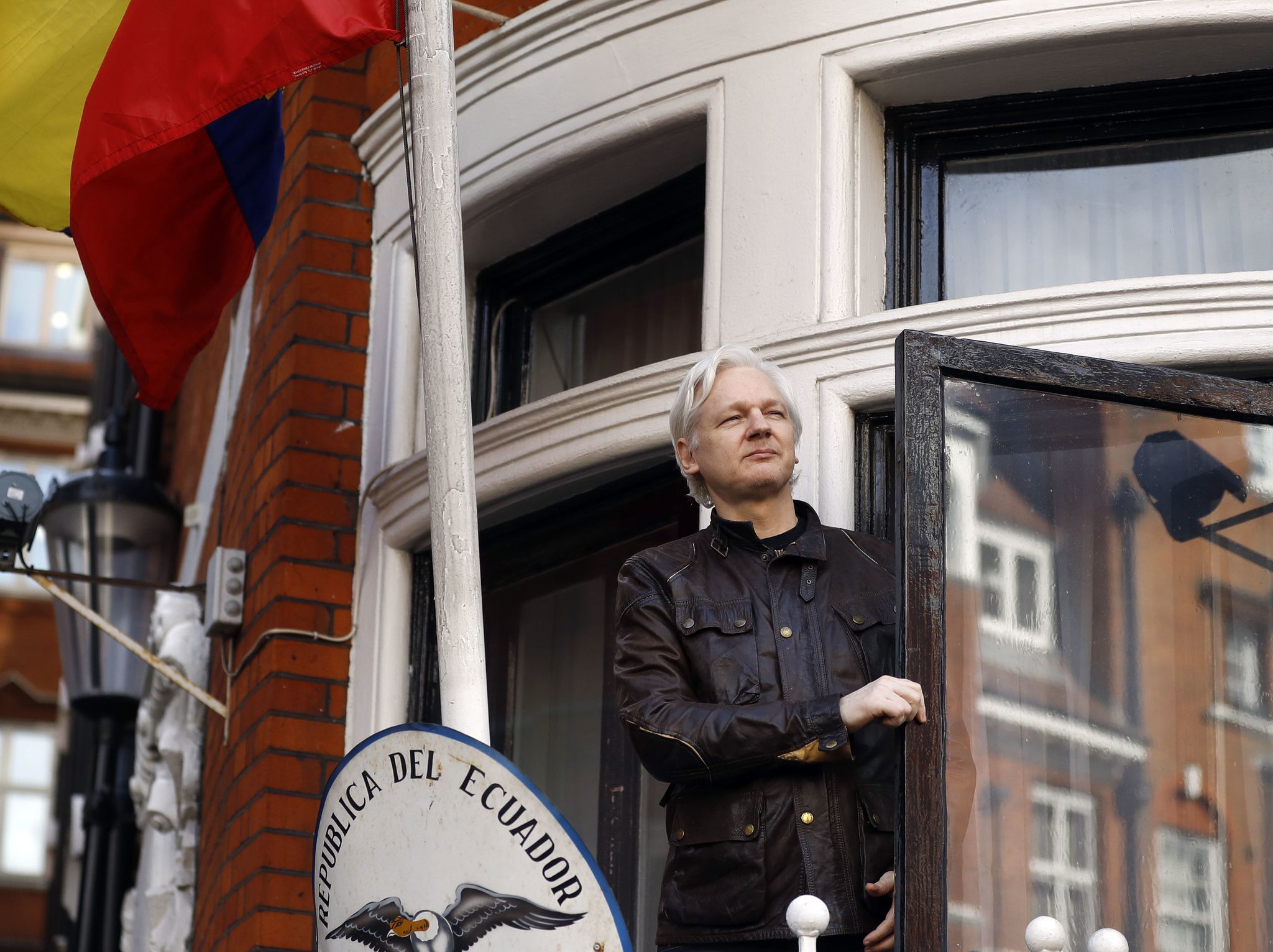
    Ecuador will scale back security at its London embassy after news reports placed a $5 million price tag on operations protecting its most famous resident, WikiLeaks publisher Julian Assange, its government announced.

    “The President of the Republic, Lenin Moreno, has ordered that any additional security at the Ecuadorian embassy in London be withdrawn immediately,” the government of Ecuador said in a statement Thursday.

    “From now on, it will maintain normal security similar to that of other Ecuadorian embassies,” the statement said.

    The government’s announcement came a day after The Guardian newspaper and Focus Ecuador reported that upwards of $66,000 a month has been spent on security, intelligence gathering and counterintelligence operations related to protecting Mr. Assange, a residence of the embassy since 2012.

    The operations were authorized by Rafael Correa, the former president of Ecuador who granted Mr. Assange asylum nearly six years ago, and ultimately cost the country more than $5 million, the outlets reported.

    “When we have special security, we hire private security firms to provide it,” Mr. Correa told The Guardian. “There is nothing unusual about this. It would have been a violation of our duties if we did not.”

    The security operations included the installation of surveillance cameras and contracting a security team to “secretly film and monitor all activity in the embassy,” The Guardian reported.

    WikiLeaks did not immediately respond to a request for comment concerning Ecuador’s decision to scale back security at the embassy.

    Mr. Assange, 46, entered the embassy in June 2012 while under house arrest in connection with a rape investigation conducted by Swedish prosecutors. He argued that he would likely be extradited to the U.S. and prosecuted for publishing classified military and diplomatic documents through his WikiLeaks website upon surrendering to Swedish authorities, and Mr. Correa granted him asylum two months later.

    Sweden dropped their rape probe in 2017, but British authorities have said they would arrest Mr. Assange if he leaves the embassy for jumping bail in 2012.

    The Justice Department has not unsealed charges against Mr. Assange, but Attorney General Jeff Sessions called arresting him a “priority.”

    London police, on their part, previously acknowledged spending roughly $16,000 a day stationing security guards outside the embassy, or about $5.6 million during the first year of Mr. Assange’s residence, prior to scaling back their operations in 2015.

  • Russia initiates terrorism investigation into Washington Examiner journalists over Crimea article

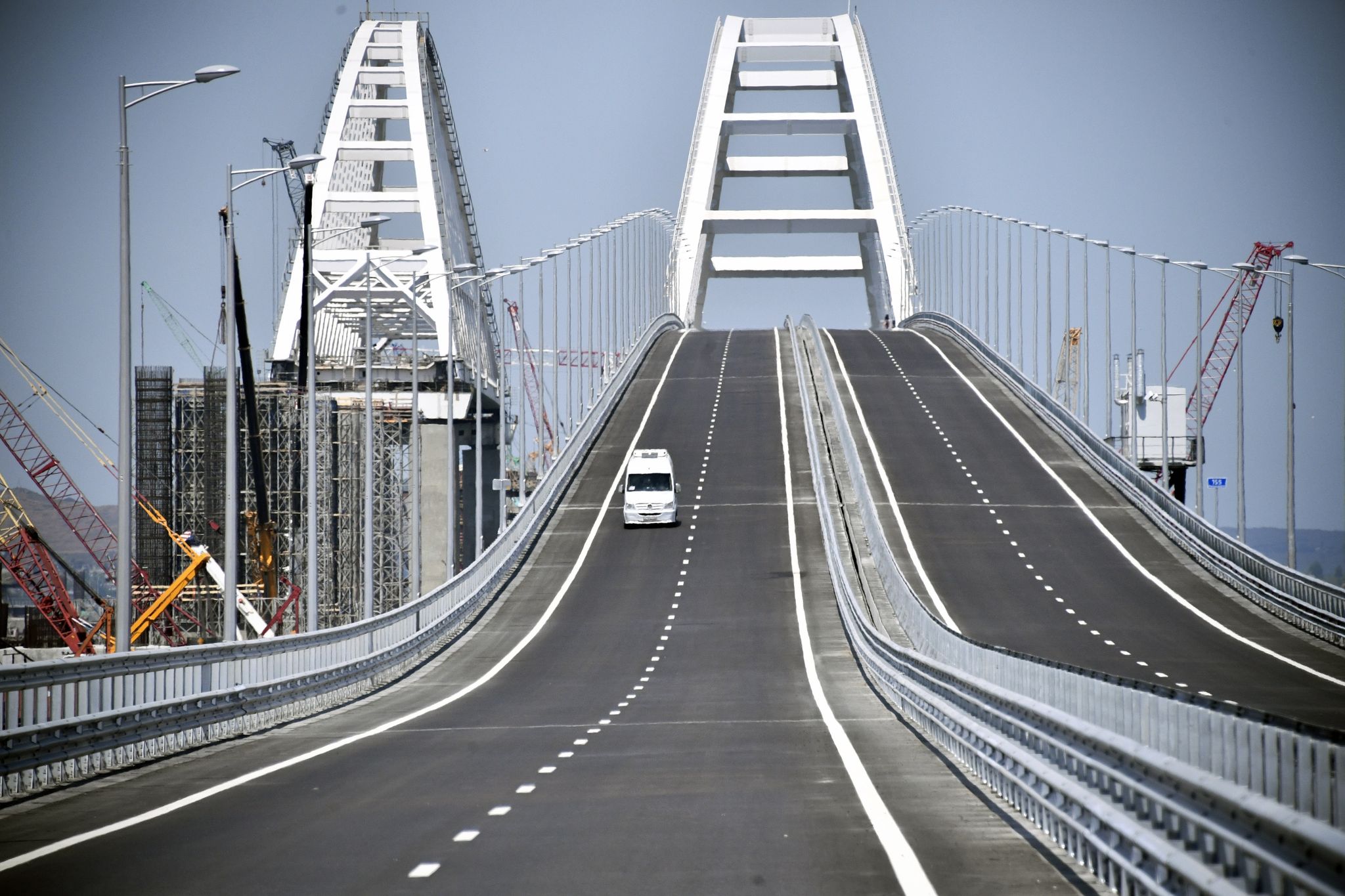
    Russian authorities have initiated criminal proceedings after The Washington Examiner, a D.C.-based magazine and website, published an article urging Ukraine to bomb Russia’s newly opened bridge to Cr

    Russian authorities have initiated criminal proceedings after The Washington Examiner, a D.C.-based magazine and website, published an article urging Ukraine to bomb Russia’s newly opened bridge to Crimea.

    Washington Examiner editorial director Hugo Gurdon and columnist Tom Rogan are both being criminally investigated in connection with the article, “Ukraine Should Blow Up Putin’s Crimea Bridge,” a spokeswoman for Russia’s Investigative Committee said Friday.

    The article was written by Mr. Rogan, 32, and published on the Examiner’s website Tuesday, the same day Russian President Vladimir Putin personally oversaw the opening of a controversial 12-mile bridge connecting the country’s mainland with Crimea, a peninsula in the Black Sea annexed from Ukraine in early 2014.

    “Ukraine has the means to launch air strikes against the bridge in a manner that would render it at least temporarily unusable,” Mr. Rogan wrote in the article.

    “Bombing the bridge,” he added, “would thus be a very personal rebuke to Putin’s ambitions and his propaganda narrative.”

    Russia’s Investigative Committee announced Thursday that it had opened a criminal case against Mr. Rogan, and the committee confirmed Friday that its probe had been widened to encompass the Examiner’s editorial director as well.

    “According to the investigators, Gurdon had negotiated the approval and published Tom Rogan’s article on the Washington Examiner’s website, calling for blowing up the Crimean Bridge by carrying out bomb attacks,” said Svetlana Petrenko, the committee’s spokeswoman.

    Investigators believe the article’s publication violates Russia’s law against publicly calling for terrorist activities on the territory of the Russian Federation, Ms. Petrenko said.

    “In the actions of Hugo Gurdon, propaganda of terrorism is seen,” she said in a statement.

    In an editorial, The Washington Examiner described Russia’s response to the article as “wacky.”

    “Our writers don’t normally advocate destruction of bridges, but then again, most bridges aren’t built as part of an illegal armed invasion of another sovereign nation,” the editorial said. “Crimea is rightly Ukrainian. Russia controls it through illegal force, and this bridge is an effort to cement that control.

    “In America, the right to express that opinion to whomever we want is protected,” the editorial said.

  • Trump calls Texas shootings a ‘horrific attack’

    President Trump called Friday’s school shooting in Texas a “horrific attack” and said the government must do more to keep guns out of the hands of dangerous people.

    President Trump called Friday’s school shooting in Texas a “horrific attack” and said the government must do more to keep guns out of the hands of dangerous people.

    “This has been going on for too long in our country,” Mr. Trump said at the White House, calling it “a very sad day.”

    Mr. Trump said the administration is “closely monitoring” the situation in Texas, where at least nine people were killed Friday morning in a shooting at a high school in Santa Fe.

    “My administration is determined to do everything in our power to protect our students, secure our schools and keep weapons out of the hands of those who pose a threat to themselves and to others,” the president said. “Everyone must work together at every level of government to keep our children safe. May God be with the victims, and with the victims’ families.”