An aid convoy crossed into the embattled rebel-held suburbs of Damascus Friday, delivering desperately needed aid despite heavy fighting that broke out “extremely close” to the convoy and renewed airs
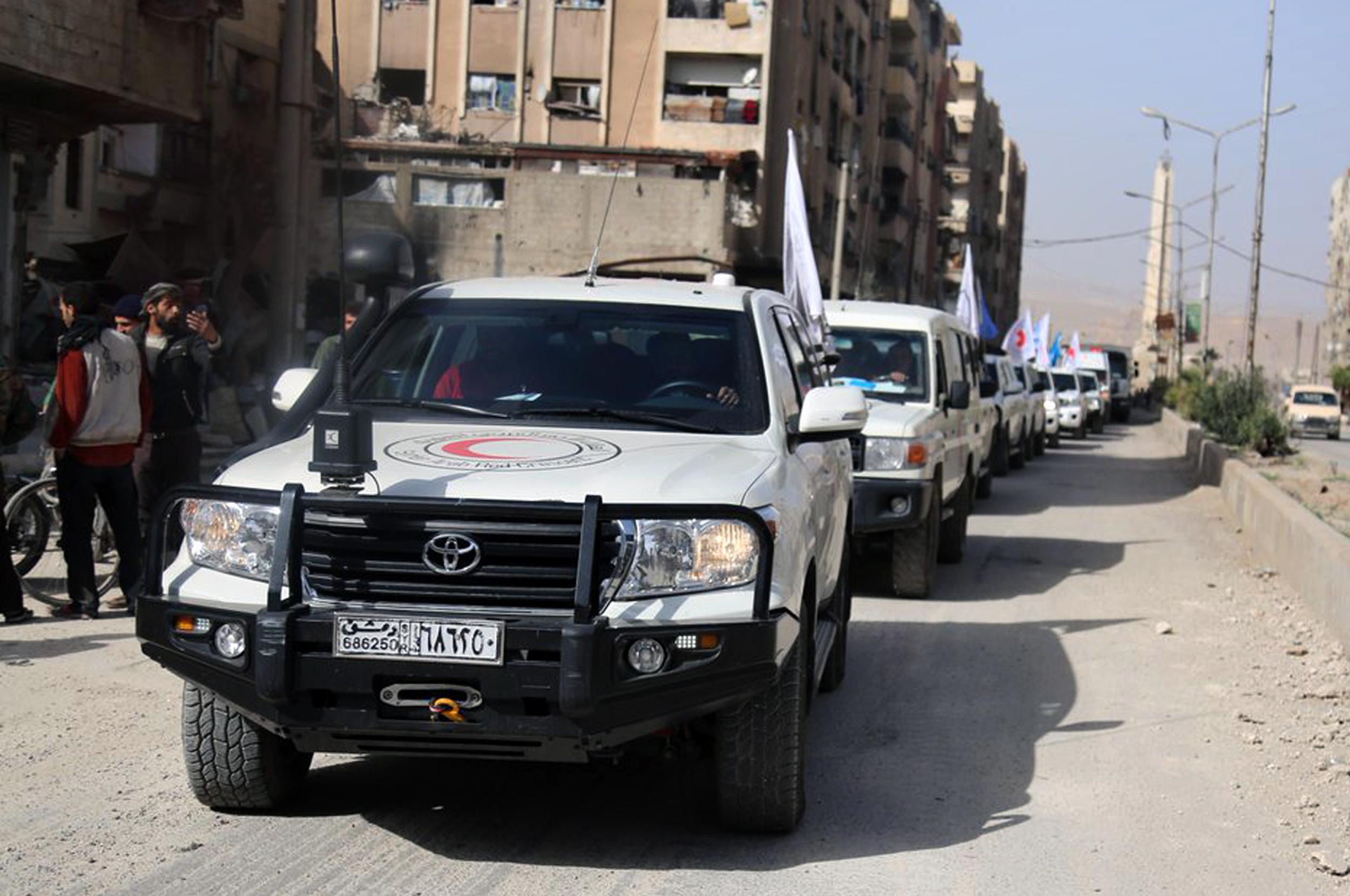
BEIRUT (AP) — An aid convoy crossed into the embattled rebel-held suburbs of Damascus Friday, delivering desperately needed aid despite heavy fighting that broke out “extremely close” to the convoy and renewed airstrikes by the Syrian government.
The International Committee of the Red Cross said the close-range fighting came despite security guarantees from the parties involved in the conflict that humanitarian aid could enter the town of Douma, in eastern Ghouta.
“We were taken aback by the fighting that broke out despite guarantees from the parties involved in this conflict that humanitarians could enter Douma, in Eastern Ghouta,” said ICRC regional director Robert Mardini.
“As more aid is needed in the coming days, it is absolutely critical that these assurances be renewed and respected in the future,” Mardini said. “Aid workers should not have to risk their lives to deliver assistance. The security of humanitarian workers, as well as that of civilians, must be guaranteed at all times.”
ICRC said it delivered along with the U.N. and the Syrian Arab Red Crescent 2,400 food parcels that can sustain 12,000 people for one month, as well as 3,248 wheat flour bags.
The delivery consists of supplies that were not offloaded during a mission to the enclave on Monday, which was cut short because of deteriorating security. The trucks had been stuck at the Wafideen crossing over the entire week, waiting to enter and deliver the remaining food parcels and flour bags.
The ICRC said the aid was delivered in Douma — the largest and most populated town in the rebel-held eastern Ghouta, on the edge of the Syrian capital — earlier in the day. The convoy entered during a brief lull but the bombardment and fighting resumed after the convoy entered eastern Ghouta.
Rami Abdurrahman, who heads the Britain-based Syrian Observatory for Human Rights, said Douma was shelled before the convoy went in. Once the relief workers arrived, Syrian government forces shelled the outskirts of the town, he said.
Mohammed Alloush, the political chief of the Army of Islam rebel group, told The Associated Press that the as the convoy was inside Douma they were “being targeted by the regime although they have informed the Russians about their location.” Alloush’s group is the largest in eastern Ghouta and controls Douma.
ICRC spokeswoman Ingy Sedky said aid workers went into eastern Ghouta “after getting security guarantees from all parties to make sure no incident will happen during the presence of our team” there.
The attempt followed what opposition activists and the Observatory said was one of the quietest nights in eastern Ghouta since Syrian government forces escalated their assault on the rebellious region on Feb. 18.
The government and its Russian backers, determined to wrest eastern Ghouta from rebel control after seven years of war, recently intensified the shelling and bombardment to clear the way for its troops to advance on the ground. Around 900 people have been killed in the past three weeks of relentless bombardment.
Doctors Without Borders said Friday that between Feb. 18 and March 3 at least 1,005 people were killed and 4,829 wounded — or 71 killed and 344 wounded on average per day. The group known by its French acronym, MSF, said that the data was collected from 10 medical facilities that it fully supports and another 10 facilities it provides with emergency medical donations inside the eastern Ghouta enclave.
“Two of these facilities have yet to submit data for March 3, so this is an underestimation,” MSF said. It added that 15 of the 20 hospitals and clinics that MSF supports have been hit by bombing or shelling, with varying degrees of damage.
“The numbers alone speak volumes. But even more telling are the words we hear from the medics we are supporting on the ground,” said MSF Director General Meinie Nicolai. “Daily, we hear an increasing sense of hopelessness and despair, as our medical colleagues reach the limits of what a person can be expected to do.”
Government forces this week advanced from the east and were less than a mile away from linking with forces on the western side of eastern Ghouta and cutting the rebel-held district in half.
The military gains have caused wide-scale internal displacement as civilians flee government advances toward areas in the territory still held by the rebels.
Nearly 400,000 people are believed to be inside eastern Ghouta. The most built-up and densely populated areas still under rebel control include the towns of Douma, Harasta, Jisreen, Kfar Batna, Saqba and Hammouriyeh.
The Observatory reported airstrikes on Douma and Jisreen just before the 13-truck convoy arrived Friday, following an hourslong lull. It said the lull was result of local negotiations brokered by unnamed Damascus businessmen with the government to try and reach a solution that would secure the exit of fighters and civilians from eastern Ghouta.
The Observatory and the opposition’s Syrian Civil Defense, also known as the White Helmets, reported that airstrikes and shelling resumed late Friday afternoon on eastern Ghouta. They said at least five people were killed in Friday’s bombardment of the town of Jisreen.
The U.N. High Commissioner for Refugees, Filippo Grandi, said the United Nations has “failed spectacularly” when it comes to Syria.
Speaking at a press conference in Beirut, he said people in eastern Ghouta are terrified.
“They do not know anymore. Some say I want to stay, some say I want to go but both options have become dangerous, this is what makes me so anguished,” he said.
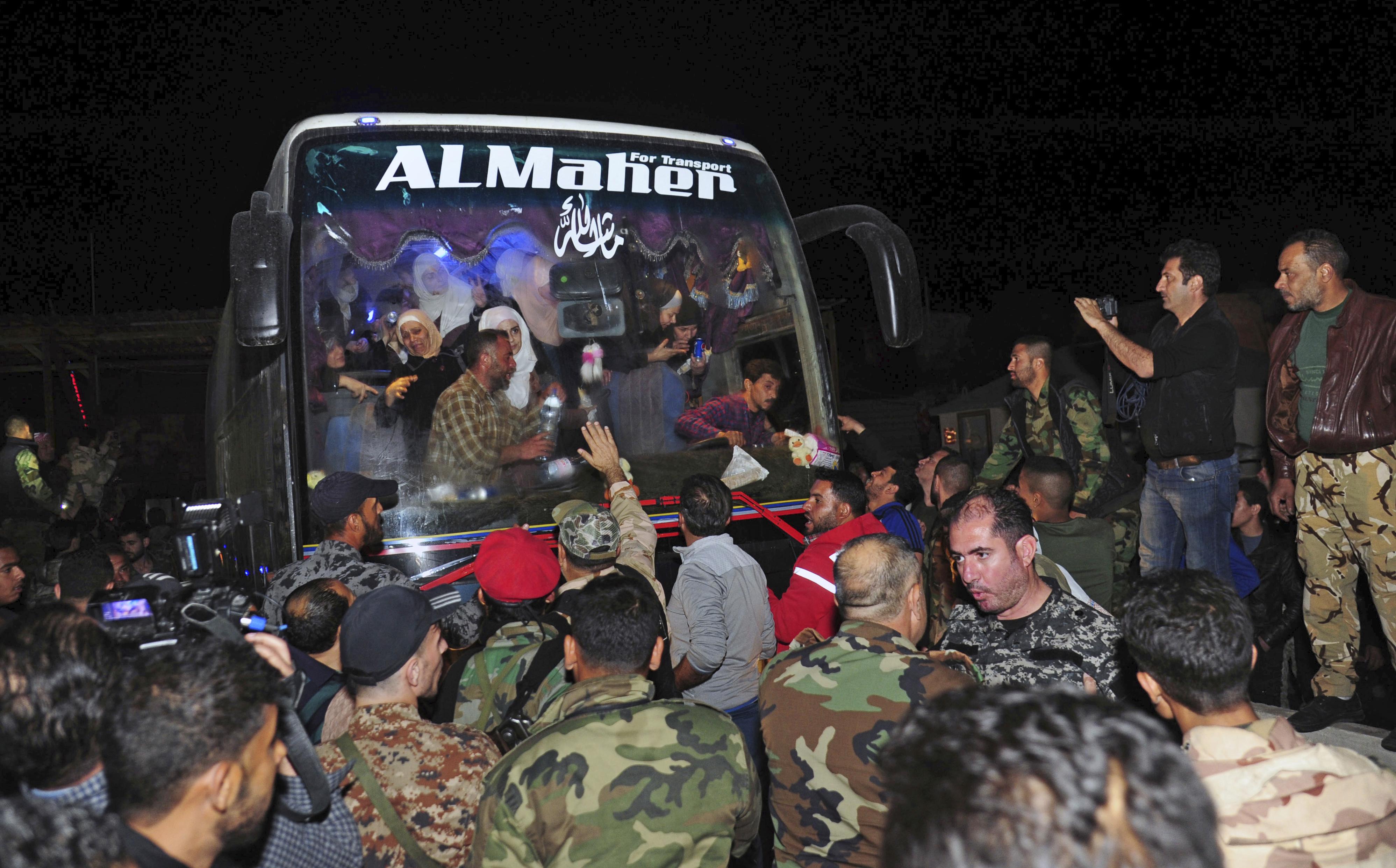
State-run Syrian TV on Friday reported that “dozens of civilians” would likely get out of eastern Ghouta, in addition to 13 gunmen who had turned themselves in, via the Wafideen safe corridor designated by the government. The channel has been reporting since last week that rebels have prevented civilians from leaving.
State TV later said that insurgents targeted the Wafideen corridor on Friday afternoon with bullets and mortar shells to prevent people from leaving.
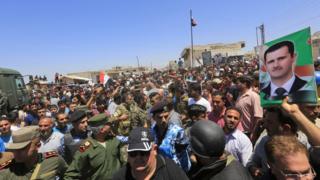
The Observatory, which monitors the Syria war through a network of activists on the ground, also reported that dozens of people from the town of Hammouriyeh in eastern Ghouta staged a demonstration, carrying Syrian government flags and calling for the end to the fighting in the area.
There was no confirmation by any of the rebel groups based in eastern Ghouta of negotiations to leave eastern Ghouta.
 Symbol copyright AFP Image caption Other Folks bought to hospitals after February’s attack in Saraqeb suffered respiring issues
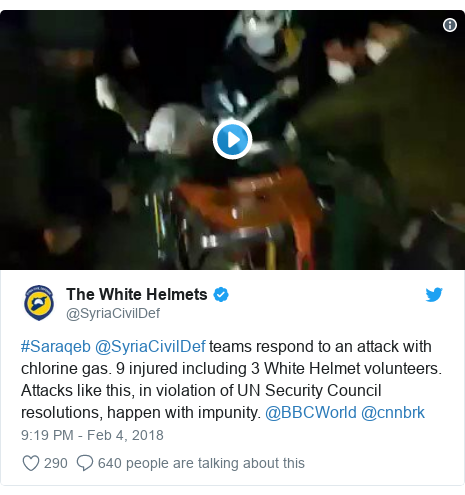 Symbol Copyright @SyriaCivilDef @SyriaCivilDef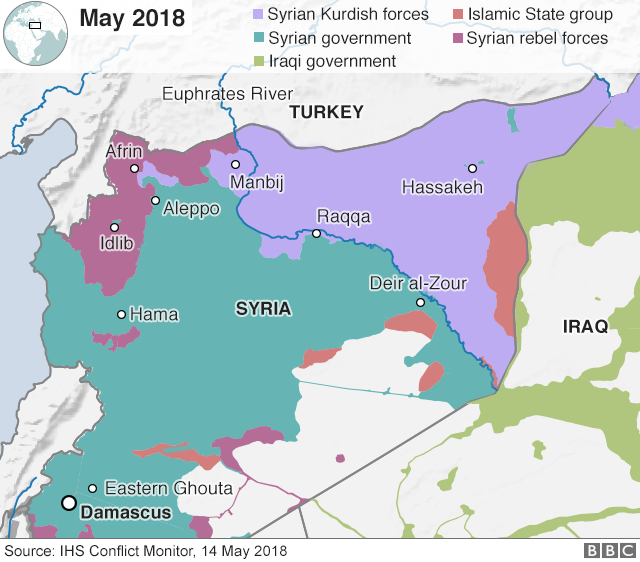
 Symbol copyright AFP Symbol caption Troops entered the significant the town of Rastan on Wednesday after rebels were evacuated