Tag: Entertainment Culture

  • Lauren Daigle wants to break down walls to Christian music

    Three years ago, Lauren Daigle took home three Dove Awards for her debut record, “How Can It Be,” and the Louisiana singer-songwriter got her first taste of the weight of genre’s expectations on her s

    NASHVILLE, Tenn. (AP) – Three years ago, Lauren Daigle took home three Dove Awards for her debut record, “How Can It Be,” and the Louisiana singer-songwriter got her first taste of the weight of genre’s expectations on her shoulders. The 2015 album, one of only a few Christian music albums to have been certified platinum in recent years, propelled her to the top of the Christian music charts.

    “You’re sitting there with these awards and it’s a beautiful moment,” Daigle said. “But everything that was happening in my ears was like, ‘Oh my gosh, how do I maintain this responsibility, how do I uphold this level of expectation?’”

    Since then, the 27-year-old has more than risen to the challenge of being an ambassador for contemporary Christian music. She sang a duet with Reba McEntire on the Academy of Country Music Awards, recorded a song for the “Blade Runner 2049” soundtrack, earned two Grammy nominations and toured relentlessly.

    Her follow up, “Look Up Child,” debuted this month at No. 3 on Billboard’s all-genre album chart and had the best first week sales of any Christian album in nearly nine years, according to Billboard. Daigle, who is performing at this year’s Dove Awards on Oct. 16 and is nominated for an American Music Award, talked with The Associated Press about why she likes Chance the Rapper and breaking down the walls to Christian music. The following remarks have been edited for brevity.

    AP: This new record has a lot of strings and orchestration on the songs. What was that like in the studio?

    Daigle: We got to go into the studio and listen to all of the sounds that can be created from an orchestra, from the strings. I remember this moment, they were in a semi-circle and I sat in the middle and I had some friends come in and sit there with me. And tears just started falling down their faces. It was so pure. Just that kind of sound was so pure and rich. I loved the complement to the lyric that strings bring.

    AP: You have a song called “Losing My Religion,” tell me about the meaning of that song.

    Daigle: I had realized there are so many moments where I let that expectation dictate my ability to perform, my perfectionism. And as much as we want to create a white picket fence, it’s not real. It’s a facade. And I think the sooner we realize that people can be messy and people are fragile, the more we actually start to see through the eyes of God, or the God that I know. We experience kindness for humanity. We experience joy for humanity. And we run toward them instead of building all these barriers. And so that’s what “Losing My Religion” is. It’s taking down all the boxes, taking down all the fences, and it’s living as pure and as whole as possible.

    AP: Has it always been your goal to reach people beyond the Christian music genre?

    Daigle: We have this saying in my team that’s called “Extend the tent pegs.” And it’s not to leave behind anybody that has listened to this music so far and that has been along this journey with me because I am 100 percent grateful. So I don’t want to leave anybody behind, but how to do I also make music that people who might not listen to Christian music they can also connect to? They can also relate to? That’s super-important to me to make music that permeates all the walls and just tear all the walls down. People need love, people need hope. People need joy anywhere in life.

    AP: Do you want to change people’s understanding of what Christian music can be?

    Daigle: Chance the Rapper got to do stuff with all these gospel artists. So profound. I love that, right? And that was something I wanted to bring in as well. Like elements where people who weren’t necessarily church people, or Christians, or whatever the title is, who don’t really dive into that kind of music can hear something and it be compelling enough and it be strong enough to where they are drawn in and feel welcomed and invited.

    __

    Online:

    http://laurendaigle.com/

    __

    Follow Kristin M. Hall at Twitter.com/kmhall
  • Trump tags US media as nation’s ‘biggest enemy’ after summit

    President Donald Trump challenged skeptical media coverage of his historic summit with North Korea’s Kim Jong Un on Wednesday, declaring that “Fake News” is the nation’s “biggest enemy.”

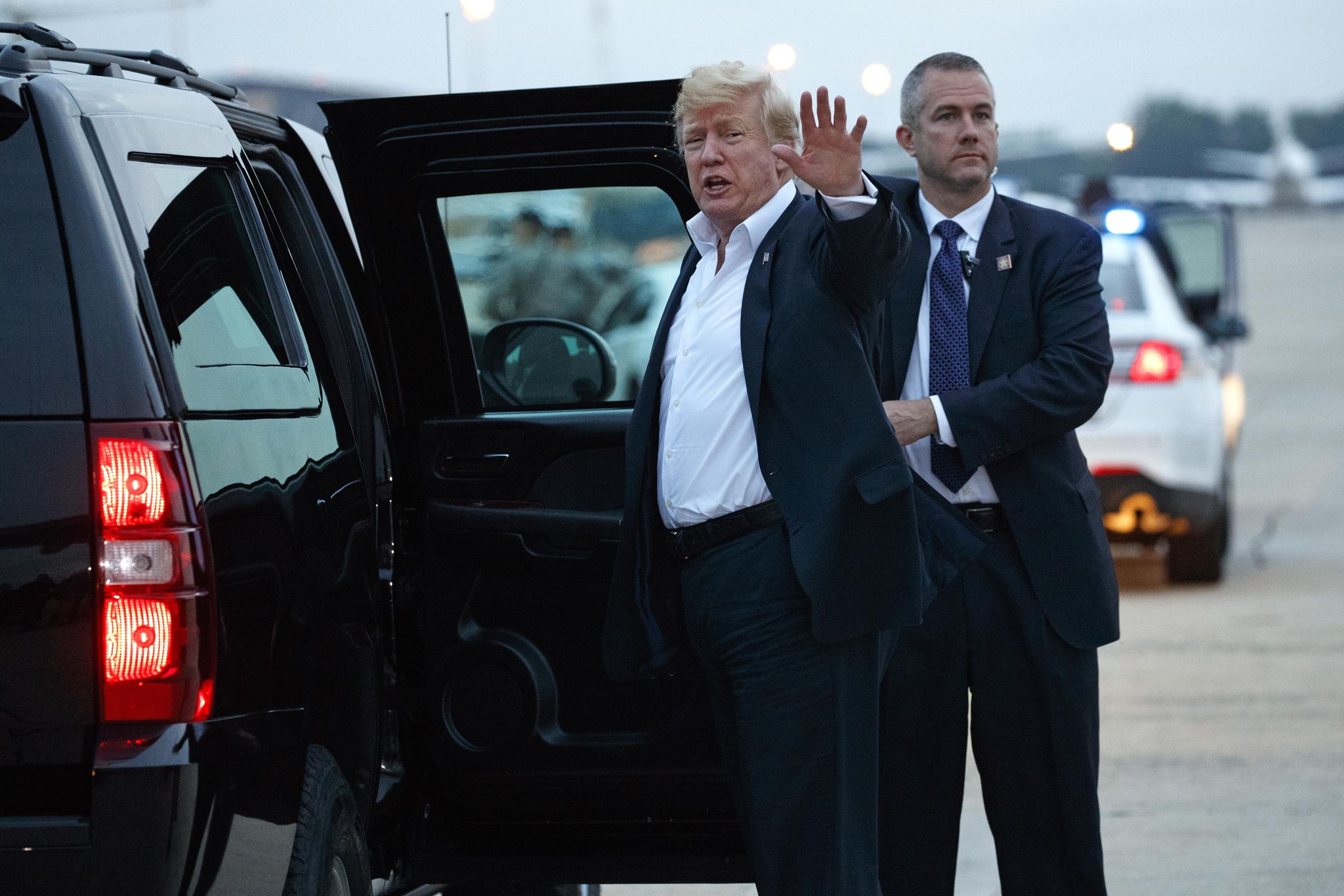
    WASHINGTON (AP) – President Donald Trump challenged skeptical media coverage of his historic summit with North Korea’s Kim Jong Un on Wednesday, declaring that “Fake News” is the nation’s “biggest enemy.”

    The president’s tweet, delivered a few hours after Air Force One touched down outside Washington, was reminiscent of his February 2017 Twitter rebuke in which he called several leading news outlets “the enemy of the American people.”

    Trump has sought to portray his unprecedented meeting with Kim as a significant accomplishment that has made the world less vulnerable to the North’s nuclear arsenal. Critics say that his agreement with the North lacks specific restraints on Kim’s government and that he offered to end joint military exercises with South Korea with little in return.

    The president tweeted after returning from his Singapore summit that “the Fake News, especially NBC and CNN,” are “fighting hard to downplay the deal with North Korea.” He added: “500 days ago they would have ‘begged’ for this deal-looked like war would break out.”

    “Our Country’s biggest enemy is the Fake News so easily promulgated by fools!” Trump tweeted.

    The president also asserted that after his initial round of talks with Kim, there is “no longer a Nuclear Threat from North Korea.” Trump’s claim is dubious given that independent experts estimate Pyongyang has enough fissile material for 20 to 60 bombs.

    The tweet followed a New York Times story on the Trump administration’s lack of scientific expertise, the president’s questioning of the honesty of the American media at an international summit in Canada and his dismissal of diplomatic expertise in favor of using a “touch” and “feel” approach in his talks with Kim.

    Trump has bristled against questions over his decision to meet with Kim, whose country is estimated to have 80,000 to 120,000 political prisoners. The president has dubbed his detractors “haters & losers.”

    “It’s a mistake to see attacks on the media as separate from those things,” said Jay Rosen, a New York University journalism professor. “It’s the erosion of the common world of fact. If we can’t agree on what the facts are, if there are no facts because they are in endless dispute, there is no accountability.”

    Rosen noted that international summits were often venues for the U.S. president and American journalists to insist on joint news conferences with autocratic leaders or strongmen and their accompanying press corps, a form of soft diplomacy that demonstrated America’s commitment to democratic institutions such as freedom of the press.

    While Trump held a news conference at the G-7 summit in Quebec last week, he told reporters during one exchange that he “came up with the term fake news” because many journalists who cover him are “very dishonest.” In response to a journalist representing CNN, Trump criticized the premise of the reporter’s question and then criticized “fake news CNN” as “the worst.”

    “Anybody who can exert a factual check on the president, saying ‘Wait a minute, that’s not what happened,’ is to be dismissed, attacked, delegitimized, pushed aside and turned into a hate object,” Rosen said.

    ___

    On Twitter, follow Ken Thomas at https://twitter.com/KThomasDC

  • Made-for-TV summit puts Trump the Showman in spotlight

    From the staged handshake before a watching world, to the debut of an infomercial about an imagined North Korea, the summit between President Donald Trump and Kim Jong Un was a made-for-the-cameras pr

    Andersen Air Force Base, GUAM (AP) – From the staged handshake before a watching world, to the debut of an infomercial about an imagined North Korea, the summit between President Donald Trump and Kim Jong Un was a made-for-the-cameras production.

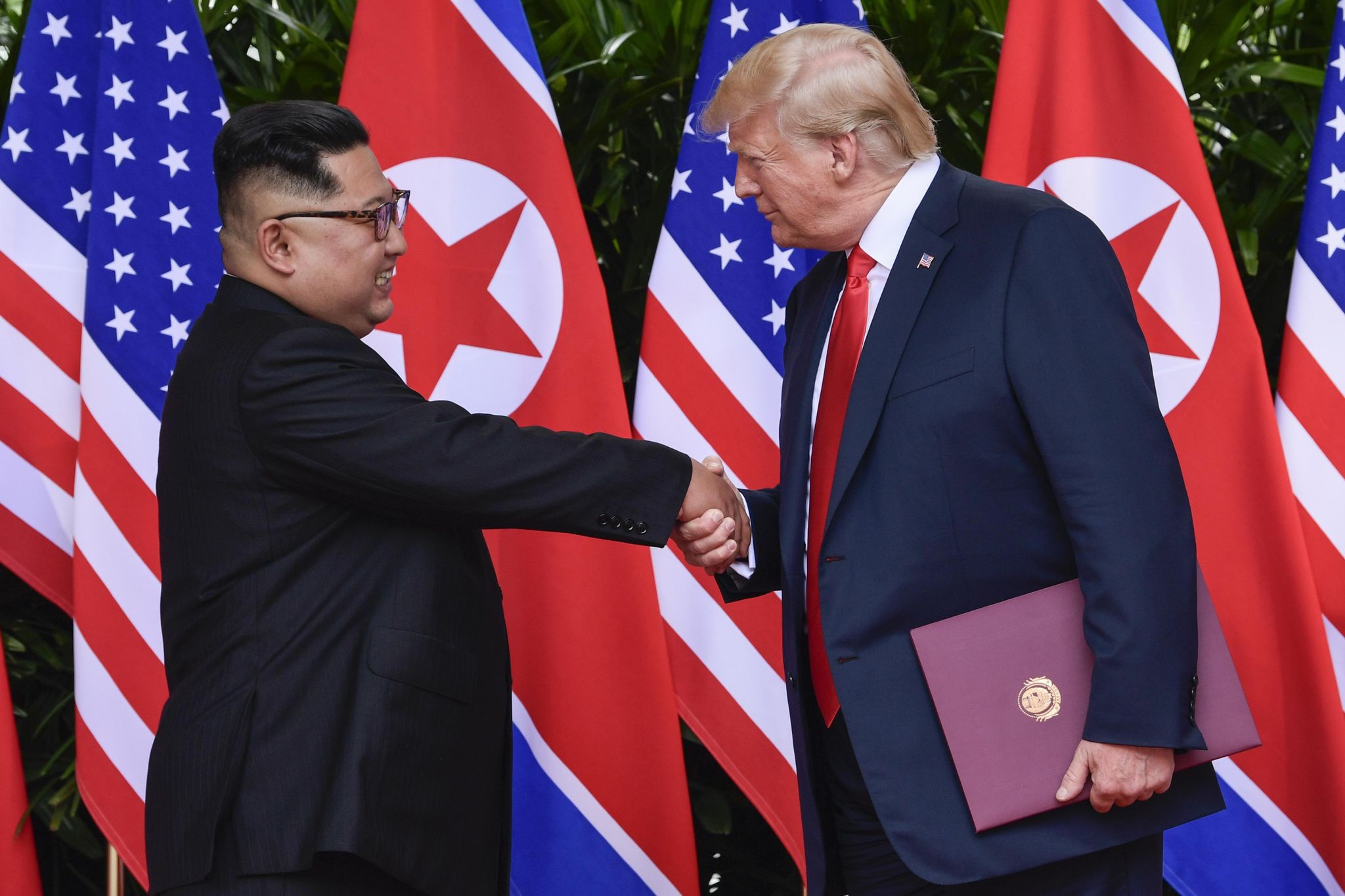
    While the Singapore sit-down at a luxury resort purported to be a serious conversation about a rising nuclear standoff, it was as much an opportunity for two decidedly unorthodox leaders to put on a show. From its start, the men embraced the power of the image over the substance, both keenly aware that the eyes of the world were fixated right where they’d intended: on them.

    Each moment of the high-stakes summit at a luxury resort on a Singapore island appeared designed for the cameras. Just after its start, both men walked toward each other from opposite ends of a colonnade, pausing before a row of alternating U.S. and North Korean flags for a lengthy handshake as cameras flashed and video and photos were beamed around the world.

    The image alone had deep, historic import, and surreal quality that even the leaders couldn’t ignore. “I think the entire world is watching this moment,” Kim said through an interpreter, comparing it to fantasy and a “science fiction movie.”

    Others thought of a different genre.

    “There’s no question this was a television production,” said Robert Thompson, director of the Bleier Center for Television and Popular Culture at Syracuse University. “Its major purpose was to be a television production.”

    For Trump, the reality television star turned surprise commander in chief, it was a chance to show off his deal-making skills on a global stage to a skeptical world. To Kim, an autocratic leader reviled by most of the international community, it represented a play for international legitimacy though a public greeting with the leader of the free world.

    Both were aware that the once-unthinkable meeting between a sitting U.S. president and a North Korean leader was a media blockbuster, drawing journalists from around the world, international viewers and mobs of cellphone-waving onlookers in the Asian city-state chosen for their sit-down. The buildup was filled with cliffhangers, from the name-calling to Trump’s first shocking announcement they would meet, to its sudden cancellation and resurrection.

    Historians were quick to point out the joint statement the two leaders signed was actually far less detailed than those struck with North Korea in the past, the same ones that Trump has repeatedly derided for ending in failure and perpetuating the nuclear threat.

    Trump immediately sold the deal – on television. He appeared before hundreds of journalists at a news conference, the sort of free-wheeling media session that he’s determinedly avoided for most of his presidency. It wasn’t a surprise that he took his message to unabashed supporter Sean Hannity for a Fox News Channel interview, but he also sat down with ABC News’ George Stephanopoulos for his first interview with a broadcast network in more than a year.

    Stressing that he had tried to pitch Kim on possible economic gains, Trump played for reporters a video depicting a utopian North Korea-of the-future, where speedboats glide alongside opulent, modern skyscrapers. Then he disclosed that he’d screened the film, produced for the occasion, for Kim.

    “That was a tape that we gave to Chairman Kim and his people, his representatives. And it captures a lot. It captures what could be done,” Trump said Tuesday.

    Proving he was a worthy foil, Kim stole the show from Trump on Monday night. The autocrat left his hotel and took a tour of some popular night spots, surrounded by a horde of security officials and breathlessly carried on live television, with people watching a leader who rarely leaves his home, much less goes out in public.

    Before leaving Singapore, Trump suggested a sequel as he talked about hosting Kim at the White House.

    He told ABC in an interview, “I would love to have him at the White House, whatever it takes. And I would love to have him at the White House and I think he’d love to be there. And at a certain point, when it’s all complete, I’d love to” go to North Korea, he said.

    ___

    Bauder reported from New York. Associated Press writer Zeke Miller contributed to this report.

  • Angela Merkel, feminists spar over stripping ‘fatherland’ from German national anthem

    Angela Merkel attempted to avoid a political minefield this week when a member of her Social Democrat (SPD) coalition called for a gender-neutral version of the national anthem.

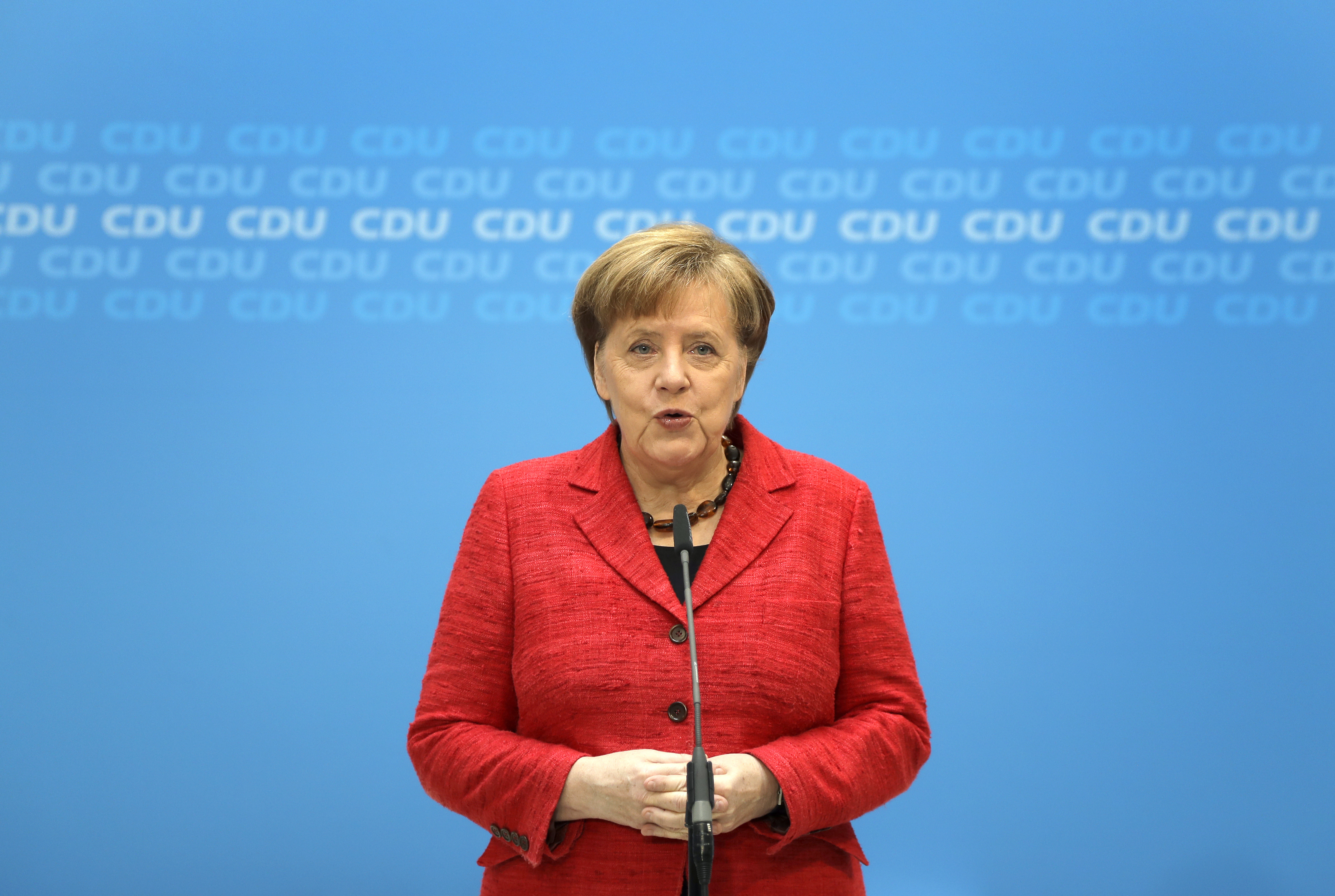
    Angela Merkel attempted to avoid a political minefield this week when a member of her Social Democrat (SPD) coalition called for a gender-neutral version of the national anthem.

    “Deutschlandlied” made global headlines in 2017 when the United States Tennis Association accidentally played a taboo verse of the song not used since World War II. The song made news again on Monday with a letter released to the media by Equality Commissioner Kristin Rose-Möhring.

    “Why don’t we make our national anthem gender sensitive?” Ms. Rose-Möhring wrote, the U.K. Telegraph reported. “It wouldn’t hurt, would it?”

    The official’s plan includes replacing the words “fatherland” with “homeland” and “brotherly” with “courageous.”

    A gender-neutral change would follow Canada’s lead, which recently altered “O Canada” to include the lyrics “in all of us command” instead of “true patriot love in all your sons command.”

    Steffen Seibert, a spokesman for Ms. Merkel, quickly released a statement saying, “the chancellor is very happy with our nice national anthem as it is in its traditional form and doesn’t see any need for change,” the newspaper reported.

    “Song of Germany” has been the nation’s anthem since 1922.

  • Tom Cruise ‘wins’ worst actor at Razzies; Mel Gibson takes worst supporting actor

    Tom Cruise’s attempted reboot of the “Mummy” franchise landed him the Razzie Award for worst actor. He now has no Oscars after three nominations, but two Razzies. Cruise and Brad Pitt won for worst sc

    LOS ANGELES — Maybe it was destiny for a movie with a pile of poop as a central character.

    “The Emoji Movie” has received Hollywood’s most famous frown, the Razzie Award, for worst picture of 2017, making it the first animated feature in 38 years to earn the top dishonor.

    “Leading this year’s list of movie-misfires is the emoticon-based, talking poop opus,” the Razzies said in a statement announcing the recipients, saying the film came in a year when “Hollywood’s recycled trash heap attained an all-time high” and saw a “toxic-level lack of originality.”

    The annual awards bestowed on the worst the movie business has to offer were announced Saturday in their traditional spot, the day before the Academy Awards.

    “The Emoji Movie” landed four of the 10 Razzies given out this year, also taking worst screenplay, worst director, and worst screen combo, which was given to “any two obnoxious emojis” from the movie.

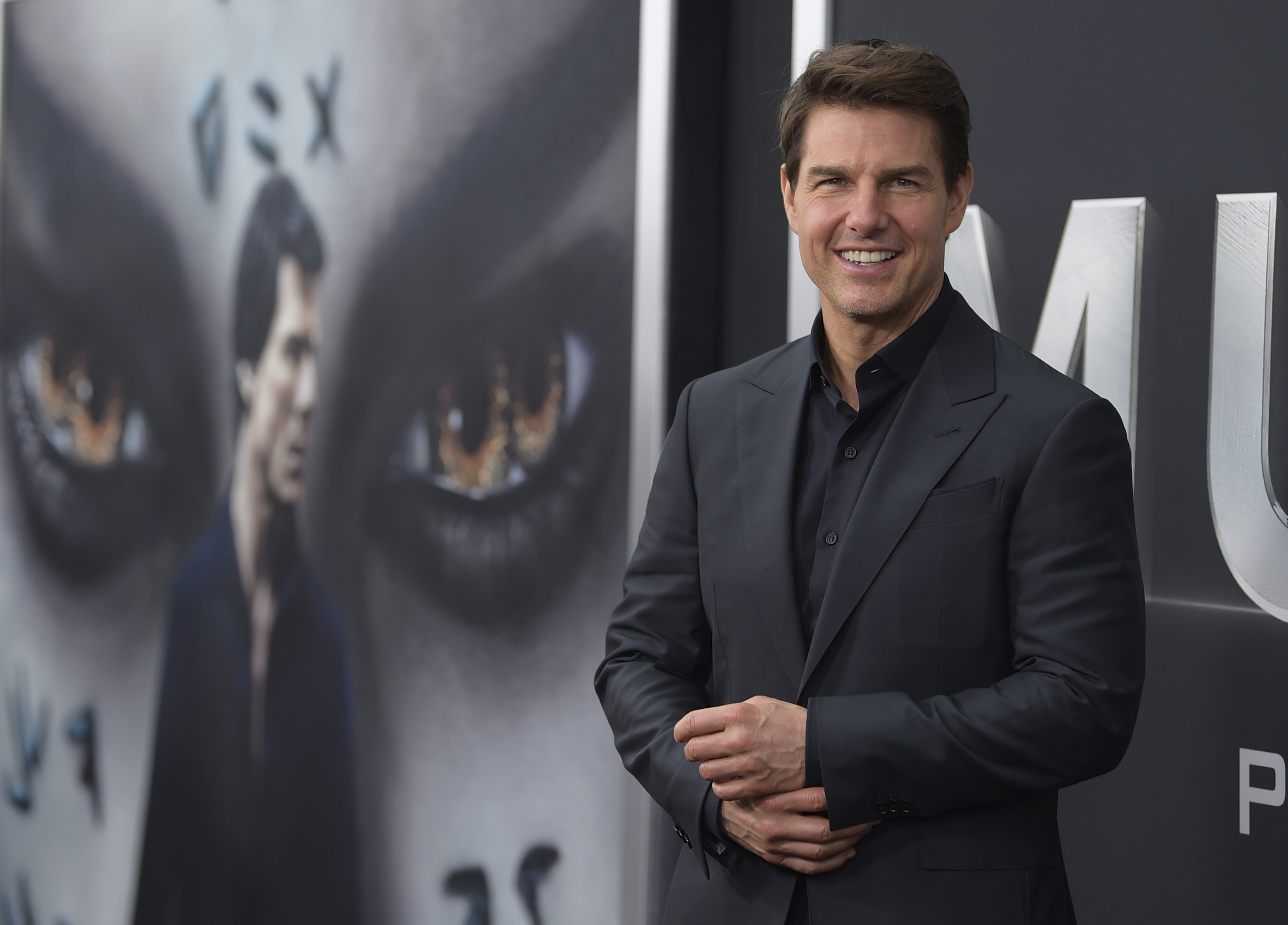
    Tom Cruise’s attempted reboot of the “Mummy” franchise landed him worst actor. He now has no Oscars after three nominations, but two Razzies. Cruise and Brad Pitt won for worst screen couple for 1994’s “Interview with the Vampire.”

    Tyler Perry took worst actress for “Boo 2! A Madea Halloween,” the director’s 10th time donning a dress and playing his signature white-wigged matriarch.

    Kim Basinger took worst supporting actress for “Fifty Shades Darker,” putting her in the special company of Faye Dunaway, Liza Minelli and Halle Berry as actresses who have won both a Razzie and an Oscar.

    Mel Gibson, who last year won the “Redeemer” award for getting an Oscar nomination just a few years after getting a Razzie nomination, is back at the bottom again as far as the Razzies are concerned, taking worst supporting actor for “Daddy’s Home 2.”

    “Baywatch,” won the inaugural “Special Rotten Tomatoes Award: The Razzie Nominee So Bad You Loved It!” The award is the result of an online poll held in conjunction with the review site Rotten Tomatoes.

    The rest of the Razzie Awards are determined by what the organization says is over 1,000 voting Razzie members 27 countries and from every U.S. state except Montana.