Tag: international monetary fund

  • IMF plans talks with Pakistan on debt help

    A team of experts from the International Monetary Fund will travel to Islamabad in the coming weeks to discuss a possible financial assistance package for Pakistan — despite warnings from U.S. lawmak

    A team of experts from the International Monetary Fund will travel to Islamabad in the coming weeks to discuss a possible financial assistance package for Pakistan — despite warnings from U.S. lawmakers and the Trump administration that the money would be used to pay off massive debts Pakistan has run up with China.

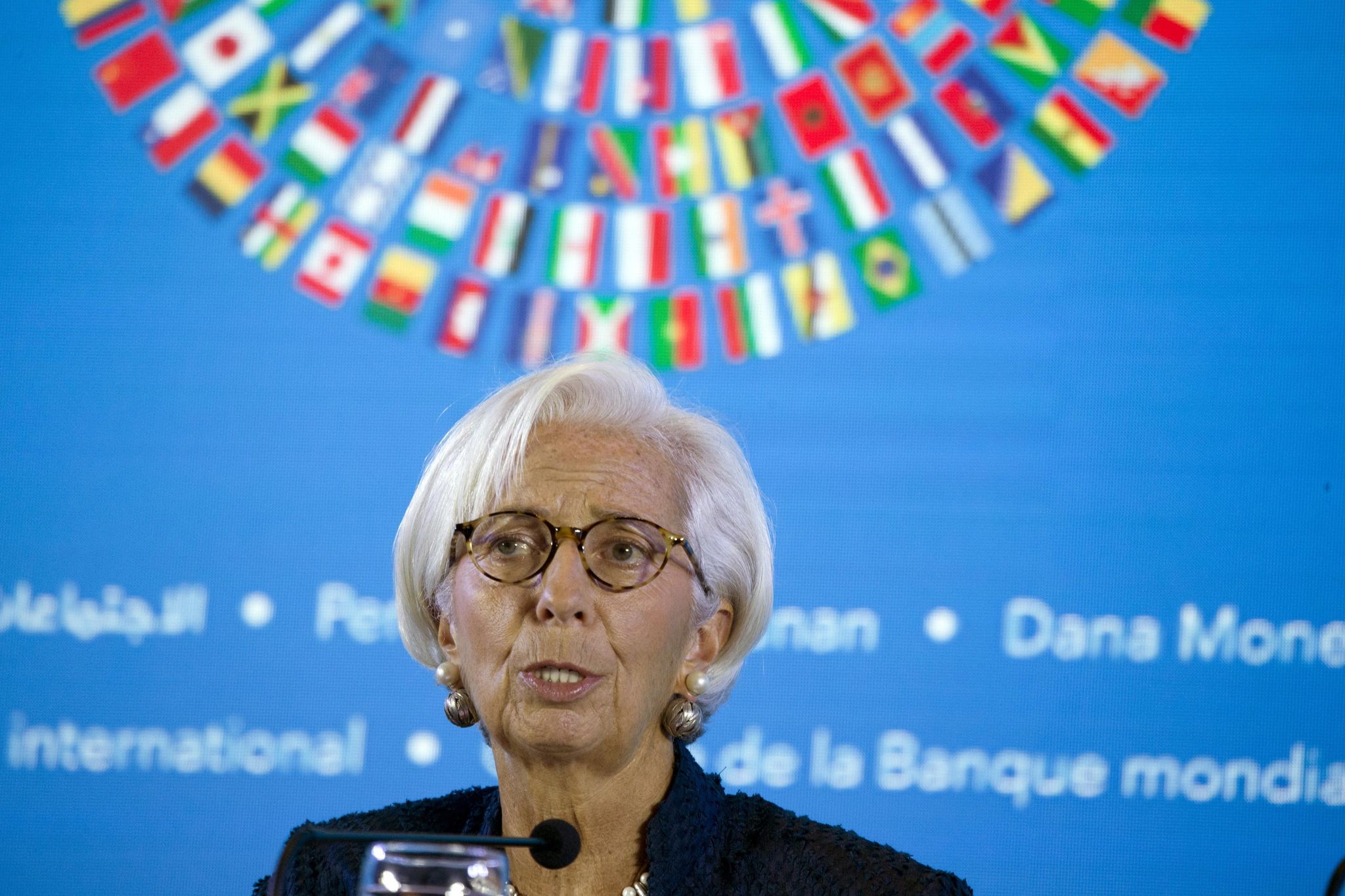
    IMF Managing Director Christine Lagarde said in a statement Thursday she had met with top officials of the new government of Pakistani Prime Minister Imran Khan, including Finance Minister Asad Umar, on the sidelines of the global finance body’s annual meeting now underway in Bali, Indonesia.

    The delegation “requested financial assistance from the IMF to help address Pakistan’s economic challenge,” Ms. Lagardesaid in a statement.

    “An IMF team will visit Islamabad in the coming weeks to initiate discussions for a possible IMF-supported economic program,” the IMF chief said, adding, “We look forward to our continuing partnership.”

    Pakistan has been a prime recipient of funds and infrastructure financing from China’s ambitious $1 trillion-plus “Belt and Road Initiative,” including the construction of highways, bridges and the strategically located port of Gwadar on the Arabian Sea.

    Secretary of State Mike Pompeo on an Asian tour this summer said the Trump administration would “be watching” closely any IMF negotiation with Pakistan.

    “There’s no rationale for IMF tax dollars — and associated with that American dollars that are part of the IMF funding — … to go to bail out Chinese bondholders or China itself,” Mr. Pompeo told the financial network CNBC in July.

    Pakistan officials later claimed they had received assurances from Washington that the Trump administration would not veto an IMF financial package.

  • Mauricio Macri downplays Argentina’s economy problems

    Having emerged from one of the world’s worst currency implosions of the new century, Argentine consumers are suddenly confronting a reprise.

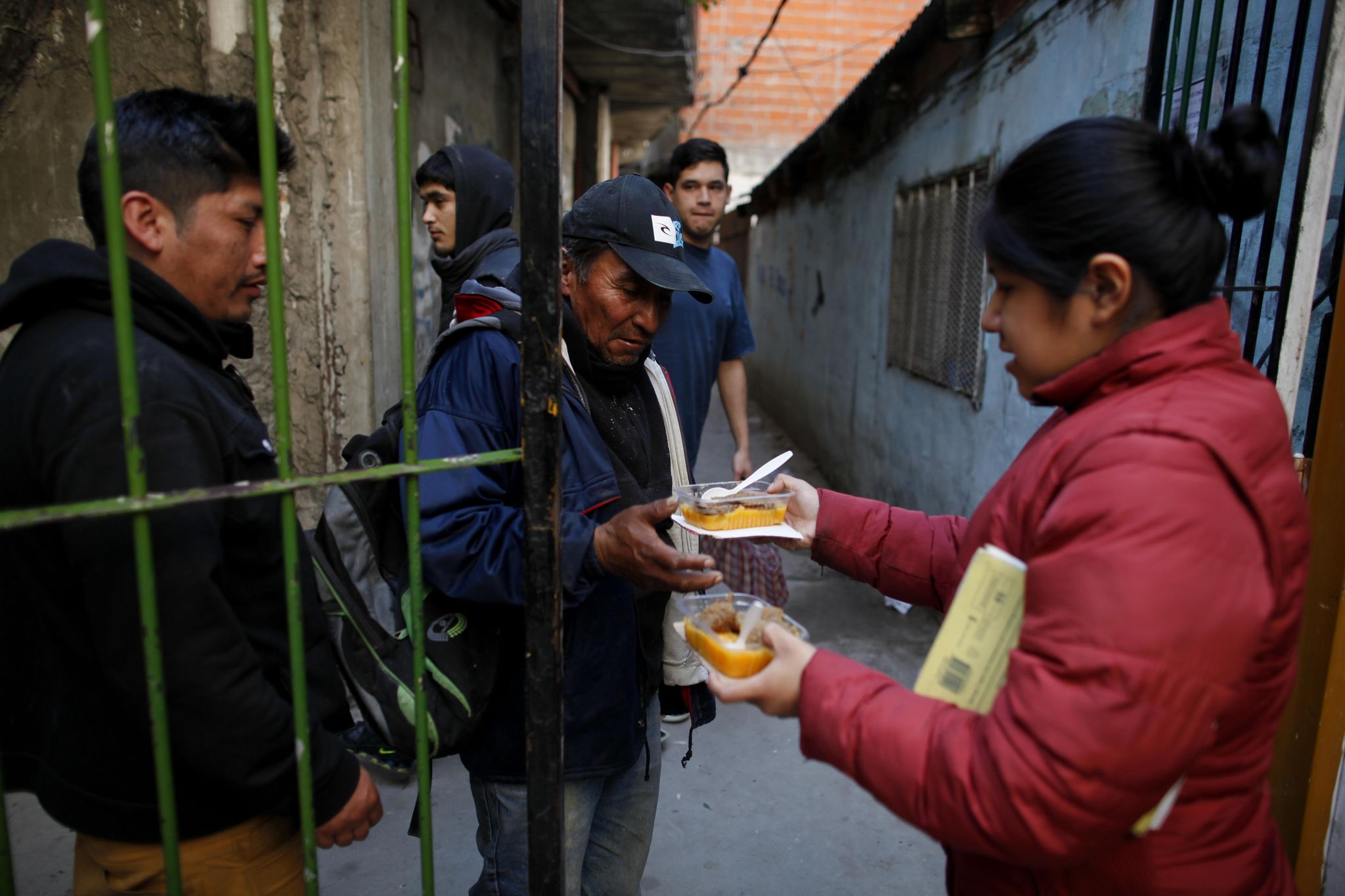
    BUENOS AIRES — For ordinary Argentines, it has been a shocking return to the bad old days, a deja vu of shortages, job losses and bailouts that many thought the country had finally ended.

    Facing a national election a year away, the ever-upbeat President Mauricio Macri never tires of reassuring Argentines that they are on “the right path” out of a “storm.”

    But to local economists, even those friendly to the conservative Mr. Macri’s pro-business bent, his imagery doesn’t quite capture the state of an economy predicted to shrink by 2.4 percent this year and had to be propped up just last week by an expanded $57 billion line of credit from the International Monetary Fund. Having emerged from one of the world’s worst currency implosions of the new century, consumers are suddenly confronting a reprise.

    Things aren’t nearly as dire as the post-2001 years, and a more apt metaphor, former National Bank board member Facundo Martinez Maino said, might be that of a car-wreck victim hospitalized after a head-on collision.

    “Right now, staying alive is all that matters,” said Mr. Martinez Maino, now the chief economist at a prominent local consulting firm. “You’re in a totally sterile room, under controlled temperature, and you can’t venture out or eat [without] a feeding tube.”

    It’s a grim picture reflected by key indicators — Argentina’s inflation rate is now topped around the world only by those of Venezuela, Sudan and South Sudan — and painful even for the urban middle class, a key component of Mr. Macri’s political base.

    “The situation is critical, unfortunately,” Graciela Clouet, a 66-year-old lawyer, said last week as she shopped for groceries in an upscale Buenos Aires neighborhood. “You don’t know where we’re headed, and you worry.”

    Prices are constantly being hiked, Ms. Clouet said, while the decline of the peso, which has already lost more than half its value this year, is having ripple effects on the rising cost of gasoline and consumer goods across the board.

    But what bothers her the most, she said, is the sense of uncertainty, which Mr. Macri’s repeatedly unkept promises that “the worst is over” have done little to ease.

    “I want there to be a direction … for us to go toward someplace,” Ms. Clouet said. “I feel like we’re improvising.”

    For market movers and shakers, the chaotic state of the economy has long contrasted with the president’s near-dogmatic confidence and, worse, conjured up memories of those crises past — including Argentina’s cataclysmic 2001 default and social meltdown.

    “We have gotten to a situation that, as a snapshot, is one of the worst since 2001 in terms of devaluation, inflation, recession and economic perspectives,” Mr. Martinez Maino said. “We’re in one of the worst situations since that collapse.”

    He added, though, that the two scenarios are vastly different in causes and scope.

    Fears of a rerun

    Even the sense that the country may be headed down a similar road is precisely what Mr. Macri — and anybody else interested in stabilizing the economy — is desperately hoping to avoid, said Mariano de Vedia, a political analyst for the La Nacion daily.

    “There’s an old saying here in Argentina: ‘He who burns himself with milk sees a cow and cries …,’” Mr. de Vedia said. “Already, salaries are worth less and less, layoffs are beginning to happen and the dollar heads to the skies.”

    For Argentina’s lower and middle classes, meanwhile, keeping up with ever-increasing food, utility and transportation costs is becoming increasingly difficult, economic analyst Jose Luis Espert said.

    “This year, with an inflation between 40 and 50 percent and salaries that rise between 25 and 30 percent, the real-wage drop is 15 percent,” Mr. Espert said. “Companies are closing, stores are closing, and there is a very, very violent drop in consumption.”

    For Roberto Rodriguez, who co-owns a florist shop on a lively Buenos Aires street corner, that means business has been “totally paralyzed.”

    “You notice it in the stores around,” he said. “[This is] a spot with pretty good purchasing power, and even so, we’re feeling it.”

    Mr. Rodriguez said he still plans to back Mr. Macri if he runs for re-election next year, hinting that he favors the president’s “change” agenda over the often inflexible protectionism of his predecessor, leftist Cristina Fernandez.

    Although Ms. Fernandez may have handed over a bloated government whose coffers had been emptied by populist spending and corruption, most commentators agree that, three years into his term, Mr. Macri shares a large chunk of the blame for the country’s predicament.

    By hastily eliminating currency controls, insisting on unrealistic inflation goals and taking on debt in an undisciplined and unsavvy manner, Mr. Macri committed key errors from the get-go, Mr. Martinez Maino said.

    “Today, we’re faced more with macroeconomic problems generated by this administration than with inherited problems, which we’re also faced with,” he said. “All three elements failed: diagnosis, policies and management.”

    To Mr. Espert, the president’s latest attempt to turn things around with a dual commitment to a no-deficit budget and steady money supply thanks to the expanded IMF credit line likely comes a day late and a peso short.

    “If ‘zero deficit’ and ‘zero issuance’ had been announced [in 2015], rejecting [Ms. Fernandez’s] inheritance, it would have been one thing,” he said. “Today, almost three years later … and a year before the elections, it lacks credibility.”

    If Mr. Macri really wants to turn things around, Mr. Espert said, his focus will need to be less about political calculus a year before Argentines head to the polls.

    “This administration should forget about the elections [and] take some risks today to get the economy moving by doing some bold things,” he said. “For example, go see [President] Trump and propose a free trade agreement.”

    Ironically, the troubling economy may have boxed in the ruling Cambiemos coalition, even though Mr. Macri has yet to formally announce that he will be seeking a second term, Mr. de Vedia said.

    “The situation is forcing them to ratify the president’s re-election [bid],” he said, “because, otherwise, it’s a recognition of his failure.”

    If a showdown next year between Mr. Macri and Ms. Fernandez takes place in the midst of a recession, the political analysts mused, then the outcome would be unpredictable.

    “People could easily say ‘no’ to the administration and also say ‘no’ to Cristina,” Mr. de Vedia said. “It’s not necessarily one or the other.”

  • End of Greek bailouts provides little wish to young

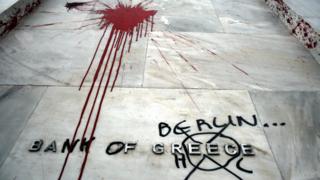
    The Headquarters of the Bank of Greece are vandalised following violent protests which took place against the Government's austerity plans, February 13, 2012 in Athens, Greece. Image copyright Getty Images Symbol caption Greater Than eight years of brutal cuts ended in anger at both Greek leaders and Ecu lenders

    On Monday, Greece ends its 3rd and final financial bailout programme, having won greater than €300bn (£269bn; $342bn) over eight years.

    the federal government and its European lenders are prepared to paint the top of the ultimate bailout as a fair factor, having have shyed away from a “Grexit” during which the country could have crashed out of the eurozone into unknown territory.

    But for plenty of Greeks – particularly the younger – the wear and tear has already been done.

    A latest poll indicates that 3-quarters of the inhabitants assume the rustic is headed down the inaccurate trail. the same number suppose the bailout deals, in preference to saving Greece, in fact harmed the rustic.

    Taxes remain high and greater than 90% of Greeks consider the creditors will stay an in depth watch on the rustic’s spending for years.

    “individuals are persuaded, and rightly so, that austerity insurance policies will continue for the years to come back,” says Dr Vasilis Leontitsis, a lecturer in Globalisation Studies on the College of Brighton.

    Back in 2011, Mr Leontitsis wrote a weblog put up a couple of “lost generation”, and a young Greek lady he met in Athens. She was once considered one of the lucky few with job in a café.

    “i do know that i’m going to have a difficult long term,” she informed him. “My pals and i have stopped planning… because regardless of how so much we plan, not anything is to materialise.”

    How bad are issues for the Greeks? What has austerity done for the eurozone?

    Mr Leontitsis says he’s adopted her growth in view that.

    She was excited to get a promising process in on-line gross sales, but the company’s terrible efficiency supposed she misplaced that within six months. Due To The Fact then, she has only secured an element-time task in a packaging company – counting on her family to make ends meet.

    “When I wrote approximately Greece’s lost technology, I meant exactly this,” Mr Leontitsis says.

    “Young people are disenchanted regarding activity prospects in Greece. Ratings of teens – among them many skilled – have left the country aiming for a greater long run in different EUROPEAN nations and past.”

    Nowadays, he says, “the typical fact of the country’s early life remains extraordinarily precarious”.

    How did Greece get right here?

    the global monetary crisis began to in reality hit the eurozone after 2008. Eire, Spain, Portugal and Cyprus every wanted bailout loans to stay afloat. However things had been worse in Greece.

    All Greek to you? Debt jargon explained The Greek debt challenge story in numbers

    In late 2009, it emerged that Greece’s nationwide finances deficit – or annual debt – used to be greater than 10% of the country’s whole economy (GDP).
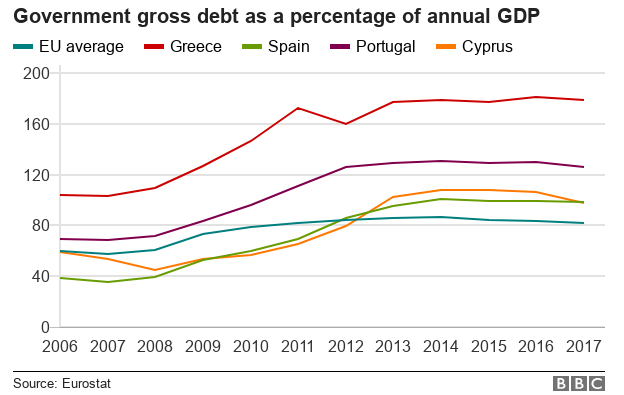
    By Means Of the tip of the 12 months, credit standing businesses had downgraded Greece’s standing, making it more difficult for Greece to borrow.

    But the actual scale of the Greek downside was worse than it first seemed.

    The Eu records agency had raised considerations approximately Greece’s economic estimates years in advance. Then, in 2010, it emerged that the monetary data were misreported. Earlier numbers needed to be revised upwards and trust in Greek information was shattered.

    Tax evasion used to be rampant and Greece used to be rated essentially the most corrupt country within the EU in 2012.

    Something had to be done.

    within the first part of 2010, the federal government brought in sweeping austerity applications, reducing public pay and raising taxes. nevertheless it nonetheless wasn’t enough.
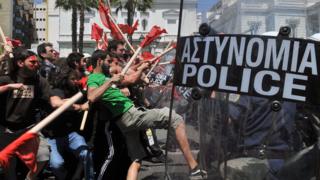
    Symbol copyright Getty Photographs Symbol caption In 2010, the primary wave of austerity measures caused protests and violent clashes in Athens

    Through Might, an almost bankrupt Greek country struck a deal with the so-called “Troika” – the ecu, Ecu Imperative Bank and World Financial Fund – none of which wanted to see Greece default on its debt, fearing a knock-on impact on other nations.

    This used to be the primary bailout – a loan of €110bn. however it got here with a situation: much more price range cuts.

    Violent protest

    Street protests broke out towards the stern austerity measures, eventually turning violent, and even leading to a handful of deaths.
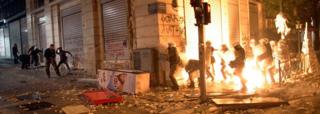
    Symbol copyright Getty Photographs Image caption In Athens, February 2012 – hearth bombs are thrown within the streets

    The unrest continued, at the same time as Greece’s credit standing was downgraded to “junk” status. More austerity followed the following year, and unemployment began to rocket.

    In 2011, the second bailout was agreed, this time for €109bn, later revised upwards to €130bn.

    Protests persisted, and in politics, anti-austerity events promising to reject spending cuts began making profits. Formative Years unemployment peaked in 2013 at virtually 60%.

    Anti-EUROPEAN sentiment was displayed at many protests – from the burning of the ecu flag to signs about Greece being a “colony” of German Chancellor Angela Merkel.

    In December 2014, the beleaguered Greek govt in any case collapsed.
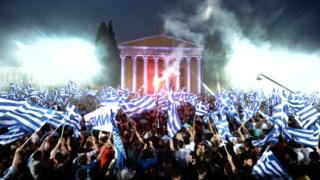
    Symbol copyright Getty Photographs Image caption 2012: Supporters of the quickly-to-be PM Samaras rally in Athens – he lasted not up to three years

    In its place, the anti-austerity, left-wing Syriza celebration gained its first nationwide victory.

    2015: Radical left takes energy in Greece Third Greece bailout: What are eurozone conditions?

    “Syriza quickly realised it needed to adopt austerity policies as prescribed by the Troika,” Mr Leontitsis says. “The political and economic revolution it had estimated on paper by no means materialised.”

    “not just did Syriza alongside its coalition partner deal with austerity policies, but in many circumstances it bolstered them.”

    Greece ended up desiring a third bailout – even though, in a referendum organised through Syriza, a majority of Greeks rejected it.

    2015 was once a tumultuous summer: banks closed, cash withdrawals have been restricted, and the Greek stock trade closed for the month of July.
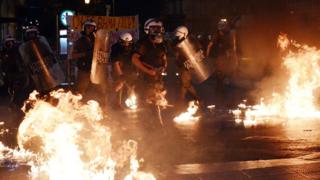
    Symbol copyright Getty Pictures Image caption The summer time of 2015 – ahead of the 3rd bailout – saw its own percentage of unrest

    the federal government eventually agreed the 3rd bailout of €86bn in August.

    Now, 3 years later, that 3rd and ultimate programme of loans to Greece is finishing. however the results may well be felt for decades.

    Hopes for the long term

    Giorgios Christides’ priorities have changed seeing that 2012, whilst he advised the BBC his pals had been leaving. Now he is involved for his youngsters, elderly five and 11.

    “i am wary about their future here,” he says. “Mavens warn it’ll take years or a long time for Greece just to go back to the pre-hindrance prosperity ranges.

    “which is why folks like me try, to the best of our talents, to provide our kids with the skills and information that may help them get an education and land a role in a foreign country – if want be.”

    but the Greek other people have large doable, he says.

    “i am no longer giving up… i believe it’s our duty to no less than attempt to make it here, prior to calling it quits and moving out of the country.”