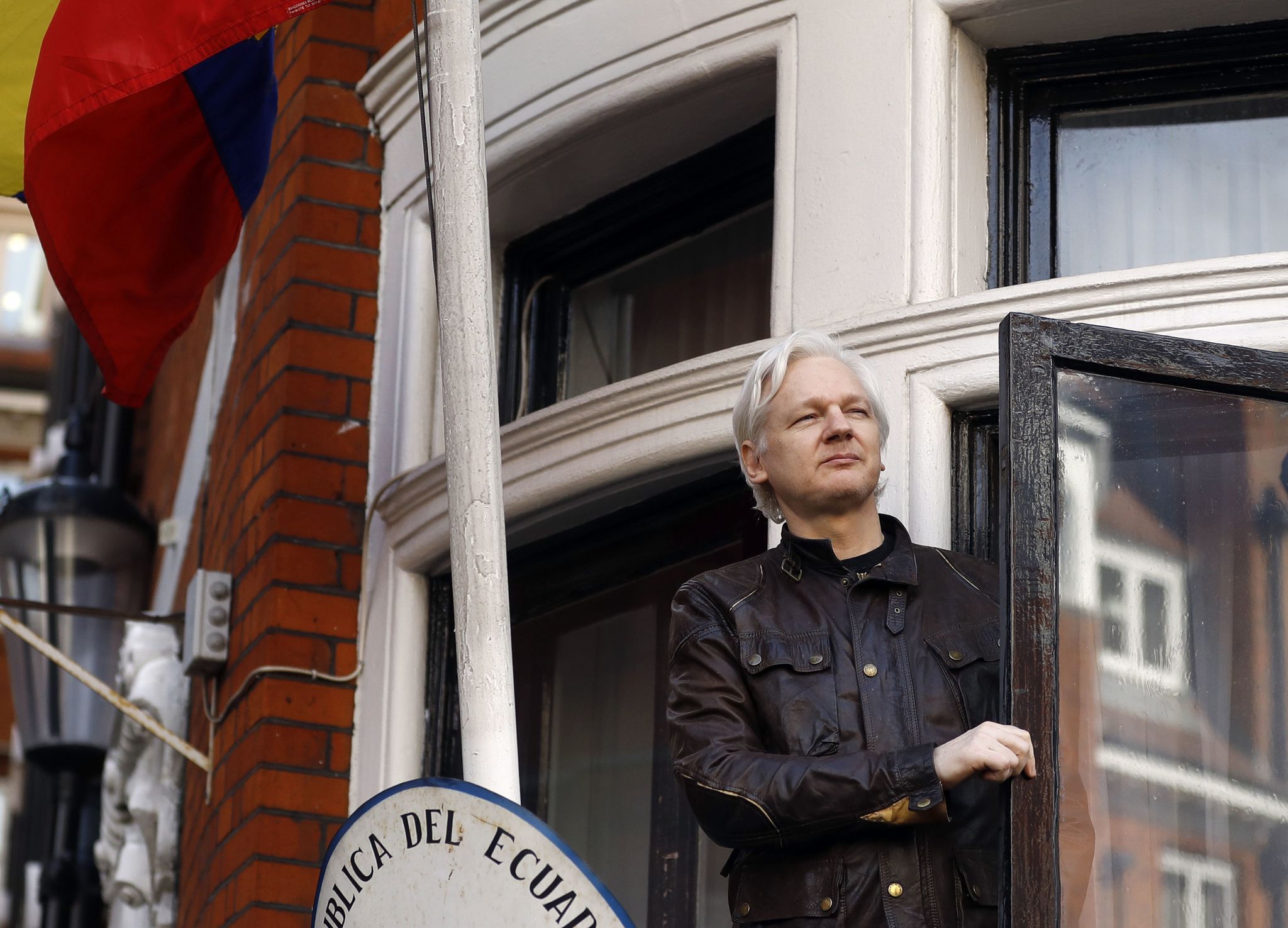
Tag: Julian Assange

  • Julian Assange’s lawsuit against Ecuador halted over WikiLeaks publisher’s issue with translator

    WikiLeaks publisher Julian Assange complained that his court-appointed translator was “not good enough,” prompting a judge overseeing his lawsuit against Ecuador to put a pause on proceedings to find

    WikiLeaks publisher Julian Assange complained that his court-appointed translator was “not good enough,” prompting a judge overseeing his lawsuit against Ecuador to put a pause on proceedings to find a replacement fluent in “Australian,” news outlets reported Friday.

    Judge Karina Martinez cut Thursday’s hearing short in response to Mr. Assange’s protest and ordered the appointment of a translator better equipped to interpret matters for the Australian-born fugitive, the Sydney Morning Herald first reported.

    Mr. Assange filed the lawsuit through an attorney last week in response to the Ecuadorian government imposing new conditions on his asylum status, and Thursday’s hearing in Quito, the nation’s capital, was the first to be held by the court considering his case.

    Speaking remotely from the Ecuadorian Embassy in London, Mr. Assange complained about the quality of the translation service prior to the judge agreeing to suspend proceedings, The Herald reported.

    The initial hearing last roughly 90 minutes prior to being suspended due to “communication problems,” Spanish media separately reported.

    WikiLeaks did not immediately return a message seeking comment.

    Mr. Assange, 46, entered the Ecuadorian Embassy in 2012 and was subsequently granted asylum, effectively protecting him against the possibility of being prosecuted in the U.S. in relation to releasing classified government material through the WikiLeaks website.

    His relationship with Ecuador has grown increasingly tense, however, and WikiLeaks lawyer Baltasar Garzon sued the nation’s foreign minister last week in response to new rules governing Mr. Assange’s conduct inside the embassy, including restrictions on his internet and phone access.

    “The protocol makes Assange’s political asylum contingent on censoring his freedom of opinion, speech and association,” WikiLeaks said in a statement announcing the suit.

    Responding in court Thursday, Ecuador’s vice minister of foreign affairs, Andrés Terán, said the lawsuit was “paradoxical,” “illogical” and filed with an “irresponsibility” toward the “democratic state that has welcomed him,” according to Agencia EFE, a Spanish news agency covering the proceedings.

    “He is (there) of his own free will and (…) he has to abide by the rules imposed by the asylum country, it is as simple as that!” said Mr. Terán, the outlet reported.

    British authorities have said that Mr. Assange will be arrested upon exiting the embassy, at which point he would risk being extradited to the U.S. and tried in relation to releasing classified documents including U.S. diplomatic and military secrets.

    Mr. Assange would possibly surrender to U.K. authorities if he is spared a trip abroad, another one of his lawyers said Friday.

    “In British justice, he could even be sentenced to three to six months’ imprisonment,” said the lawyer, Carlos Poveda, AFP reported. “But what is being requested from the legal team is that there is a necessary assurance that after that sentence he will not be extradited to the United States.”
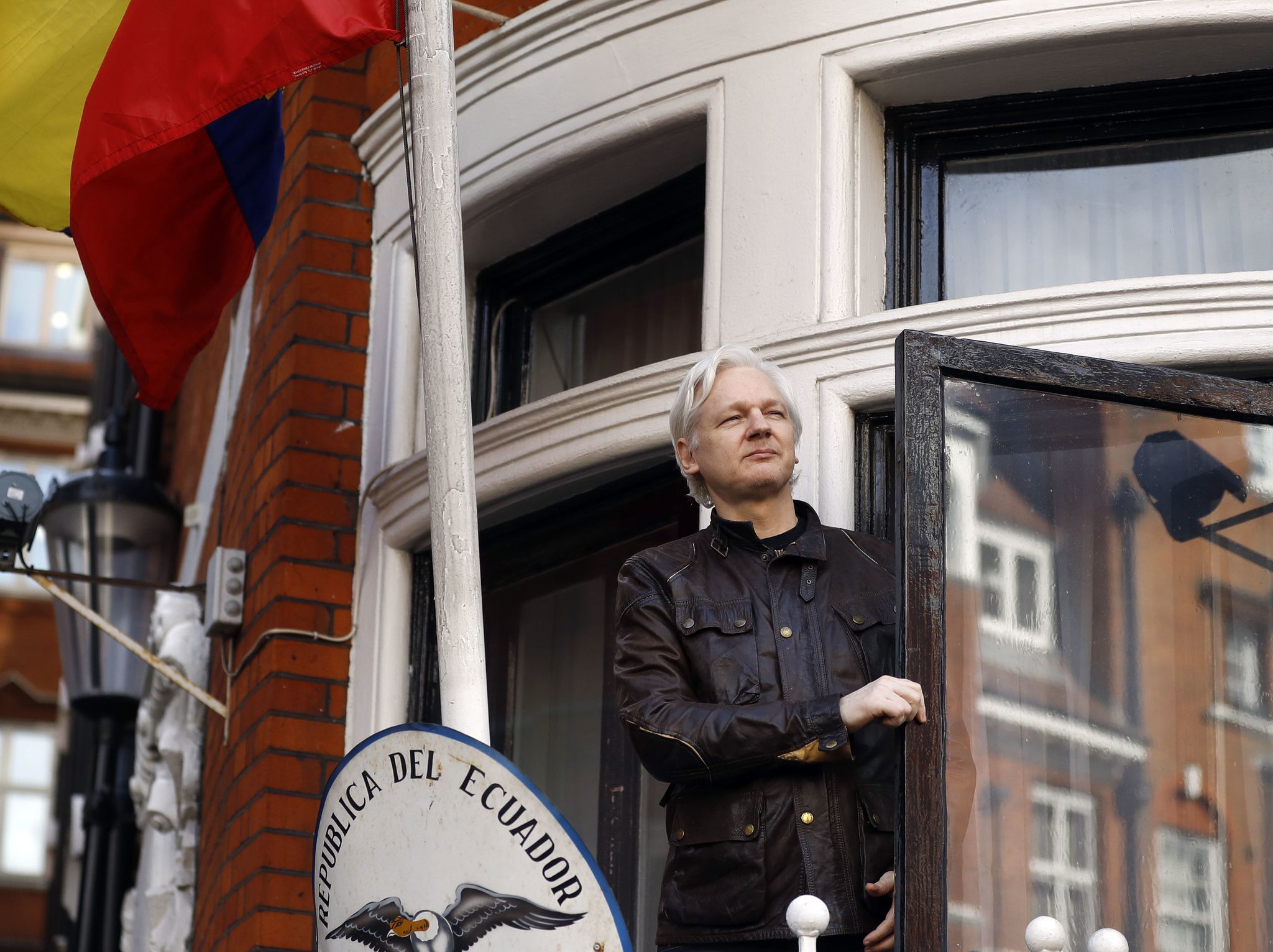
  • Russia plotted sneaking Julian Assange out of Ecuadorian Embassy in London: Report

    Russian diplomats have secretly discussed extracting WikiLeaks founder Julian Assange from the Ecuadorian Embassy in London and escorting him out of the U.K. and beyond the reach of a potential U.S. e

    Russian diplomats have secretly discussed extracting WikiLeaks founder Julian Assange from the Ecuadorian Embassy in London and escorting him out of the U.K. and beyond the reach of a potential U.S. extradition request, The Guardian reported Friday.

    Citing four sources, The Guardian said Russians held secret talks in London last year with people close to the Australian-born WikiLeaks publisher on the subject of potentially facilitating his safe exit from the embassy, his residence since 2012.

    One tentative plan involved smuggling Mr. Assange out of the embassy in a diplomatic vehicle on Christmas Eve and transporting him to another country, possibly Russia, where he stood a lesser risk of being extradited to the U.S. and tried on charges related to his WikiLeaks website, The Guardian reported.

    Another plan considered involved shipping Mr. Assange on a boat to Ecuador, the newspaper reported.

    “It is false that giving Julian Assange diplomatic status is news,” WikiLeaks responded through its Twitter account Friday. “It has been widely discussed for almost a year by Ecuador and the international bar and has nothing, whatsover [sic], to do with Russia.”

    Mr. Assange, 47, was granted asylum by Ecuador within weeks of seeking refuge in its London embassy more than six years ago, though an outstanding arrest warrant issued by U.K. authorities and the related risk of being extradited abroad have kept him from exiting ever since.

    Ecuador naturalized Mr. Assange in late 2017, but a subsequent attempt to grant him diplomatic status days later was quickly quashed by U.K. authorities.

    According to The Guardian, the aborted Christmas Eve escape plan involved utilizing the diplomatic protection Mr. Assange would have been granted had the request been accepted. Ecuador could have given Mr. Assange diplomatic documents, and he could have then been picked up from the embassy by Russians and taken away in diplomatic vehicle, the report said.

    The plan was ultimately deemed “too risky” and aborted, the report said.

    Reacting to the report through its Twitter account, the Russian embassy in London called the story “another example of disinformation and fake news from the British media.”

    Mr. Assange sought refuge from Ecuador amid being sought for questioning by Swedish prosecutors investigating allegations of sexual assault. Sweden dropped the probe in 2017, but a U.K. judge subsequently ruled that Mr. Assange breached related bail conditions by entering the embassy and should be arrested upon exiting.

    WikiLeaks has published throngs of classified U.S. military, diplomatic and intelligence community documents during the past decade, including Democratic Party documents in 2016 allegedly sourced by Russian state-sponsored hackers, according to U.S. federal intelligence and law enforcement officials.

    Mr. Assange has not been charged publicly by U.S. prosecutors, but Attorney General Jeff Sessions previously called his arrest a “priority.”

  • Ecuador pulls extra security from London embassy after spending millions shielding Julian Assange

    Ecuador will scale back security at its London embassy after news reports placed a $5 million price tag on operations protecting its most famous resident, WikiLeaks publisher Julian Assange, its gover

    Ecuador will scale back security at its London embassy after news reports placed a $5 million price tag on operations protecting its most famous resident, WikiLeaks publisher Julian Assange, its government announced.

    “The President of the Republic, Lenin Moreno, has ordered that any additional security at the Ecuadorian embassy in London be withdrawn immediately,” the government of Ecuador said in a statement Thursday.

    “From now on, it will maintain normal security similar to that of other Ecuadorian embassies,” the statement said.

    The government’s announcement came a day after The Guardian newspaper and Focus Ecuador reported that upwards of $66,000 a month has been spent on security, intelligence gathering and counterintelligence operations related to protecting Mr. Assange, a residence of the embassy since 2012.

    The operations were authorized by Rafael Correa, the former president of Ecuador who granted Mr. Assange asylum nearly six years ago, and ultimately cost the country more than $5 million, the outlets reported.

    “When we have special security, we hire private security firms to provide it,” Mr. Correa told The Guardian. “There is nothing unusual about this. It would have been a violation of our duties if we did not.”

    The security operations included the installation of surveillance cameras and contracting a security team to “secretly film and monitor all activity in the embassy,” The Guardian reported.

    WikiLeaks did not immediately respond to a request for comment concerning Ecuador’s decision to scale back security at the embassy.

    Mr. Assange, 46, entered the embassy in June 2012 while under house arrest in connection with a rape investigation conducted by Swedish prosecutors. He argued that he would likely be extradited to the U.S. and prosecuted for publishing classified military and diplomatic documents through his WikiLeaks website upon surrendering to Swedish authorities, and Mr. Correa granted him asylum two months later.

    Sweden dropped their rape probe in 2017, but British authorities have said they would arrest Mr. Assange if he leaves the embassy for jumping bail in 2012.

    The Justice Department has not unsealed charges against Mr. Assange, but Attorney General Jeff Sessions called arresting him a “priority.”

    London police, on their part, previously acknowledged spending roughly $16,000 a day stationing security guards outside the embassy, or about $5.6 million during the first year of Mr. Assange’s residence, prior to scaling back their operations in 2015.