Tag: Technology Internet

  • Tim Cook, Apple CEO, backs privacy laws, warns data being ‘weaponized’

    The head of Apple on Wednesday endorsed tough privacy laws for both Europe and the U.S. and renewed the technology giant’s commitment to protecting personal data, which he warned was being “weaponized

    BRUSSELS (AP) — The head of Apple on Wednesday endorsed tough privacy laws for both Europe and the U.S. and renewed the technology giant’s commitment to protecting personal data, which he warned was being “weaponized” against users.

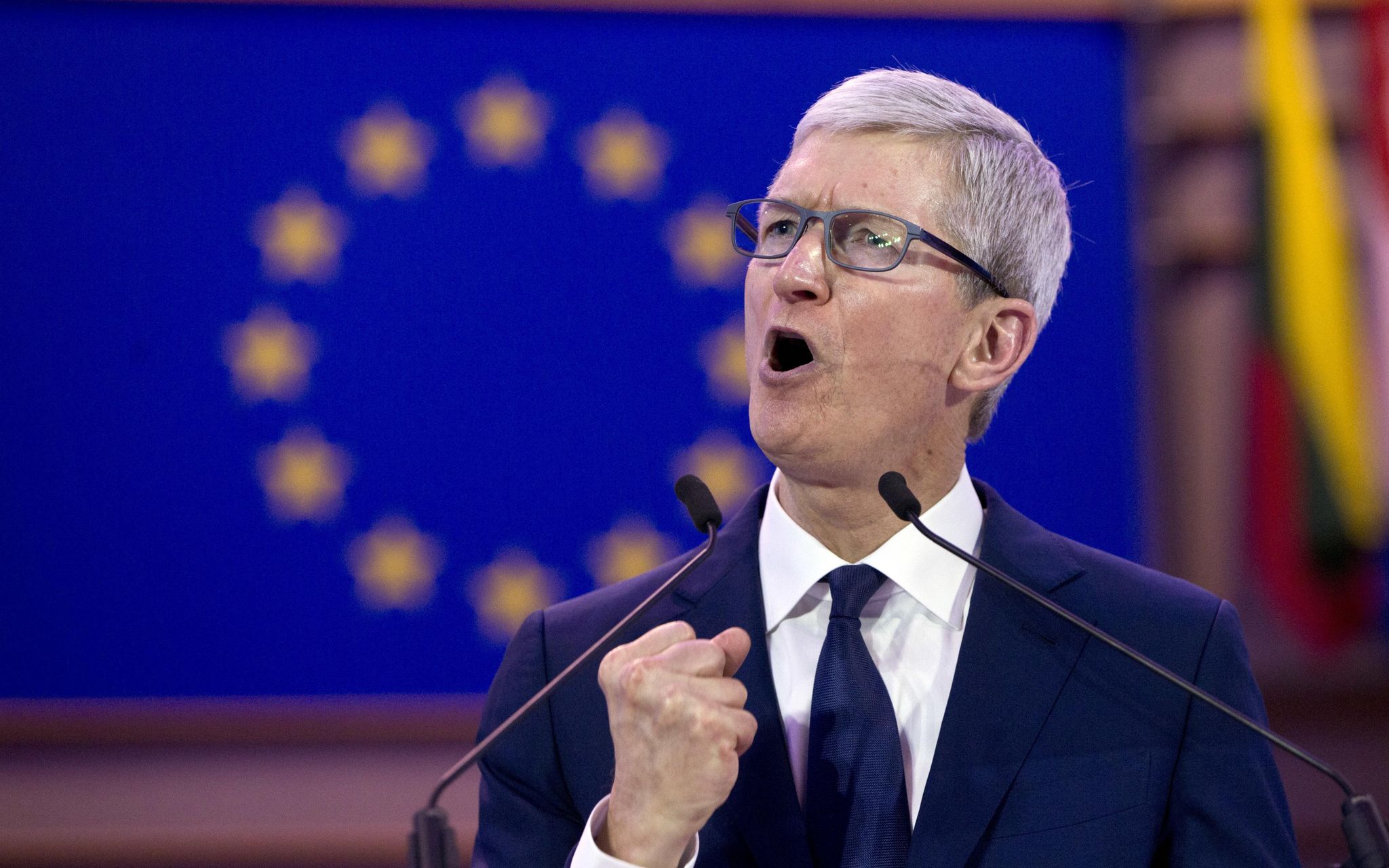
    Speaking at an international conference on data privacy, Apple CEO Tim Cook applauded European Union authorities for bringing in a strict new data privacy law in May and said the iPhone maker supports a U.S. federal privacy law.

    Cook’s speech, along with video comments from Google and Facebook top bosses, in the European Union’s home base in Brussels, underscores how the U.S. tech giants are jostling to curry favor in the region as regulators tighten their scrutiny.

    Data protection has become a major political issue worldwide, and European regulators have led the charge in setting new rules for the big internet companies. The EU’s new General Data Protection Regulation, or GDPR, requires companies to change the way they do business in the region, and a number of headline-grabbing data breaches have raised public awareness of the issue.

    “In many jurisdictions, regulators are asking tough questions. It is time for rest of the world, including my home country, to follow your lead,” Cook said.

    “We at Apple are in full support of a comprehensive federal privacy law in the United States,” he said, to applause from hundreds of privacy officials from more than 70 countries.

    In the U.S., California is moving to put in regulations similar to the EU’s strict rules by 2020 and other states are mulling more aggressive laws. That’s rattled the big tech companies, which are pushing for a federal law that would treat them more leniently.

    Cook warned that technology’s promise to drive breakthroughs that benefit humanity is at risk of being overshadowed by the harm it can cause by deepening division and spreading false information. He said the trade in personal information “has exploded into a data industrial complex.”

    “Our own information, from the everyday to the deeply personal, is being weaponized against us with military efficiency,” he said. Scraps of personal data are collected for digital profiles that let businesses know users better than they know themselves and allow companies to offer users “increasingly extreme content” that hardens their convictions, Cook said.

    “This is surveillance. And these stockpiles of personal data serve only to enrich the companies that collect them,” he said. “This should make us very uncomfortable. It should unsettle us.”

    Cook’s appearance was one-up on his tech rivals and showed off his company’s credentials in data privacy, which has become a weak point for both Facebook and Google. That is facilitated also by the fact that Apple makes most of its money by selling hardware like iPhones instead of ads based on user data.

    “With the spotlight shining as directly as it is, Apple have the opportunity to show that they are the leading player and they are taking up the mantle,” said Ben Robson, a lawyer at Oury Clark specializing in data privacy. Cook’s appearance “is going to have good currency,” with officials, he added.

    His speech comes a week after Apple unveiled expanded privacy protection measures for people in the U.S., Canada, Australia and New Zealand, including allowing them to download all personal data held by Apple. European users already had access to this feature after GDPR took effect. Apple plans to expand it worldwide.

    Facebook CEO Mark Zuckerberg and Google head Sundar Pichai sent brief video remarks to the annual meeting of global data privacy chiefs.

    Zuckerberg said the social network takes seriously its “basic ethical responsibility” to safeguard personal information but added that “the past year has shown we have a lot more work to do,” referring to a big data breach and the scandal over the misuse of data by political consultancy Cambridge Analytica.

    He also said the company is investing in measures to beef up protection, including building a new tool to let users clear their browsing activity and deploying artificial intelligence to detect fake accounts and take down extremist content.

    They both said they supported regulation, with Pichai noting Google recently proposed a legislative framework that would build on GDPR and extend many of its principles to users globally.

    The International Conference of Data Protection and Privacy Commissioners , held in a different city every year, normally attracts little attention but its Brussels venue this year takes on symbolic meaning as EU officials ratchet up their tech regulation.

    The 28-nation EU took on global leadership of the issue when it launched GDPR. The new rules require companies to justify the collection and use of personal data gleaned from phones, apps and visited websites. They must also give EU users the ability to access and delete data, and to object to data use.

    GDPR also allows for big fines benchmarked to revenue, which for big tech companies could amount to billions of dollars.

    In the first big test of the new rules, Ireland’s data protection commission, which is a lead authority for Europe as many big tech firms are based in the country, is investigating Facebook’s data breach, which let hackers access 3 million EU accounts.

    Google, meanwhile, shut down its Plus social network this month after revealing it had a flaw that could have exposed personal information of up to half a million people.
  • Nepal blocks 25,000 websites in porn ban

    Nepalese internet providers have begun blocking thousands of pornographic websites as part of a government directive aimed at stopping sexual violence, officials said Sunday.

    KATHMANDU, Nepal — Nepalese internet providers have begun blocking thousands of pornographic websites as part of a government directive aimed at stopping sexual violence, officials said Sunday.

    The government issued new criminal and civil codes this year that include regulations against the use, broadcast and publication of pornographic materials with punishment for violators of up to one year in prison.

    Min Prasad Aryal of the Nepal Telecom Authority said Sunday that more than 25,000 websites have been blocked under the campaign.

    “This is only the start, but a very good start,” Aryal said, adding that a team of officials are monitoring internet service providers to ensure the order is followed.

    He said those providers who refuse or fail to comply face a fine of up to $4,200 and risk losing their operating license.

    Internet service providers say they are complying with the government order but say it would be impossible to weed out and block all such sites.

    “We are following the government order and have blocked the list of websites that was provided. However, it is not practical and technically not possible to block every pornographic website,” said Binay Bohra of Vianet Communications.

    Bohra said they feared that with the new law service providers could easily be punished.

    Media rights groups have also expressed concern at the blanket ban of websites.

    “This opens up the path for the government to block any websites in the future, saying they have obscene content. This order was issued without clarifying what is obscene and why or without doing any proper study,” said Taranath Dahal, who heads the Freedom Forum, a Nepal-based media rights group.

    Dahal said there should be clear regulations from the government on what content is considered obscene and pornographic and what aged users should be barred.

    The government issued a similar ban in 2011, but this time there are more serious punishments for violations.

  • U.S. warns World Cup attendees of Russian hacking risks

    World Cup attendees of all sorts risk having their personal data compromised by hackers, state-sponsored or otherwise, the head of the U.S. National Counterintelligence and Security Center warned ahea

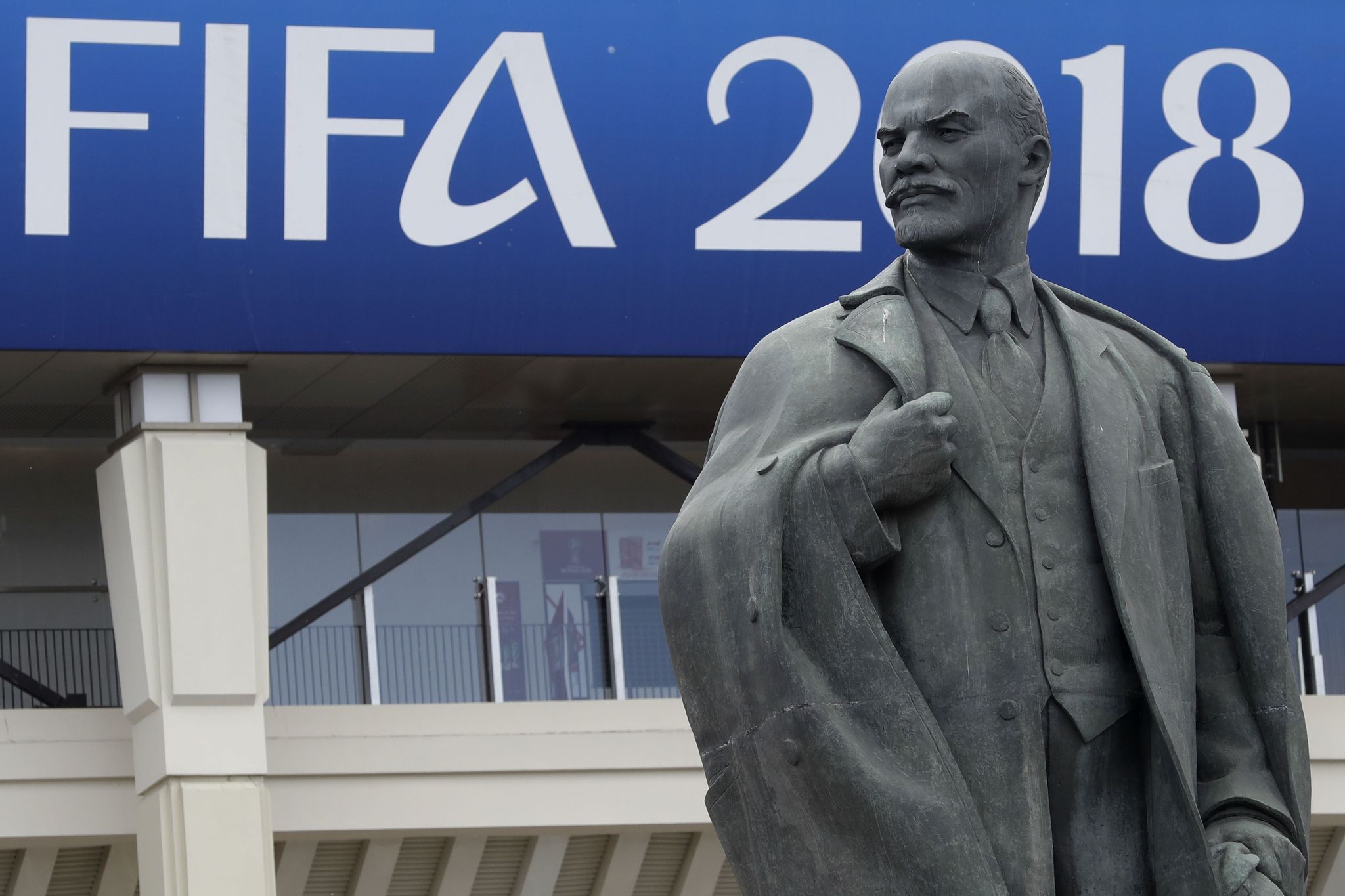
    World Cup attendees of all sorts risk having their personal data compromised by hackers, state-sponsored or otherwise, the head of the U.S. National Counterintelligence and Security Center warned ahead of the annual soccer tournament starting in Russia this week.

    “If you’re planning on taking a mobile phone, laptop, PDA or other electronic device with you — make no mistake — any data on those devices (especially your personally identifiable information) may be accessed by the Russian government or cyber criminals,” William Evanina, an FBI agent and the center’s director, warned World Cup attendees in a statement sent to Reuters on Tuesday.

    “Corporate and government officials are most at risk, but don’t assume you’re too insignificant to be targeted,” Mr. Evanina added. “If you can do without the device, don’t take it. If you must take one, take a different device from your usual one and remove the battery when not in use.”

    The 2018 World Cup is scheduled to start Thursday in Moscow, and cities stretching from Sochi to St. Petersburg are slated to host matches, athletes and attendees during the course of the monthlong tournament.

    In the U.K., meanwhile, Britain’s National Cyber Security Center (NCSC) said it was “providing expert cyber security advice to the (U.K.) Football Association ahead of their departure to Russia for the 2018 FIFA World Cup,” Reuters reported.

    The NCSC issued a warning to the public last month urging World Cup attendees to take adequate security measures before traveling to Russia.

    “Public and hotel Wi-Fi connections may not be safe; carefully consider what information you might be sharing when using these connections,” the NCSC warned.

    Russian hackers have been repeatedly accused of conducting cyberattacks targeting the U.S. and its allies, ranging from the alleged state-sponsored attack waged against the 2016 White House race, to a sustained attack last year against Britain’s media, telecommunications and energy sectors.

    More recently, the FBI warned in May that almost half a million internet routers around the world may have been infected with malware attributed to Russian state-sponsored hackers.

    Moscow has denied targeting the 2016 U.S. presidential race and other hacks attributed to the Russian government.

  • Washington becomes 1st state to approve net-neutrality rules

    Setting up a likely legal fight with the Trump administration, Washington has become the first state to enact its own net-neutrality requirements after U.S. regulators repealed Obama-era rules designe

    OLYMPIA, Wash. (AP) – Setting up a likely legal fight with the Trump administration, Washington has become the first state to enact its own net-neutrality requirements after U.S. regulators repealed Obama-era rules designed to keep the internet an even playing field.

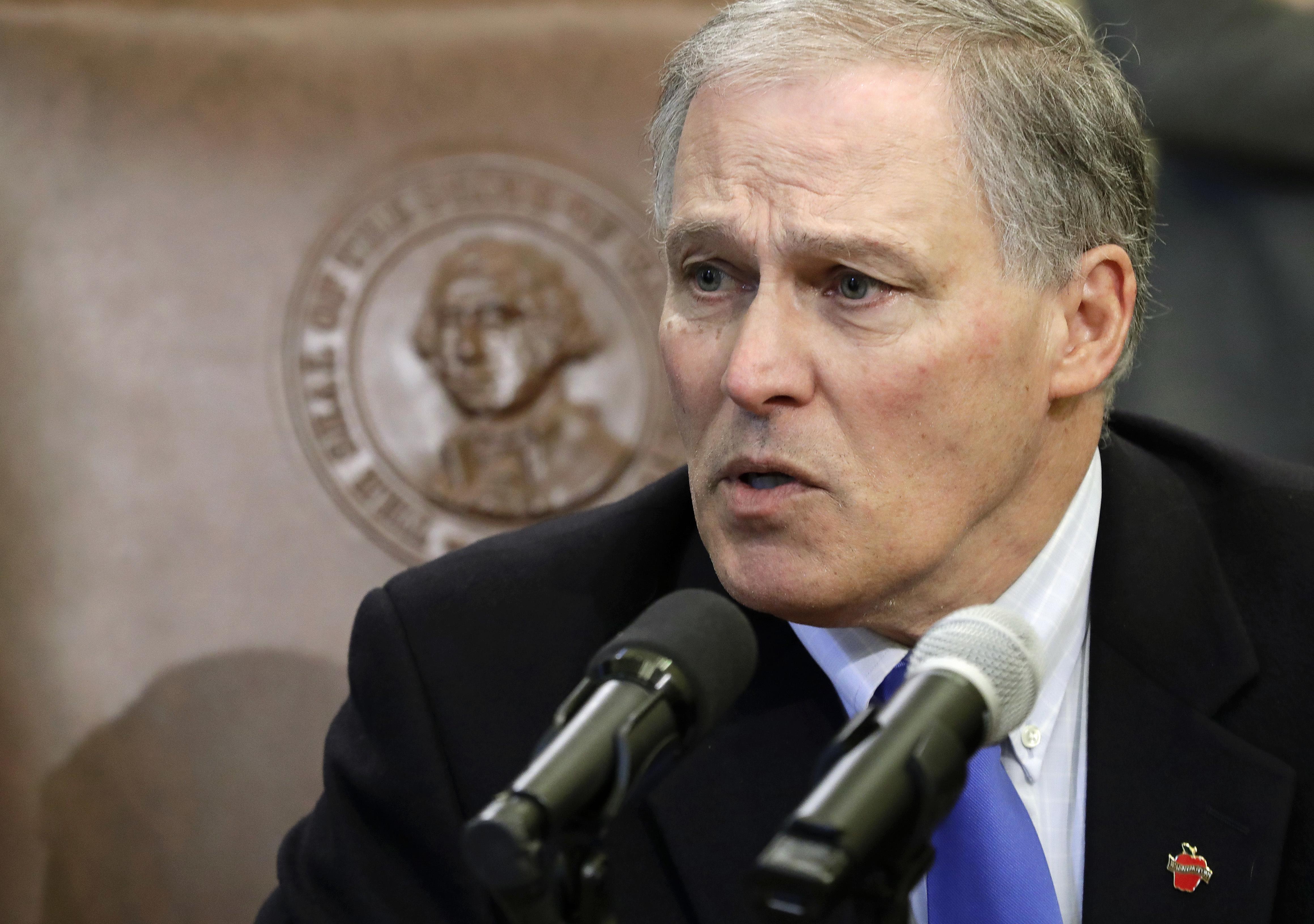
    “We know that when D.C. fails to act, Washington state has to do so,” Gov. Jay Inslee said Monday before signing the bipartisan measure that banned internet providers from blocking content or interfering with online traffic.

    The new law also requires internet providers to disclose information about their management practices, performance and commercial terms. Violations would be enforceable under the state’s Consumer Protection Act.

    The Federal Communications Commission voted in December to gut U.S. rules that meant to prevent broadband companies such as Comcast, AT&T; and Verizon from exercising more control over what people watch and see on the internet. The regulations also prohibited providers from favoring some sites and apps over others.

    Because the FCC prohibited state laws from contradicting its decision, opponents of the Washington law have said it would lead to lawsuits. Inslee said he was confident of its legality, saying “the states have a full right to protect their citizens.”

    As he has done frequently over the past year, Inslee took aim at President Donald Trump’s administration, saying the decision by the Federal Communications Commission was “a clear case of the Trump administration favoring powerful corporate interests over the interests of millions of Washingtonians and Americans.”

    While several states introduced similar measures this year seeking to protect net neutrality, so far only Oregon and Washington have passed legislation. But Oregon’s measure wouldn’t put any new requirements on internet providers.

    It would stop state agencies from buying internet service from any company that blocks or prioritizes specific content or apps, starting in 2019. It’s unclear when Oregon’s measure would be signed into law.

    Washington state was among more than 20 states and the District of Columbia that sued in January to try and block the FCC’s action. There are also efforts by Democrats to undo the move in Congress.

    Governors in five states – Hawaii, New Jersey, New York, Montana and Vermont – have signed executive orders related to net-neutrality issues, according to the National Conference of State Legislatures.

    Montana’s order, for instance, bars telecommunications companies from receiving state contracts if they interfere with internet traffic or favor higher-paying sites or apps.

    Big telecom companies have said net neutrality rules could undermine investment in broadband and introduce uncertainty about what are acceptable business practices. Net-neutrality advocates say the FCC decision harms innovation and make it harder for the government to crack down on internet providers who act against consumer interests.

    The FCC’s new rules are not expected to go into effect until later this spring. Washington’s law will take effect in June.

    Ron Main, executive director of the Broadband Communications Association of Washington, which opposed the bill, said the cable companies his group represents have already pledged not to block legal content or engage in paid prioritization.

    He said that because the internet is an interstate service, only Congress can pass legislation “that gives all consumers and internet services providers the clarity and consistency needed for a free and open internet.”

    “There should not be a state-by-state patchwork of differing laws and regulations,” he said in a written statement.

  • Rideshare drivers mostly earning less than minimum wage: MIT report

    Motorists making some extra cash by hauling around Uber or Lyft customers are mostly earning less than minimum wage, and nearly a third of ride-hailing drivers are losing money behind the wheel, accor

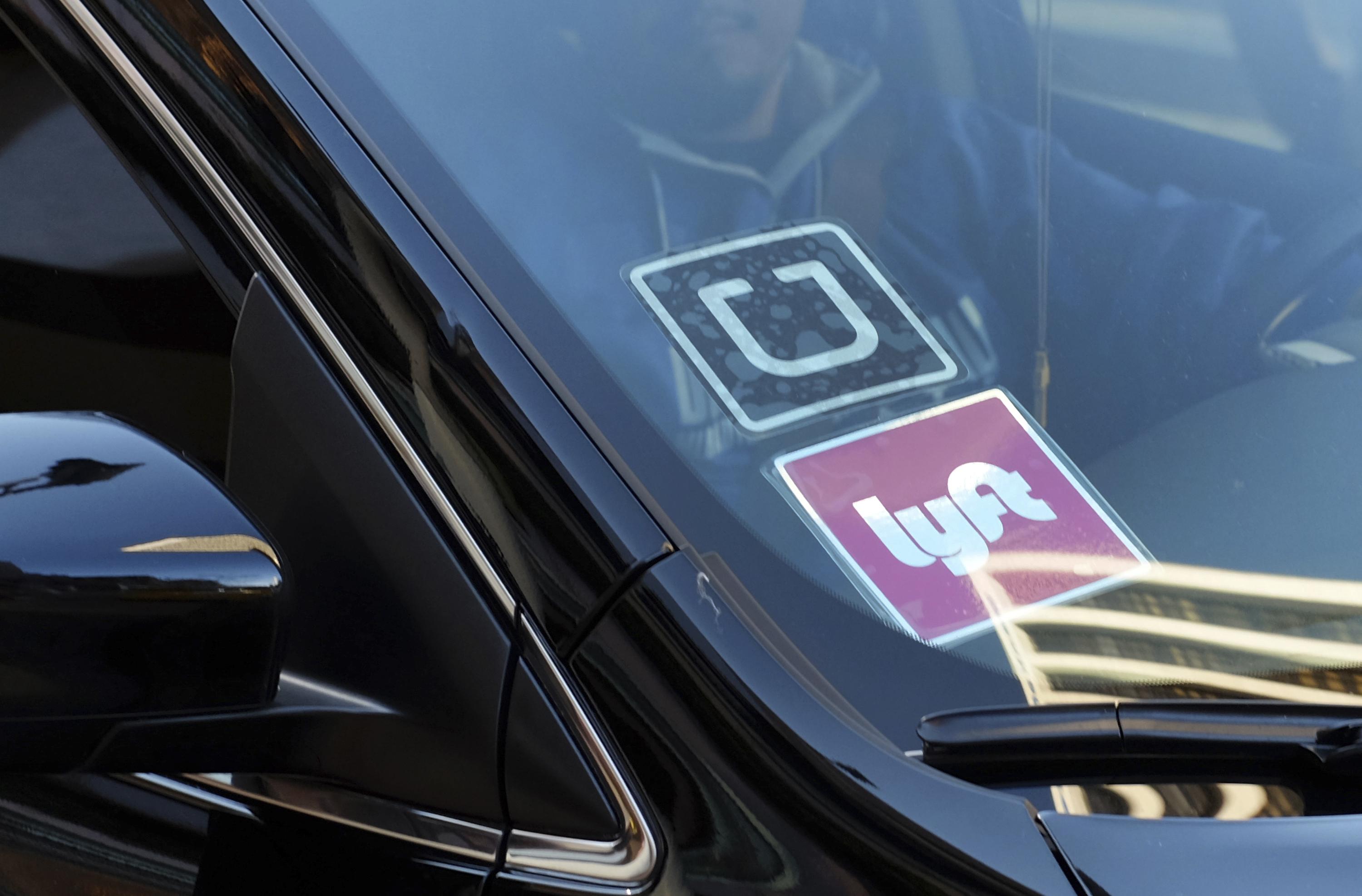
    Motorists making some extra cash by hauling around Uber or Lyft customers are mostly earning less than minimum wage, and nearly a third of ride-hailing drivers are losing money behind the wheel, according to researchers at the Massachusetts Institute of Technology.

    The median profit before taxes earned by ride-hailing drivers at either service is about $3.37, or less than half of the minimum wage in most states, researchers at MIT’s Center for Energy and Environmental Policy Research wrote in their newly published working paper, “Economics of Ride-Hailing: Driver Revenue, Expenses and Taxes.”

    Culled from interviews conducted with over 1,100 Uber and Lyft drivers, the analysis “provides one of the first detailed estimates of ride-hailing profit,” its authors wrote.

    The MIT researchers quizzed respondents with questions like how many miles they drive and the types of car they use, then factored in the costs of insurance, fuel, maintenance, repairs and depreciation to reach their figures.

    Seventy-four percent of drivers earn less than the minimum wage in their state, while 30 percent “are actually losing money once vehicle expenses are included,” the report said.

    “We were surprised by the numbers; they seemed pretty low,” co-author Stephen Zoepf, executive director of Stanford’s Center for Automotive Research, told the San Francisco Chronicle.

    Indeed, Mr. Zeopf said he plans to crunch the numbers with a different formula as his findings are questioned by both San Francisco-based companies, the newspaper reported Friday.

    “While the paper is certainly attention grabbing, its methodology and findings are deeply flawed. We’ve reached out to the paper’s authors to share our concerns and suggest ways we might work together to refine their approach,” Uber spokesperson Michael Amodeo said in a statement.

    “We have not yet reviewed this study in detail, but an initial review shows some questionable assumptions,” said Lyft.

    Uber and Lyft launched in 2009 and 2012, respectively, leaving a limited window for research into either of the nation’s two largest ride-hailing companies.

    Nonetheless, previous studies have suggested drivers receive significantly more than MIT’s researchers concluded. A 2015 study funded by Uber found that drivers overall in Denver, Detroit and Houston earned less than $13.25 an hour after expenses. More recently, a 2017 survey conducted by the RideShareGuy blog and cited by Uber in response to the MIT study reported average hourly earnings of $15.68.

  • Facebook’s fact-checkers flag satire as fake news

    Facebook on Friday said it mistakenly threatened to demonetize a satirical website’s social networking account after one of its articles, “CNN Purchases Industrial-Sized Washing Machine To Spin News B

    Facebook on Friday said it mistakenly threatened to demonetize a satirical website’s social networking account after one of its articles, “CNN Purchases Industrial-Sized Washing Machine To Spin News Before Publication,” was debunked by Snopes, the fact-checking site used to help counter the platform’s fake news problem.

    “A page you admin (The Babylon Bee) recently posted the link (CNN Purchases Industrial-Sized Washing Machine To Spin News Before Publication) that contains info disputed by (Snopes.com), an independent fact checker,” Facebook wrote in a message sent Thursday to The Babylon Bee founder Adam Ford. “Repeat offenders will see their distribution reduced and their ability to monetize and advertised removed,” the message said.

    The blatantly satirical article should not have been flagged as fake news, Facebook conceded Friday.

    “There’s a difference between false news and satire,” Facebook said in a statement. “This was a mistake and should not have been rated false in our system. It’s since been corrected and won’t count against the domain in any way.”

    According to the Snopes, the article’s satirical nature wasn’t immediately apparent among everyone who read it.

    “Although it should have been obvious that the Babylon Bee piece was just a spoof of the ongoing political brouhaha over alleged news media ‘bias’ and ‘fake news,’ some readers missed that aspect of the article and interpreted it literally,” Snopes said.

    The Babylon Bee brands itself as “Your Trusted Source For Christian News Satire.” Nonetheless, Snopes has debunked 13 of its articles since 2016, including write-ups with titles including “Southern Baptist Convention Purchases Chick-Fil-A For $5.5 Billion” and “Is Playing Christmas Music Before Thanksgiving Now a Federal Crime?”

    “This is the first time Facebook has used that to threaten us with reduced reach and demonetization,” Mr. Ford told PJ Media after receiving the initial warning Thursday. “Also it seems that anyone who clicked on the article got a notice that it was ‘disputed.’”

    Established in 1995, Snopes partnered with Facebook in 2016 to help fact-check a flood of fake news stories being shared among its users.

    “Our goal is to help empower Facebook users to better control and enhance their own online experience, and we believe that increasing the flow and visibility of accurate, vetted information is one of the best ways to do that,” Snopes said at the time.

    More recently, the Department of Justice last month filed criminal charges against 13 Russian nationals and three Russian companies accused of using Facebook to spread disinformation during the 2016 U.S. presidential race.